A bright smile can change how confident you feel in photos, at work and in everyday conversations, so it is no surprise that aloe vera gel is searched by thousands of people every month. The good news is that some simple remedies really do help. The honest news is that most of them only remove surface stains, and a few popular ones can actually damage your teeth. This guide explains which teeth whitening home remedies work, how to use them safely, and which ones dentists say you should skip.
Why Teeth Turn Yellow in the First Place
Before trying any remedy, it helps to know what kind of stain you have. Dentists usually divide tooth discolouration into three types. Extrinsic stains sit on the surface of the enamel and come from coffee, tea, red wine, berries, tomato sauces and smoking. Intrinsic stains form inside the tooth and can be caused by genetics, some medicines taken during childhood, or an injury to the tooth. Age-related yellowing happens as enamel naturally thins over the years and the yellowish dentin underneath starts to show through.
Home remedies can help with surface stains. They cannot change the colour of dentin inside the tooth, and they cannot fix stains caused by medicines or injury. If your teeth are yellow from the inside, only a dentist can help. Knowing this saves you from scrubbing your teeth with things that will never work and may do harm.
1. How to Whiten Teeth with Baking Soda
Baking soda is the most popular of all teeth whitening home remedies, and it is also one of the few with real evidence behind it. It is a mild abrasive, which means it gently polishes away light surface stains from coffee and tea. Research published in the Journal of the American Dental Association found baking soda to be a gentle and effective stain remover, with a very low abrasivity rating of just 7, compared with 70 to 100 for a typical toothpaste.
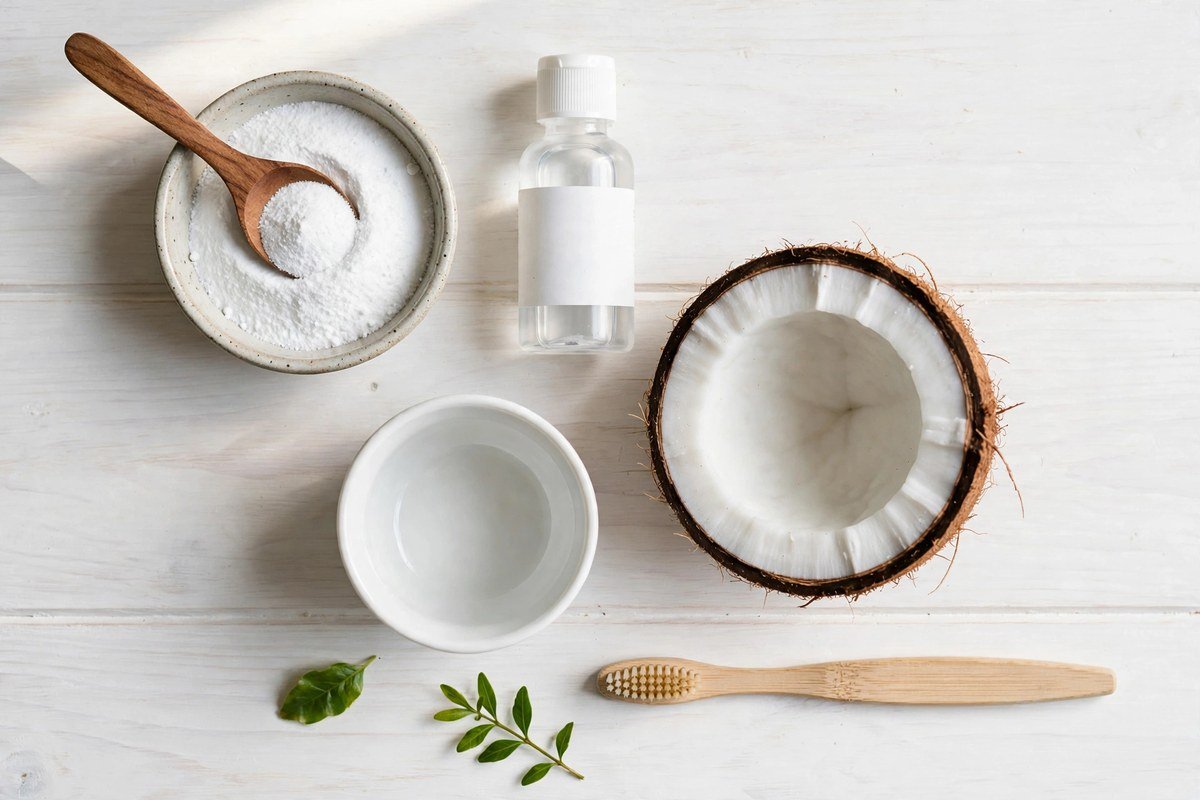
To use it, mix half a teaspoon of baking soda with a few drops of water to make a smooth paste. Brush gently with it for about two minutes, then rinse well and brush again with your normal fluoride toothpaste. Use it only once a week at most. Brushing hard or using it every day can wear down enamel over time, and once enamel is gone it does not grow back. Never mix baking soda with lemon juice, because the acid softens enamel and the scrubbing then scrapes it away.
2. Hydrogen Peroxide Rinse
Hydrogen peroxide is the one home ingredient that truly bleaches, because it breaks down the coloured compounds inside stains. It is the same active ingredient used in professional whitening gels, only much weaker at home. A standard drugstore bottle is 3 percent, and the American Dental Association considers hydrogen peroxide generally safe in over-the-counter products at concentrations up to 3.5 percent.
Dilute it with an equal amount of water and swish for 30 to 60 seconds, then spit it out and rinse with plain water. Do not swallow it, and do not use a concentration above 6 percent on your teeth. The most common side effect is temporary sensitivity, which affects many users and usually fades after a few days. Stop using it and see a dentist if the sensitivity lingers or turns into a throbbing pain, because a cavity or a crack may be letting the peroxide reach the nerve.
3. Baking Soda and Hydrogen Peroxide Paste
Combining the two ingredients above makes a paste that both polishes and bleaches. Mix a few teaspoons of baking soda with a small amount of 3 percent hydrogen peroxide until you have a smooth paste, brush gently for no longer than two minutes, then rinse thoroughly. Use this paste only once or twice a week. It is stronger than either ingredient alone, so daily use raises the risk of sensitivity and gum irritation. As with any whitening routine, talk to your dentist first if you have fillings, crowns, gum disease or untreated cavities.
4. How to Whiten Teeth with Coconut Oil (Oil Pulling)
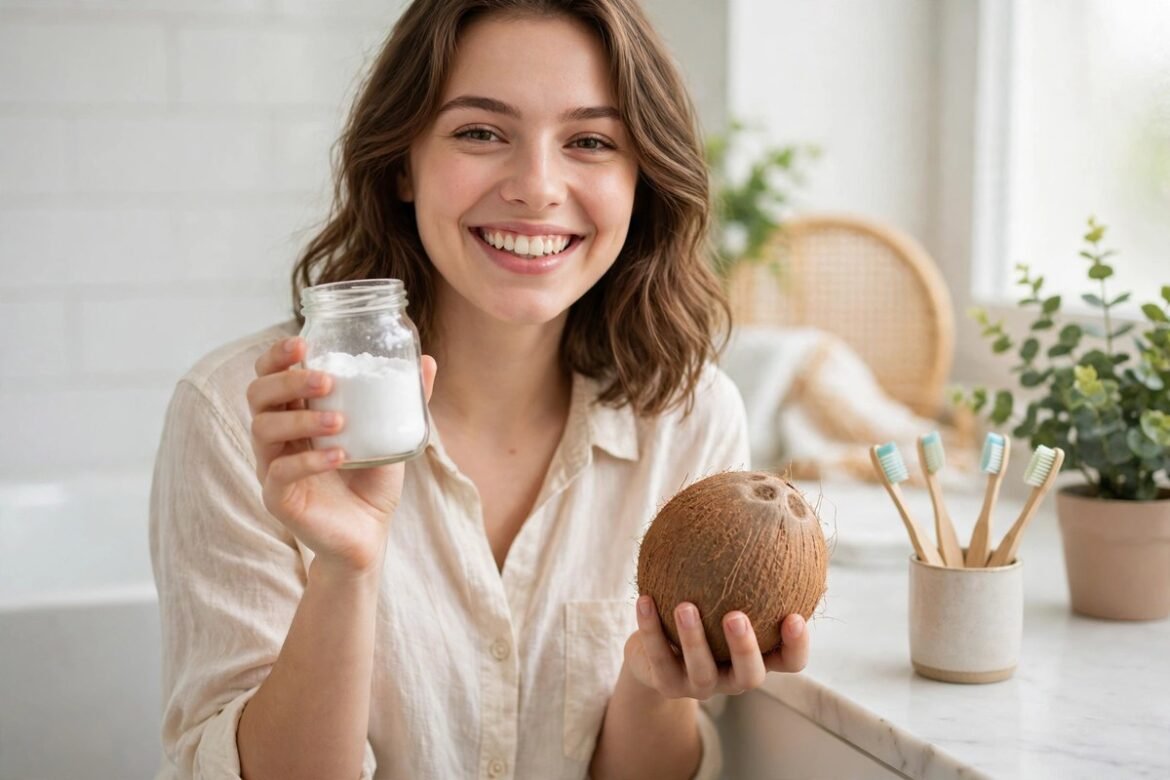
Oil pulling is an ancient practice from India in which you swish a spoonful of oil, usually coconut oil, around your mouth for 15 to 20 minutes before spitting it out. It is one of the most searched natural remedies, but here is the honest truth: coconut oil contains no bleaching ingredient, and no strong study has shown that it changes tooth shade. The American Dental Association notes that there is no reliable evidence that oil pulling whitens teeth.
That does not make it useless. Coconut oil contains lauric acid, which has antibacterial properties, and several small studies have found that daily oil pulling can reduce plaque and gum redness. Less plaque can make teeth look a little cleaner and brighter, but cleaner is not the same as whiter. If you enjoy the practice, use one tablespoon of coconut oil, swish gently, spit into a bin rather than the sink, and rinse with water. Never let it replace brushing with fluoride toothpaste and flossing.
5. Use a Whitening Toothpaste
The simplest remedy of all is already sitting on a shop shelf. A whitening toothpaste approved by a dental association uses gentle polishing agents and sometimes a low dose of peroxide to lift surface stains over a few weeks. It works slowly, but it is the safest daily option and it contains fluoride, which protects your enamel. Look for a product with an ADA Seal of Acceptance or the equivalent seal in your country, and use it twice a day like a normal toothpaste. It will not give you dramatic results, but it will help keep new stains from building up.
6. Rinse After Coffee, Tea and Red Wine
Prevention is the easiest remedy there is. Coffee, tea and red wine are the biggest stain makers in most diets, and the longer they sit on your teeth, the deeper the stain sets. You do not have to give them up. Just rinse your mouth with plain water right after you finish a cup, and wait about 30 minutes before brushing so your enamel has time to reharden. Drinking through a straw also helps for iced coffee and tea. Small habits like this are one of the best ways to learn how to whiten yellow teeth without spending anything at all.
7. Eat Crunchy Fruit and Vegetables
Crisp foods such as apples, celery, carrots and raw cauliflower act like a gentle natural scrub as you chew, and they stimulate saliva, which helps wash away stain-causing food particles. Strawberries are often suggested too, but a study summarised by the ADA found no measurable whitening from a strawberry and baking soda mix, so treat fruit as a supporting habit rather than a whitening treatment. A diet that protects your smile is simply a diet that keeps your mouth clean between brushes.
How to Remove Yellow Stains from Teeth: A Simple Daily Routine
Remedies work best as part of a routine. Brush twice a day with fluoride toothpaste, floss once a day, and use your chosen whitening remedy once or twice a week at most. Rinse with water after staining foods and drinks, avoid smoking, and book a professional cleaning every six months, because only a dental cleaning can remove hardened tartar. If you want to know how to remove yellow stains from teeth for good, this routine matters more than any single remedy. Real whitening takes weeks of steady care, not one dramatic treatment.
Remedies to Avoid
Some popular home remedies do more harm than good, and dentists are clear about them. Lemon juice and vinegar are acids that soften and erode enamel, and the damage is permanent. Activated charcoal has no reliable proof that it whitens teeth, and its gritty particles can scratch enamel and get stuck along the gum line. Harsh scrubs, salt, and baking soda mixed with lemon are all too abrasive for daily use. If a remedy promises overnight results, it is almost certainly either useless or unsafe.
When to See a Dentist Instead
Home remedies are not right for everyone. See a dentist before trying any whitening method if you have untreated cavities, cracked teeth, gum disease, sensitive teeth, or crowns and veneers, because whitening agents do not work evenly on dental work and can make sensitivity worse. Also book a visit if your teeth do not respond after a few weeks, if a single tooth suddenly darkens, or if you notice pain, bleeding gums or white spots. Professional whitening is stronger, faster and supervised, and for deep or stubborn stains it is still the best option.
The Bottom Line
Teeth whitening home remedies can help, but only when you choose the right ones and use them gently. Baking soda once a week, a diluted hydrogen peroxide rinse, and a good whitening toothpaste are the safest bets for surface stains. Coconut oil pulling may support your oral health, but it will not bleach your teeth. Avoid lemon juice, vinegar and charcoal, protect your enamel, and let a dentist handle anything deeper. A whiter smile is a slow project, and your enamel is worth protecting along the way.
Disclaimer: This article is for general information only and is not medical advice. Talk to your dentist before starting any whitening routine, especially if you have sensitive teeth, gum problems or dental work.