Your carpet takes a beating every single day. Shoes, spills, pet hair, dust and crumbs all sink into the fibres, and before long the room starts to look tired and smell stale. The good news is that you do not need a professional cleaner or expensive products to fix it. Learning how to clean carpet at home is mostly about the right order of steps and a few cheap supplies you probably already own.
This guide covers carpet cleaning at home from start to finish: the weekly vacuum that stops dirt building up, a baking soda carpet cleaner that freshens the whole room, simple ways to remove stains from carpet, and a proper deep clean twice a year. Follow the methods below and your carpet will feel softer, look brighter and smell fresh again.
1. Start With a Thorough Vacuum
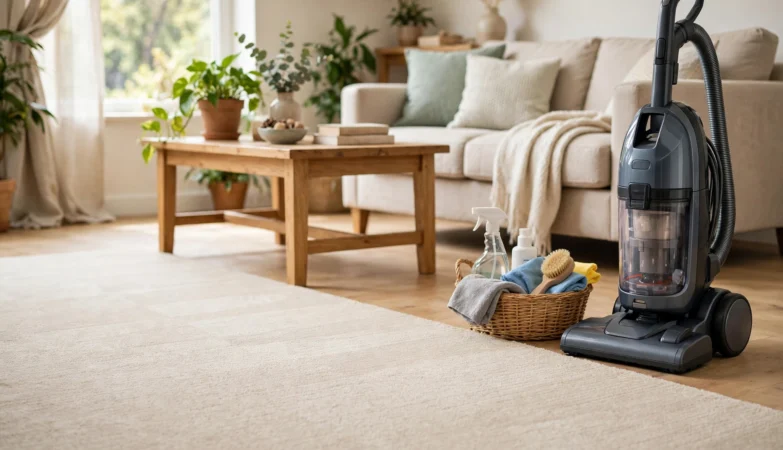
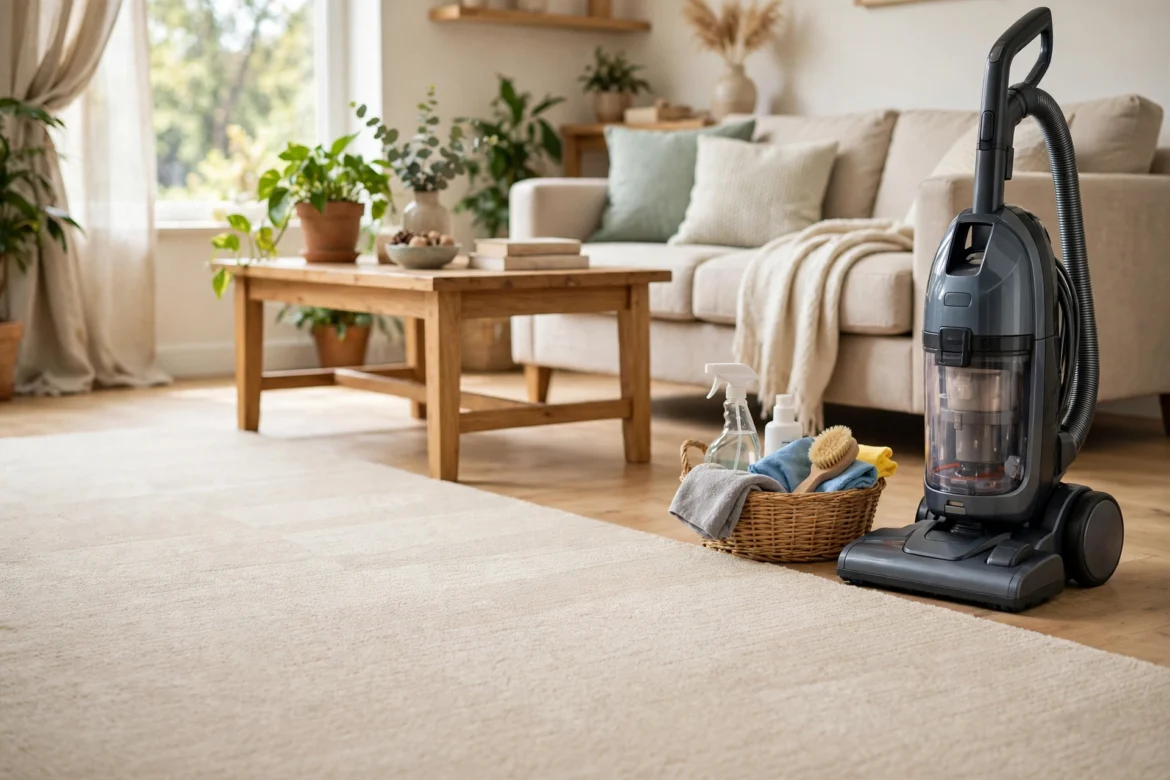
Every carpet clean starts with the vacuum, because loose dirt turns to mud the moment it meets water. Vacuum slowly in overlapping passes, first in one direction and then across it, so the brush reaches dirt trapped deep in the pile. Pay extra attention to high-traffic areas such as doorways and the middle of the room, and go over them two or three times.
Use the crevice tool along skirting boards and under furniture, where dust collects out of sight. The same slow, overlapping passes work on fabric furniture too, so if your sofa needs attention, read our guide on how to clean a sofa at home after you finish the carpet. A good vacuum once a week is the single best habit for keeping a carpet clean between deeper cleans.
2. Freshen the Whole Carpet With Baking Soda
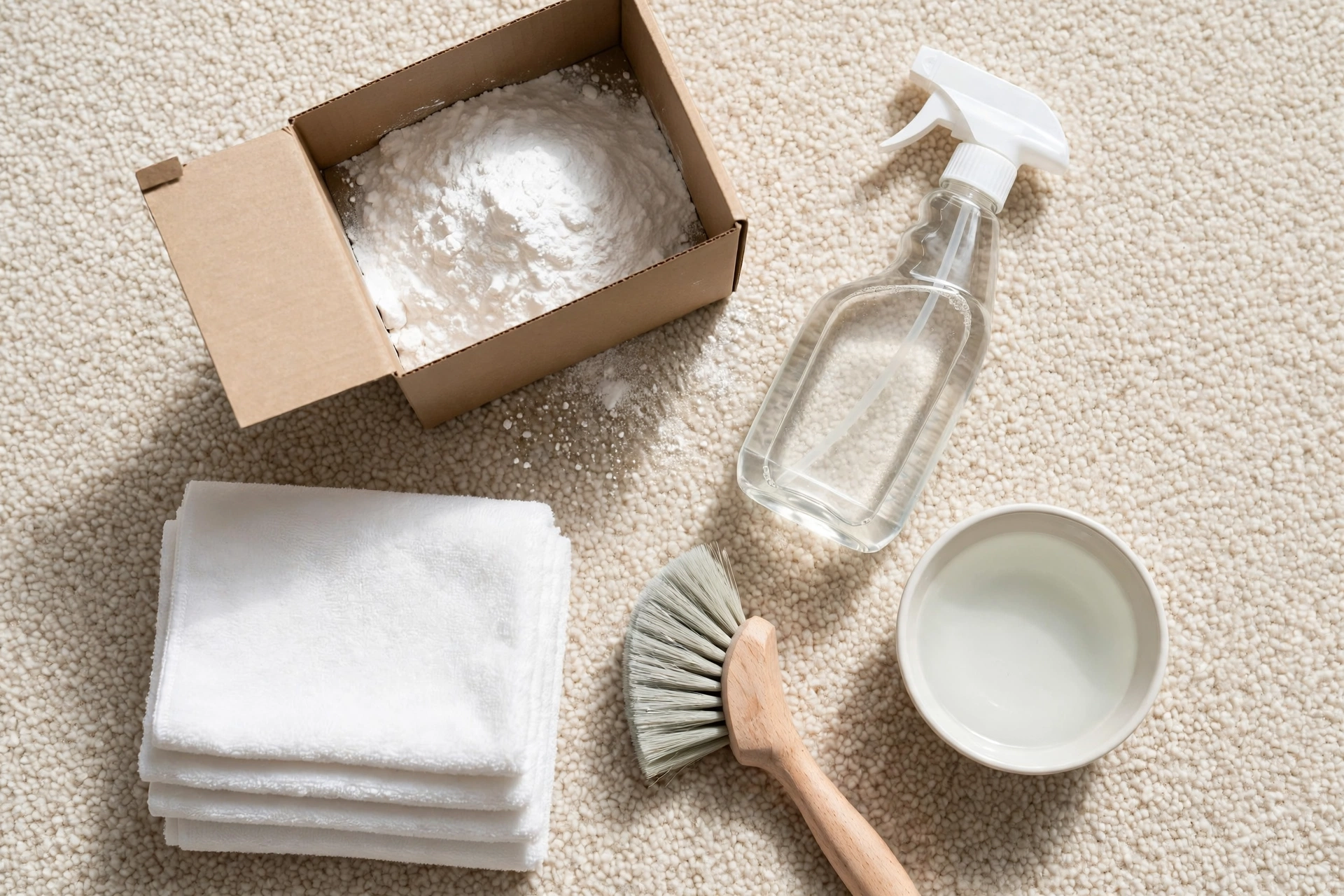
A baking soda carpet cleaner is the cheapest way to remove odours from a whole room. Baking soda neutralises smells instead of covering them up, and it is safe for most carpet types. Sprinkle it generously over the dry carpet, work it lightly into the fibres with a soft brush, and leave it for at least 30 minutes. For strong smells, leave it overnight.
Then vacuum slowly and thoroughly, going over the area twice so no powder is left behind. You can add ten to fifteen drops of essential oil, such as lavender, to the baking soda before sprinkling if you like a light scent, but plain baking soda works perfectly on its own. Repeat this once a month, or whenever the room starts to smell less than fresh.
3. Remove Stains With Vinegar and Dish Soap
When you need to know how to remove stains from carpet, the first rule is to act fast and blot, never rub. Rubbing pushes the stain deeper and frays the fibres. Start by lifting any solid bits with a spoon, then blot up as much liquid as you can with a clean white cloth.
Mix one part white vinegar with three parts warm water in a spray bottle, add a few drops of plain dish soap, and spray the stain lightly. Do not soak the carpet. Leave the solution for five to ten minutes, then blot firmly with a clean cloth, turning the cloth to a fresh side as the stain transfers onto it. Repeat until the stain stops lifting, then rinse by blotting with plain water and let the area air-dry.
4. Tackle Coffee, Tea and Wine Stains
Coffee, tea and red wine are tannin stains, and white vinegar handles them well. Mix equal parts white vinegar and water, spray the stain, and blot immediately. For a dried coffee stain, first loosen it with a paste of baking soda and water, leave it for fifteen minutes, then spray the vinegar solution over it and blot.
Red wine needs speed. Blot up as much as you can, cover the stain with a thick layer of baking soda or salt to draw the liquid out, wait fifteen minutes, vacuum it up, and then treat what is left with the vinegar solution. If a faint mark remains, repeat the process rather than reaching for a harsh chemical straight away.
5. Treat Grease and Oil Spots the Right Way
Grease from food, cooking oil or oily skin does not respond to water alone. Sprinkle baking soda or cornstarch generously over the spot to absorb the oil, leave it for at least thirty minutes, then vacuum it up. Follow with a few drops of dish soap mixed into warm water, dabbed onto the spot with a cloth and blotted away.
Avoid using hot water on a fresh grease stain, because heat can set it. If the spot is old, repeat the baking soda step twice before the soap step. For a carpet near the kitchen, a regular wipe-down routine helps too, and the same habit of tackling spills quickly applies everywhere, from the carpet to the microwave oven, where splatters are far easier to remove the same day.
6. Remove Pet Stains and Smells
Pet accidents need two steps: remove the stain and remove the smell, because a lingering smell invites a repeat accident in the same spot. Blot up as much as possible first, then clean with cold water and a little dish soap, blotting again and again. For urine stains, use an enzyme-based pet cleaner if you have one, since it breaks down the proteins that cause the smell.
Once the stain is gone, sprinkle baking soda over the area and leave it overnight before vacuuming. That is the simplest answer to how to get smell out of carpet after a pet accident, and it works on general mustiness too. Keep the room ventilated while the carpet dries, and remember that smells travel: a fridge full of leftovers can make a whole kitchen smell stale, so keeping the refrigerator fresh helps the whole home smell cleaner.
7. Steam Clean for a Real Deep Clean
Twice a year, give the carpet a proper deep clean with a steam cleaner or hot-water extraction machine, which you can hire cheaply if you do not own one. The water heats to roughly 150–200°F, which sanitises the fibres, kills dust mites and lifts dirt that vacuuming cannot reach.
Vacuum thoroughly first, pre-treat any visible stains, and then move the machine slowly so it has time to work. The most common mistake is leaving the carpet too wet, so make extra slow passes to extract as much water as possible. With good airflow, carpets usually dry within six to twelve hours. Open windows, run a fan, and keep people and pets off the carpet until it is fully dry, otherwise damp fibres attract dirt and can start to smell.
8. Clean Rugs the Same Way
If you are wondering how to clean a rug at home, the same methods apply. Shake a small rug outside first, vacuum both sides, and then treat stains exactly as you would on a fitted carpet. A rug has one advantage: you can take it outside on a dry, sunny day, which freshens the fibres and helps it dry faster after a wash.
Check the label before you steam clean a rug, because wool and handmade rugs often need a gentler approach and too much heat or water can shrink them. For those, stick to vacuuming, baking soda and gentle spot cleaning, and leave the deep clean to a specialist if you are unsure.
9. Dry It Properly and Keep It Fresh
Whatever method you use, drying matters as much as cleaning. A damp carpet is a magnet for dirt, and if it stays wet for a day or more it can develop a musty smell or even mould. After any wet cleaning, open windows, switch on a fan, and avoid walking on the carpet in shoes until it is completely dry.
To keep the result, vacuum once a week, treat spills the same day, keep a doormat at every entrance, and ask family members to leave shoes at the door. A quick baking soda freshen once a month takes five minutes and stops odours building up again. That is the whole secret of carpet cleaning at home: small, regular care beats one big rescue clean every time.
Conclusion
Knowing how to clean carpet at home saves money and keeps your home healthier. Start with a slow, thorough vacuum, freshen with a baking soda carpet cleaner, treat stains early with vinegar and dish soap, and steam clean twice a year. Once you learn how to remove stains from carpet without panic and how to get smell out of carpet with nothing more than baking soda and fresh air, a stained or smelly carpet stops being a problem and becomes a ten-minute job. Try one method this weekend and see the difference for yourself.