Waking up with itchy red bites in a neat row is a horrible start to the day, and it usually means one thing: bed bugs. If you want to know how to get rid of bed bugs, the good news is that you can handle a small or medium infestation yourself with a mix of heat, cleaning and a few simple products. This guide covers nine practical methods, from hot washing and steam to bed bug spray and diatomaceous earth, so you can clear the problem and keep it from coming back.
Bed bugs do not spread disease, but their bites can itch badly for a week or two, and a heavy infestation can disturb your sleep for months. They are also stubborn: they hide in tiny cracks, survive for months without feeding, and their eggs resist many sprays. That is why a single spray rarely solves the problem, and why the methods below work best when you combine them.
1. Confirm the Signs Before You Treat
The first step in how to get rid of bed bugs is making sure that is really what you have. Many people treat the wrong pest, so take ten minutes to check. The most common early clue is bites: small, red, itchy bumps, often in a line or a cluster on the face, neck, arms or hands, noticed after waking up. But bites alone are not proof, because some people do not react to them at all, and a bite can take up to two weeks to appear.
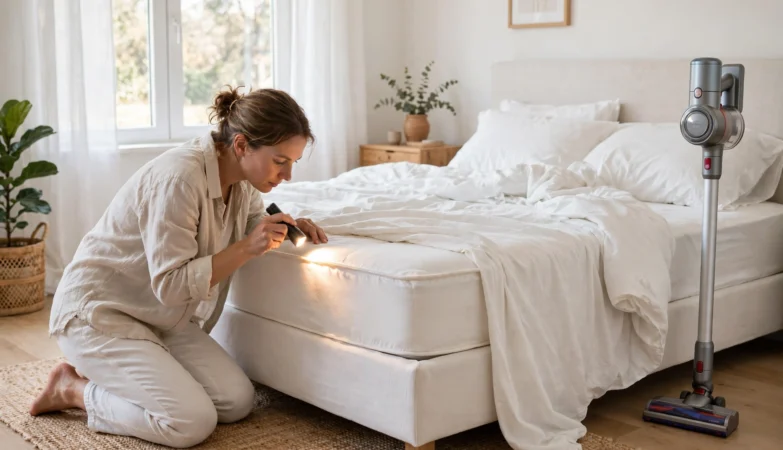
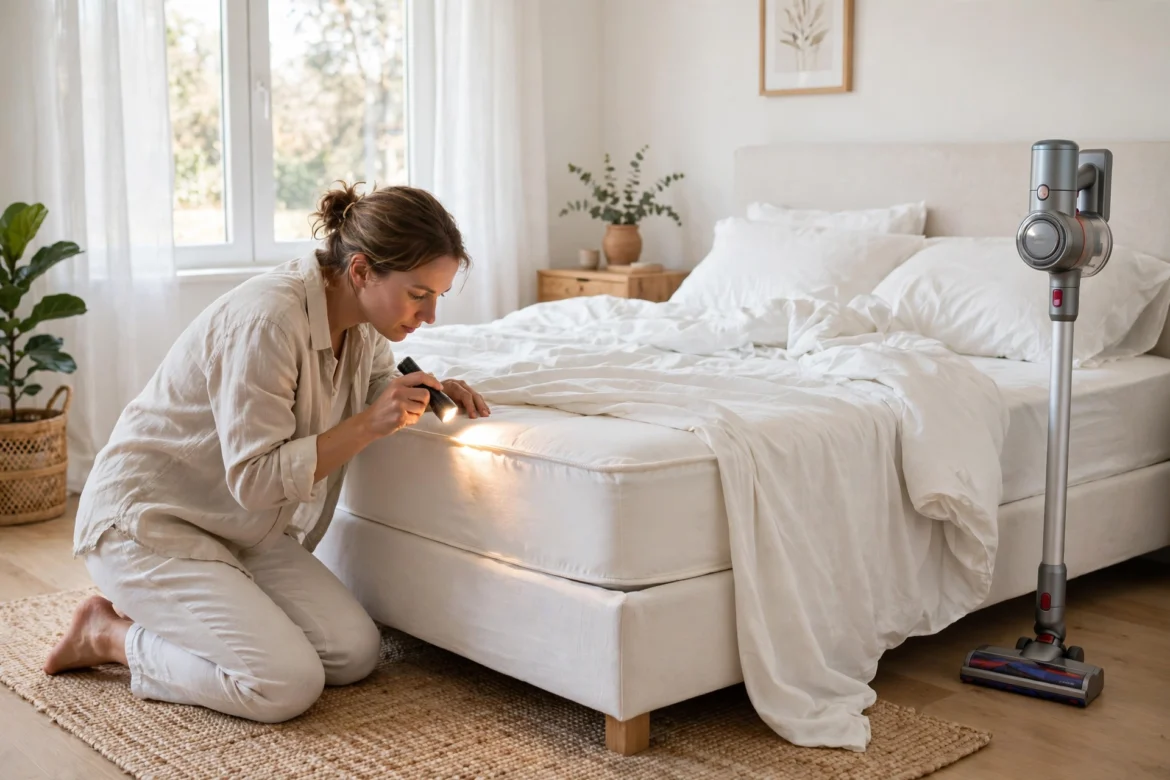
Look for physical evidence instead. Strip the bed and check the mattress seams, piping, tufts and tag with a flashlight. You are looking for dark spots like ink marks, which are bed bug droppings, rusty stains from crushed bugs, pale yellow shed skins, and tiny white eggs about the size of a pinhead. If you are wondering what do bed bugs look like, think of a flat, oval, reddish-brown insect about the size of an apple seed, roughly 4 to 10 mm long. Catch one in a sealed bag if you can, so you can identify it properly.
2. Wash and Dry Everything on High Heat
Heat is the simplest weapon against bed bugs, because they cannot survive sustained temperatures of about 118 to 122°F. Gather all bedding, pillowcases, curtains and clothes from the infested room and wash them in the hottest water the care labels allow, ideally 120°F or hotter. Then dry everything on the highest heat setting for at least 30 minutes. The dryer is often more effective than the wash, because the heat penetrates right through the fabric.
For items that cannot be washed, use the freezer. Seal them in a plastic bag and leave them at 0°F for four days, which kills bed bugs and their eggs. Shoes, books and soft toys can be treated this way. Keep the treated items in sealed bags until the room is clean, so the bugs cannot climb straight back onto them.
3. Vacuum Every Seam and Crack
Before you apply any product, vacuum the whole sleeping area carefully. Use the crevice tool along the mattress seams, the piping, the box spring, the bed frame joints and screw holes, the headboard, and the baseboards nearby. Bed bugs hide in exactly these tight places, and a strong vacuum pulls out live bugs, eggs and shed skins in one pass.
Do not forget the soft furniture close to the bed. Bed bugs can shelter under and behind sofas and chairs, so it helps to clean your sofa properly and vacuum underneath it too. When you finish, empty the vacuum contents into a sealed bag and throw it away outside straight away, or the bugs you collected will simply crawl back out.
4. Use a Bed Bug Spray the Right Way
A bed bug spray can help, but only if you use it where the bugs actually hide. Choose a spray labelled for bed bugs, read the label carefully, and apply it directly into mattress seams, bed frame joints, cracks in the headboard and along baseboards. Spraying the middle of the mattress or the open floor is mostly wasted effort.
Keep in mind that most sprays kill the bugs they touch but not the eggs, so you will usually need to repeat the treatment after about two weeks, when any surviving eggs have hatched. Do not spray bedding you sleep on unless the label says it is safe for that use, and keep children and pets out of the room until the spray has dried. A bed bug spray works best as one part of a wider plan, not as the whole plan.
5. Try Diatomaceous Earth for Bed Bugs
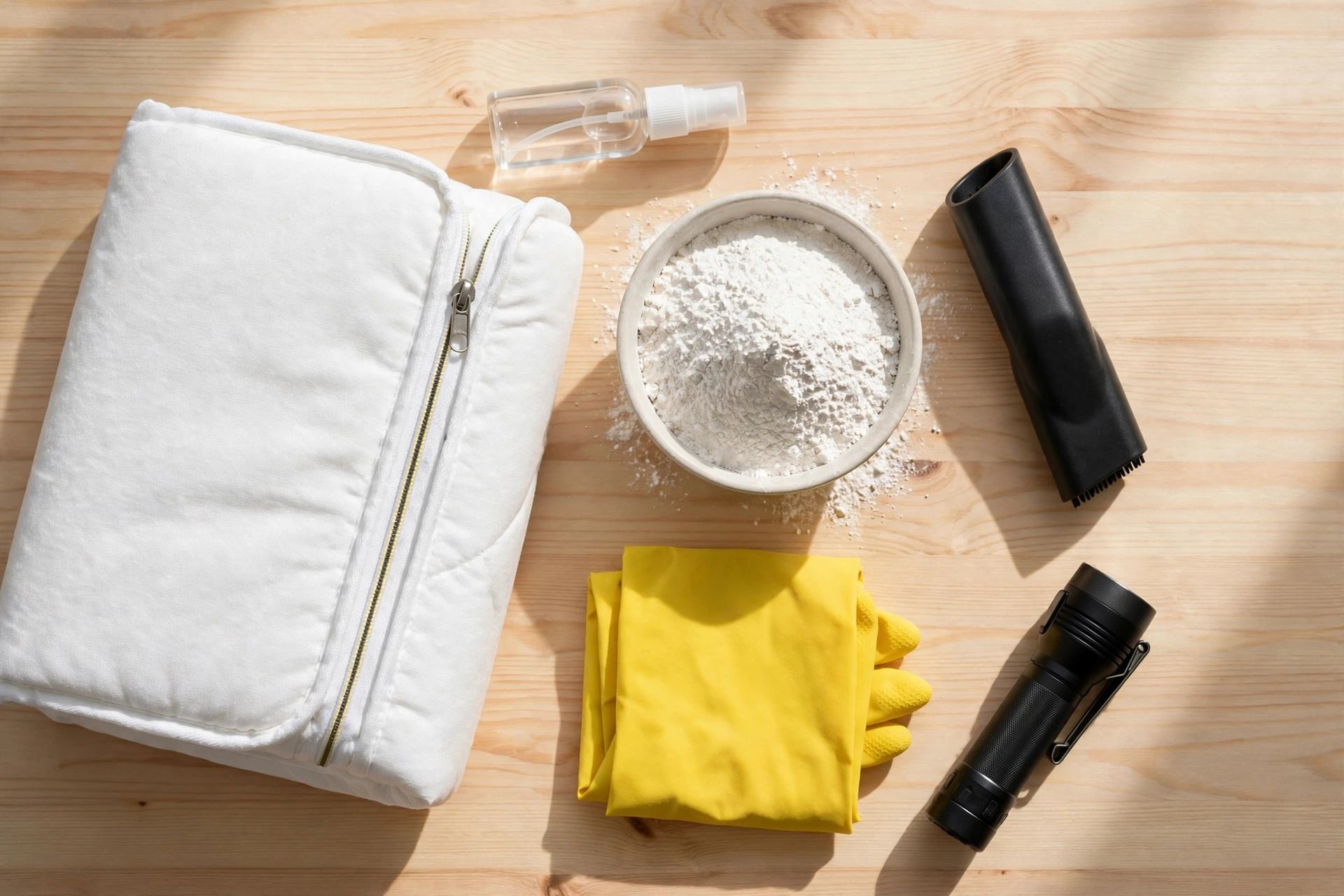
Of the low-cost treatments, diatomaceous earth for bed bugs is one of the most useful. It is a fine white powder made from fossilised algae, and it works by scratching the bug’s waxy outer coating so the insect slowly dries out and dies. Unlike chemical sprays, it does not rely on poison, so bed bugs cannot build up resistance to it.
Use food-grade diatomaceous earth only, never the pool-grade version. Wear a mask, and puff a very thin, barely visible layer into cracks, behind the headboard, along baseboards and under the bed frame. This kind of bed bug powder only works when it stays dry, so do not use it in damp areas, and do not pile it up, because bugs simply walk around thick piles. Leave it in place for at least a week, then vacuum it up and reapply the bed bug powder if needed.
6. Steam the Mattress and Furniture
A bed bug steam treatment is one of the fastest ways to kill bugs on contact. A steam cleaner that reaches 160°F or hotter kills adults, nymphs and eggs the moment the steam touches them, with no chemicals involved. Move the steamer slowly along the mattress seams, the box spring, the bed frame, the headboard and any upholstered furniture nearby, so the heat has time to soak in.
Steam only works where it reaches, so it will not clear bugs hiding deep inside walls or furniture. It is also important to let everything dry fully afterwards, because damp bedding invites mould. Used together with vacuuming and encasements, though, steam is a strong part of the routine.
7. Encase the Mattress and Box Spring
Once the mattress is clean, seal it inside a bed bug-proof encasement. These are zippered covers made from a fine fabric that bugs cannot bite through, climb through or escape from. Any bugs trapped inside the cover will die over time, and any new bugs cannot hide in the seams. The same applies to the box spring, which has just as many hiding places as the mattress.
Leave the encasements on for at least a year, because bed bugs can survive for months without feeding. Check the covers regularly for tears, and replace them if they split. This step is especially useful after treatment, because it takes away the bugs’ favourite hiding place for good.
8. Seal Cracks and Trap the Rest
Bed bugs travel through tiny gaps, so sealing their routes makes a real difference. Fill cracks in the bed frame, the headboard and the skirting boards with caulk, and move the bed a few centimetres away from the wall. Declutter the area around the bed too: piles of clothes, books and boxes give the bugs extra places to hide and make every other treatment harder.
Place bed bug interceptors under each bed leg. These are small cups that trap bugs trying to climb up to feed, and they also tell you whether the treatment is working: if the traps stay empty for several weeks, the infestation is probably under control. Keeping the kitchen and the rest of the home clean matters here as well. A clean, organised home gives pests fewer hiding spots, so it helps to keep your refrigerator clean and free of spills, and to clean your microwave regularly, because crumbs and clutter attract pests of all kinds.
9. Know When to Call a Professional
DIY methods work well for early infestations, but there are times when a professional is the sensible choice. Call an exterminator if you find bed bugs in several rooms, if you keep seeing them in daylight, or if your own treatments have not worked after a few weeks. Professionals can use whole-room heat treatment, raising the room to between 120 and 140°F with special equipment, which kills bugs and eggs in a single visit.
Before the visit, ask what preparation is needed and what the treatment covers, and get the price in writing. A professional visit costs more than DIY, but a heavy infestation that is left alone only gets more expensive to fix. After treatment, keep checking the mattress seams and the interceptors for a few weeks, so you catch any stragglers early.
How to Stop Bed Bugs Coming Back
Once the bugs are gone, a few habits keep them away. If you want to know how to get rid of bed bugs for good, prevention matters as much as treatment. Inspect second-hand furniture carefully before bringing it home, and wash holiday clothes on hot as soon as you return from a trip. Use a luggage rack in hotels instead of putting your suitcase on the bed, and check the mattress seams of the hotel bed when you arrive. Once you know what do bed bugs look like, that hotel check takes less than a minute. At home, wash bedding weekly on hot, vacuum the bedroom regularly, and keep the bed away from the wall. These small steps are the cheapest form of bed bug control there is.
Final Thoughts
Learning how to get rid of bed bugs takes patience more than money. Confirm the signs first, then work through the methods in order: hot washing, thorough vacuuming, a well-placed bed bug spray, diatomaceous earth for bed bugs, steam, encasements, and sealed cracks. Most early infestations clear up within a few weeks if you repeat the treatments and check the traps regularly. If the problem spreads or refuses to go away, a professional heat treatment is worth the cost. Start tonight, stay consistent, and your bedroom can be yours again.