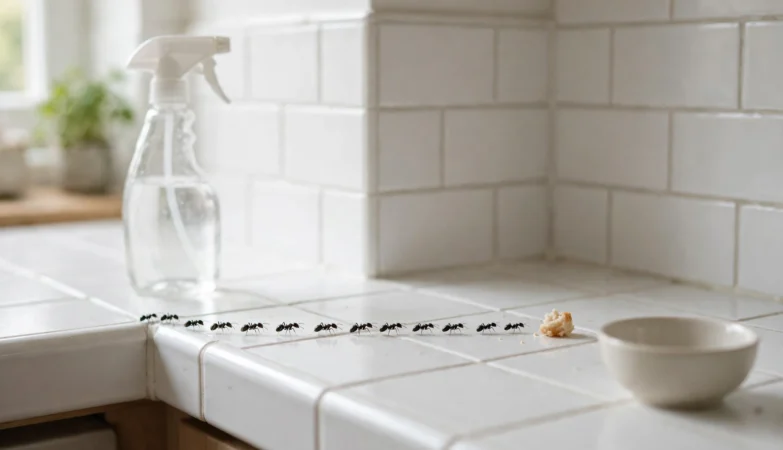
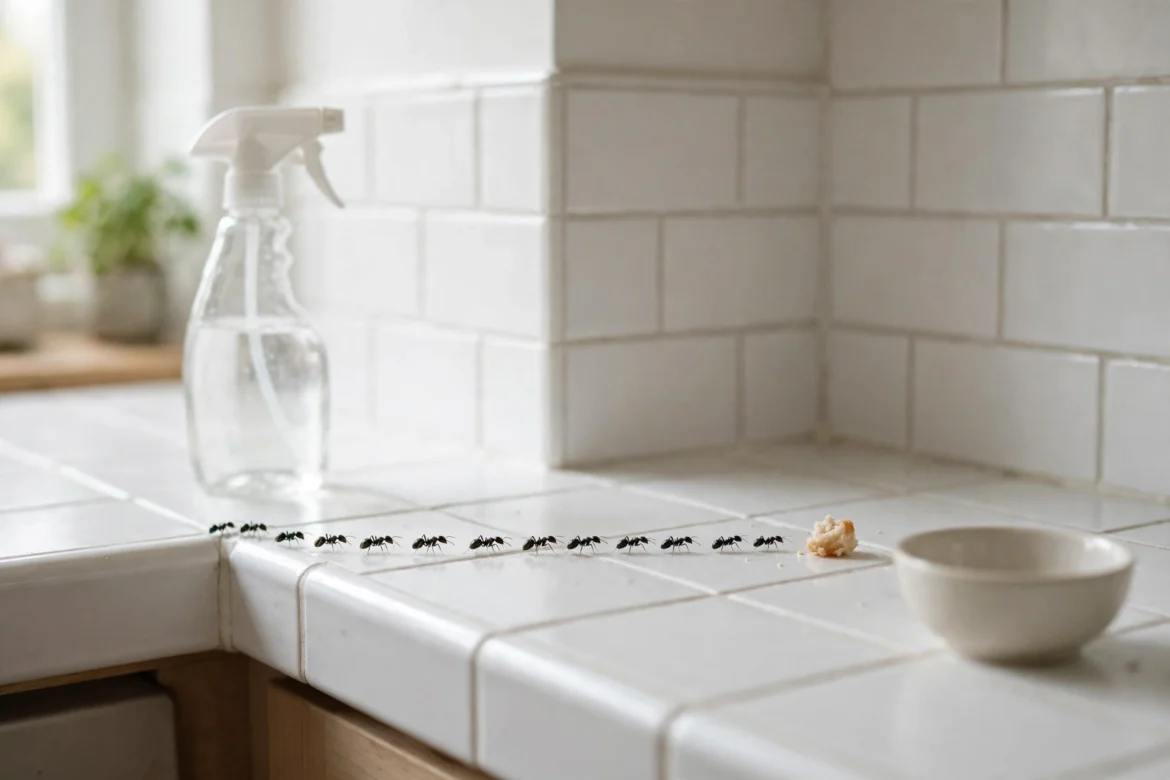
One ant on the kitchen counter is never just one ant. Where there is a single scout, a trail usually follows within hours, and before long the whole counter, the sugar jar and the pet bowl are part of the route. The good news is that learning how to get rid of ants in house does not need expensive sprays or a professional visit in most cases. A few kitchen staples, a little patience and the right order of steps will clear the trail and keep it away.
This guide covers nine simple methods that actually work, from a vinegar spray that wipes out scent trails to a borax bait that reaches the colony itself. Use them in order, starting with the quick fixes, and give the slower methods a few days to do their job.
Why Ants Come Inside Your House
Ants come indoors for the same three things every time: food, water and shelter. A single crumb under the toaster, a sticky honey jar, a leaking tap or a pet bowl left out overnight is enough to bring scouts inside. Once a scout finds food, it lays down a chemical scent trail on its way back to the nest, and hundreds of other ants follow that invisible path. That is why killing the ants you can see never solves the problem on its own. Any plan for how to get rid of ants in house has to deal with the trail and the colony behind it too.
Most house ants are either sugar ants, drawn to anything sweet, or grease ants, hunting for proteins and fats. Knowing which type you have matters, because the bait that works for one may be ignored by the other. If you are dealing with sugar ants, the fastest way to learn how to get rid of sugar ants in house is to match the bait to what they actually eat. Tiny trailing ants are the most common complaint, and the steps for how to get rid of small ants in house are the same as for larger ones, so do not worry about identifying the exact species before you start.
1. Vinegar Spray That Erases Ant Trails
Start here, because it is fast, cheap and safe around food. Mix equal parts white vinegar and water in a spray bottle. Spray the whole trail, from where the ants enter to where they are feeding, let it sit for a minute, then wipe the area clean. The vinegar smell disrupts the scent trail ants rely on, so the ants behind the first ones lose their way.
This is more of a confuse-and-repel tool than a colony killer, so use it as your first step and daily maintenance rather than your only method. Wipe the trail down properly instead of just spraying over it, because you need to remove the pheromone residue, not just mask it. Avoid using vinegar on natural stone surfaces such as marble or granite, because the acid can damage the stone.
2. Borax and Sugar Bait That Reaches the Colony
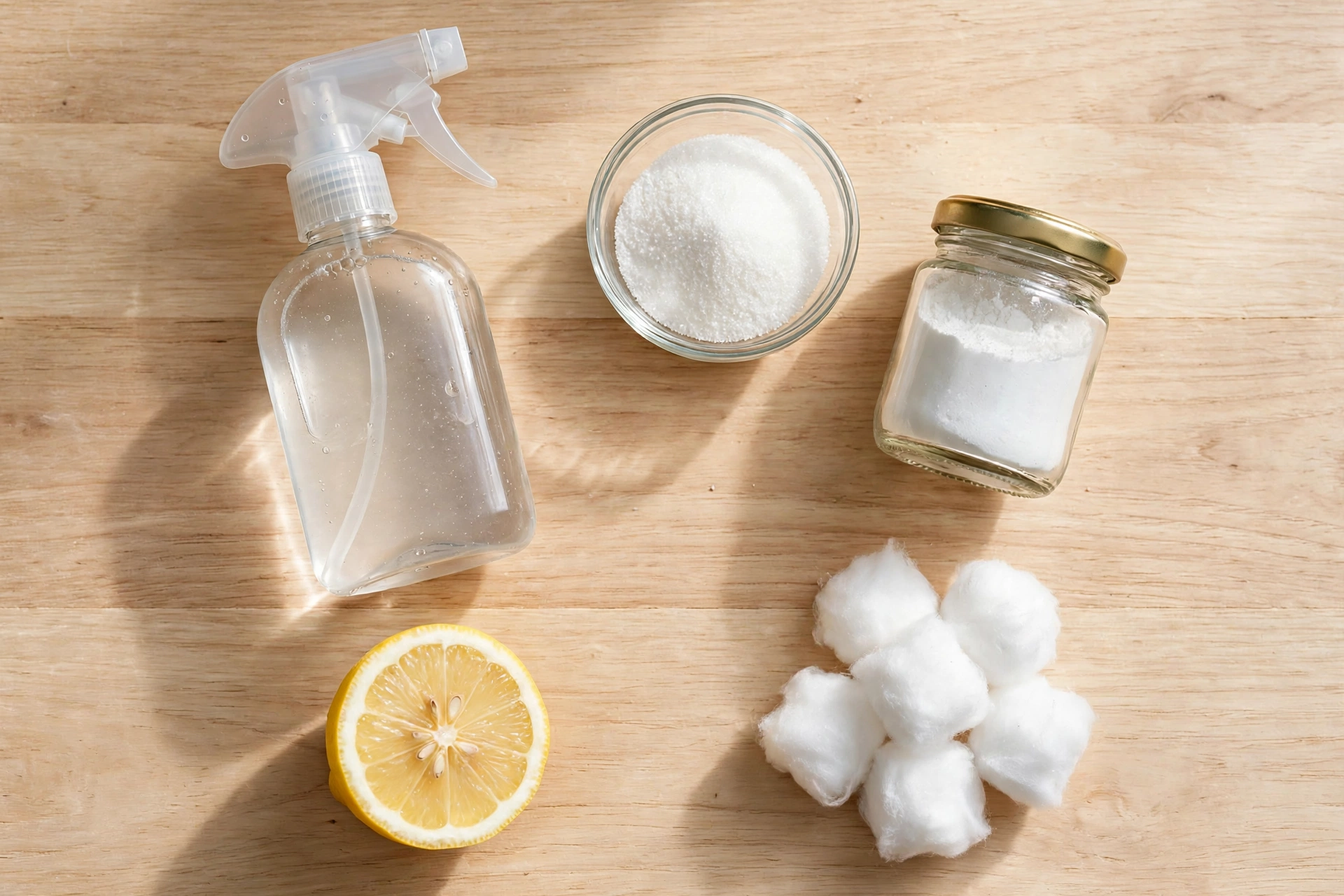
This is the method that actually eliminates the colony instead of just chasing ants away. Mix one part borax with three parts sugar, dissolved in a little warm water, and soak cotton balls in the mixture. Place them in shallow lids or small containers near the ant trail, where ants are active but away from children and pets. The ants eat the sweet bait and carry it back to the nest, where it slowly poisons the colony, including the queen.
Borax bait is not instant, and that is the point. Sugar ants love this mix, which is why borax and sugar is the classic answer to how to get rid of sugar ants in house. Give it several days and avoid killing every ant on the trail while they are feeding, because you need them alive to carry the bait home. Results usually show within three to seven days, and a stubborn colony can take a week or more. Borax is toxic if eaten, so placement out of reach of children and pets is non-negotiable.
3. Baking Soda and Powdered Sugar Bait
If you want a gentler option, mix equal parts baking soda and powdered sugar and place the mixture in a small lid or shallow container where you see ants. The sugar attracts them, and the baking soda does the rest once they eat it. This is one of the cheapest home remedies for ants, and it works best as a second bait alongside the borax method, not as a replacement for it. Refresh the mixture every couple of days and keep it dry.
4. Food-Grade Diatomaceous Earth
Food-grade diatomaceous earth is a fine powder made from fossilised algae. At a microscopic level it is abrasive, so it damages the outer shell of ants that crawl through it and dehydrates them over time. Dust a thin line along baseboards, under appliances and around entry points. It only affects the ants that come into contact with it, so it will not reach the nest, but it is excellent for persistent or recurring problems around doors and windows. Keep it dry, because it loses its effect when wet, and wear a mask while applying it so you do not breathe in the fine dust.
5. Soapy Water Spray for Ants You Can See
For the ants already on your counter, a simple soapy spray works on contact. Mix a quarter cup of liquid Castile soap with a quart of water in a spray bottle and spray directly on visible ants, then wipe the area clean. The soapy water breaks down the ants’ outer coating and kills them quickly. It will not stop the colony, so treat it as a clean-up step to use alongside a bait, not as a solution on its own.
6. Peppermint Oil as a Natural Deterrent
Ants dislike strong scents, and peppermint oil is one of the most reliable. Add ten to fifteen drops of peppermint oil to a spray bottle of water with a little dish soap, and spray it along baseboards, windowsills, door frames and countertops. It works as a pleasant-smelling daily deterrent that keeps new trails from forming. Reapply every day or two, because the scent fades. You can also place cotton balls soaked in peppermint oil near entry points for a longer-lasting effect.
7. Seal the Entry Points
No bait will hold for long if new ants keep walking in through the same gaps. Follow the trail back to where it enters and seal small cracks, holes and gaps around windows, doors and pipes with caulk. Check the seal around the kitchen sink and where pipes come through the wall, because these are the most common entry points. Sealing gaps also helps against other kitchen pests, so if you have seen more than ants, read our guide on how to get rid of cockroaches at home for a similar room-by-room approach.
8. How to Get Rid of Ants in Kitchen and Stop Them Returning
The kitchen is where most ant problems start, so this is where prevention matters most. If you cook daily, learning how to get rid of ants in kitchen spaces starts with the bin and the sink, not the spray bottle. Store sugar, honey, jam and cereals in sealed containers, wipe counters and the hob every evening, sweep up crumbs daily, and never leave dirty dishes in the sink overnight. Take the rubbish out regularly and clean the bin itself, because the smell draws scouts even when the bin looks empty. The same steps work when you need to know how to get rid of ants in bedroom spaces too: keep snacks out of bedrooms, empty the bin, and check wardrobes and drawers for forgotten food. Vacuuming soft furnishings matters as well, because crumbs hide in fabric; our guide on how to clean carpet at home explains how to lift crumbs and spills from fibres that a broom misses.
9. Commercial Bait Stations
If homemade baits are not working after a week, try commercial bait gels or stations placed where ants are crawling. These use the same idea as the borax bait: a slow-acting poison mixed with food that ants carry back to the nest. Place them along trails and near entry points, and do not spray insecticide on the same trail, because killing the foragers stops them carrying the bait home. Change the bait if ants stop feeding on it, and give it several days before deciding it has failed.
How to Get Rid of Ants Permanently
The only way to learn how to get rid of ants permanently is to kill the colony, not just the ants you see. Sprays and wipes handle the visible trail, baits handle the nest, and sealing and cleaning stop the next colony moving in. Bedrooms need the same treatment: if you ever need to know how to get rid of ants in bedroom corners, the bait-and-seal routine works there exactly as it does in the kitchen. Put all three together and the problem usually ends within one to two weeks. Like bed bugs, ants follow warmth and food, so if pests keep returning to the same rooms, our guide on how to get rid of bed bugs covers a similar room-by-room approach that works for stubborn infestations. If the trail keeps coming back after two weeks of baiting, or if you are seeing large black carpenter ants that may be nesting in wood, call a pest professional, because the colony may be inside the structure of the house.
Frequently Asked Questions
How long does it take to get rid of ants in house?
Most home methods show results in three to seven days. When people ask how long it takes to learn how to get rid of ants in house, the honest answer is three to seven days for visible results, and up to two weeks for the colony to be fully gone. Sprays work on contact but do not remove the nest, so the full job takes longer than the first day suggests.
Are natural ant killers safe for pets and children?
Vinegar spray, soapy water and peppermint oil are generally safe when used as directed, but borax bait must be kept out of reach of pets and children. A common how to get rid of ants in house home remedy is a borax bait, and it should always be placed in a covered container or behind furniture where small hands and paws cannot reach it. Diatomaceous earth should be food-grade, and you should wear a mask while applying it.
Why do ants keep coming back after I spray them?
Spraying kills the ants you see but leaves the scent trail and the colony untouched. New foragers simply follow the same trail again. Wipe the trail with vinegar water, place a bait so the colony is dealt with, and seal the entry point to stop them returning.
Final Thoughts
Ants are stubborn, but they are also predictable. They follow food, they follow scent trails, and they carry bait home. Once you know how to get rid of ants in house, the routine is simple: wipe, bait, seal and clean. Most ant problems clear up within a week or two without a single can of insecticide, and the methods above cost almost nothing. Start with the vinegar spray today, put a borax bait out tonight, and give the colony a few days to finish the job for you.