Those chalky white marks on your shower door, taps and toilet bowl are hard water stains, and once you understand what causes them, they are far easier to remove. If you want to know how to remove hard water stains without buying expensive cleaners, the good news is that two cheap kitchen items — white vinegar and baking soda — handle most of them. In this guide, you will learn how to remove hard water stains from glass, toilets, faucets, sinks, tiles and bathtubs, step by step, using simple methods that actually work.
1. What Are Hard Water Stains?
Hard water stains are dried mineral deposits, mostly calcium and magnesium, left behind when hard water evaporates. Every drop of water that dries on a surface leaves a tiny amount of mineral behind, and over weeks and months those layers build up into the white, cloudy film you see on shower doors, taps and tiles. The stains are not dirt, so ordinary soap and water will not shift them. Because the deposits are alkaline, a mild acid such as white vinegar dissolves them, which is why vinegar is the hero of almost every method below. The sooner you tackle a stain, the easier it comes off — a mark left for years can etch into glass and become impossible to remove completely, so it pays to clean little and often.
2. The Vinegar Spray Method: The All-Rounder
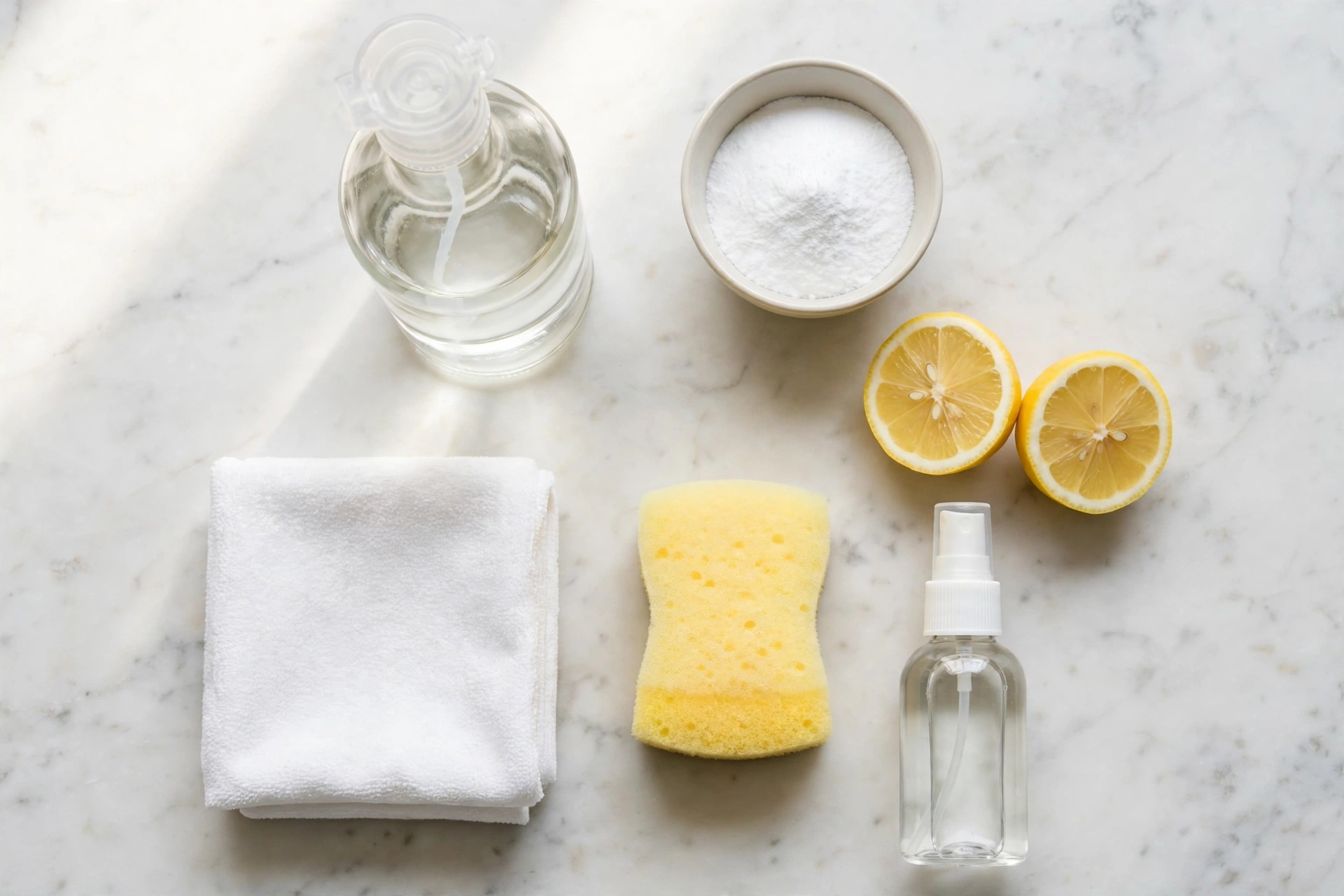
This is the first method to try on almost any surface, and it is also the simplest way to learn how to clean hard water stains at home. Mix equal parts white vinegar and warm water in a spray bottle. Spray the stained area generously, starting at the top so the solution runs down over the whole stain, and let it sit for 15 minutes. Do not let it dry — mist it again if it starts to. Then wipe with a microfiber cloth or a non-abrasive sponge, rinse with clean water and dry the surface. For light stains, one pass is usually enough. For heavier build-up, use undiluted vinegar warmed slightly, leave it for 30 minutes, and repeat. This one spray bottle covers glass, chrome, porcelain and ceramic tile, so keep it under the sink and reach for it first. If you want a fuller routine for the rest of the kitchen, the same gentle vinegar wipe is safe on stainless steel, which is why we use it on the fridge too — see our guide on how to clean a refrigerator for a step-by-step fridge clean.
3. How to Remove Hard Water Stains from Glass
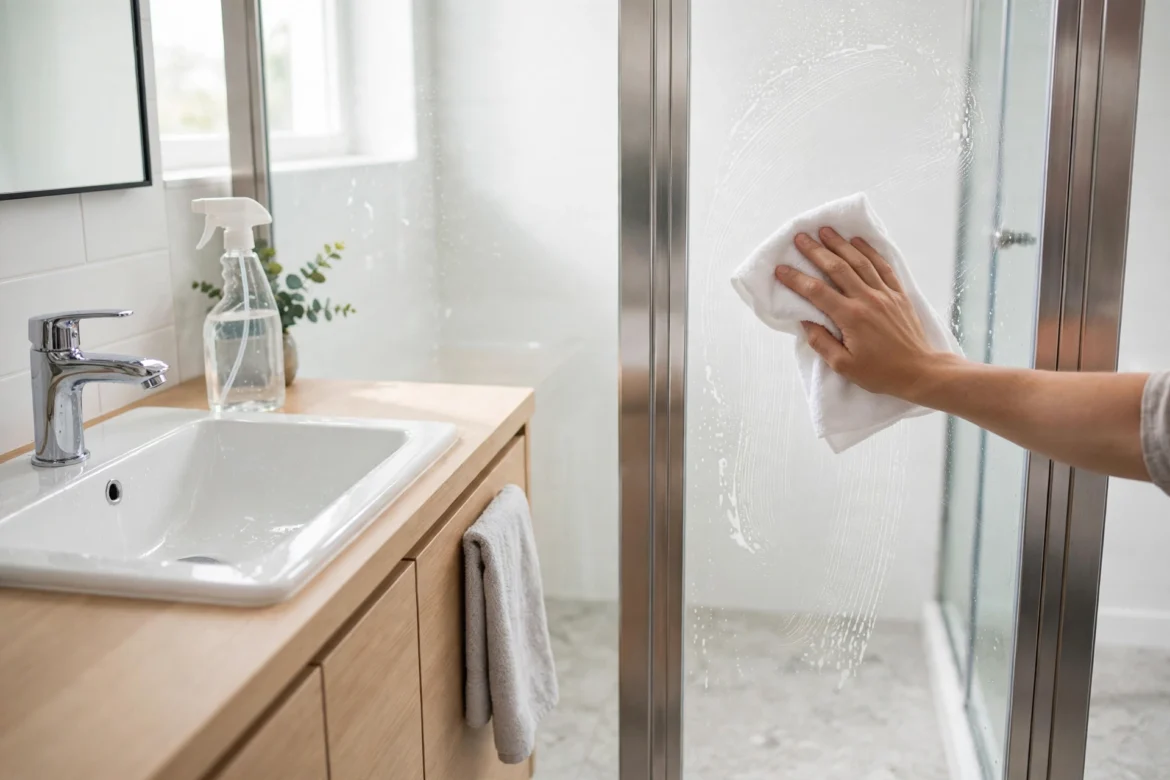
Glass shower doors and mirrors are magnets for hard water stains, and this is where most people first notice the problem. To learn how to remove hard water stains from glass, start with the vinegar spray above: coat the whole door, wait 15 to 30 minutes, and wipe with a microfiber cloth. For stubborn spots, sprinkle a little baking soda onto a damp sponge and rub gently in circles, then spray with vinegar again and rinse. Hard water stains on glass shower door panels are the most common complaint, because every shower leaves droplets that dry in place — hard water stains on glass shower door glass can even etch the surface if they sit for years, so do not leave them. Finish by drying the glass with a squeegee or a towel, and the door will look clear again. The same method works on windows above sinks and on drinking glasses: soak glassware in equal parts warm water and white vinegar for 30 minutes, then wash as normal.
4. How to Remove Hard Water Stains from the Toilet
The ring at the waterline of a toilet bowl is limescale that has had days to harden in standing water, which is why a brush alone never touches it. Here is how to remove hard water stains from toilet bowls in two steps. First, pour two cups of white vinegar into the bowl, brush it up over the ring and any stained areas above the waterline, and leave it for at least an hour — overnight is even better for a dark ring. Then sprinkle in a cup of baking soda, let the fizzing settle for ten minutes, scrub thoroughly with a toilet brush and flush. If a faint ring survives, that is where a second round helps: repeat the vinegar soak rather than reaching for a harsher chemical. For a ring that still will not move, a wet pumice stone made for bathroom cleaning is safe on glazed porcelain as long as both the stone and the bowl stay wet. Learning how to remove hard water stains from toilet bowls is mostly about patience — the acid needs time to dissolve the minerals, and rushing the soak is the most common mistake.
5. How to Remove Hard Water Stains from Faucets
Faucets and taps collect crusty white deposits around the base, the spout and the handles, where water pools and dries. The trick with how to remove hard water stains from faucet surfaces is to keep the vinegar in contact with the crust instead of letting it run off. Soak a paper towel or a rag in white vinegar and wrap it around the faucet base or spout, then leave it for 20 to 30 minutes. Unwrap it, wipe the softened deposits away with a cloth, and use an old toothbrush for the small gaps around the handles. Rinse and dry the tap, and polish with a dry microfiber cloth for a shine. The same wrap works on showerheads: fill a plastic bag with vinegar, tie it over the showerhead so the holes are submerged, leave it for an hour, then run the shower to flush it out. Never use a wire brush or steel wool on chrome, as it will scratch the finish permanently.
6. How to Remove Hard Water Stains from the Sink
Kitchen and bathroom sinks show hard water stains as dull white patches, especially around the drain and the taps. Here is how to remove hard water stains from sink surfaces without damage. For a stainless steel sink, spray the vinegar solution over the whole basin, wait 15 minutes, and wipe in the direction of the steel grain with a soft cloth. For a porcelain or ceramic sink, the same spray works, and a baking soda paste — three parts baking soda to one part water — rubbed gently in circles will lift any marks the vinegar leaves behind. Rinse well and dry the sink, because letting it air-dry is exactly what caused the stains in the first place. If your sink is granite or another natural stone, skip the vinegar entirely and use only the baking soda paste, as acid can etch stone. The best way to learn how to remove hard water stains from sink basins is to test the gentlest method first and only move up to stronger ones if the stain survives.
7. How to Remove Hard Water Stains from Tiles and Grout
Bathroom tiles and grout lines dull quickly when minerals settle into them, and grout is porous, so it holds onto stains. To see how to remove hard water stains from tiles, spray a half-and-half vinegar and water solution over the tiles, let it sit for 10 to 15 minutes, then wipe clean with a towel and finish with glass cleaner for a shine. Where soap scum has mixed with the minerals, sprinkle baking soda onto a damp sponge, scrub, and follow with the vinegar spray. For grout, make a thick paste of baking soda and water — about three parts baking soda to one part water — spread it along the grout lines, leave it for 15 minutes and scrub with a stiff brush. Rinse and dry the tiles. This is also the method to use on shower walls, where the same mineral film builds up between cleanings. If you are giving the whole bathroom a deep clean, a regular routine keeps the rest of the house fresh too — from the bathroom to the living room, where our guide on how to clean carpet at home covers the soft furnishings.
8. How to Remove Hard Water Stains from the Bathtub
Bathtubs collect a ring of mineral scale at the waterline and a general haze across the bottom, especially in homes with very hard water. The method for how to remove hard water stains from bathtub surfaces depends on the material. For enamel, acrylic and fibreglass tubs, spray the vinegar solution generously, leave it for 20 minutes, and scrub with a non-abrasive sponge. For a stubborn ring, lay vinegar-soaked paper towels along the waterline for half an hour, then scrub with baking soda paste. Rinse thoroughly and dry. Do not use abrasive scouring powders or pads on an acrylic or fibreglass tub, as they leave scratches that trap dirt and make future stains worse. If your tub is natural stone, use only the baking soda paste and a stone-safe cleaner, never vinegar. Knowing how to remove hard water stains from bathtub enamel safely is worth the care — a scratched tub is much harder to keep clean than a smooth one.
9. Baking Soda Paste and Lemon for Stubborn and Light Stains
When vinegar alone is not enough, a baking soda paste adds gentle scrubbing power without scratching most surfaces. Mix three tablespoons of baking soda with one tablespoon of water until it has a toothpaste-like consistency, spread it on the stain, leave it for 15 to 20 minutes, scrub gently and rinse. Use it after the vinegar spray, not instead of it — the acid loosens the minerals first, and the paste then lifts what is left. For light stains on glassware and taps, lemon works too: cut a lemon in half, rub the cut side over the stain, leave it for ten minutes and rinse. The citric acid in lemon juice dissolves mineral deposits in the same way vinegar does, and it leaves a fresh smell behind. Together, vinegar, baking soda and lemon cover almost every stain in the house, which is why this guide needs no expensive specialist cleaner. The same descaling idea works inside small appliances as well — vinegar loosens scale in kettles and coffee makers, and the gentle approach suits a microwave too, as our guide on how to clean a microwave oven shows.
What Not to Do
A few mistakes make hard water stains worse, so avoid them. Never mix vinegar with bleach or with any bleach-based cleaner — the combination releases toxic chlorine gas. Never use vinegar or lemon on marble, granite, travertine or other natural stone, because acid etches the surface and the damage cannot be wiped away. Avoid abrasive powders, steel wool and wire brushes on glass, chrome and acrylic, since scratches trap minerals and make the next stain harder to remove. Do not expect bleach to help: bleach whitens stains but does nothing to dissolve minerals, so the mark comes straight back. And do not let the vinegar solution dry on the surface — if it dries, it leaves its own faint residue, so mist it again or rinse it off while it is still wet.
How to Prevent Hard Water Stains
Removing stains is satisfying, but stopping them is easier. Keep a squeegee in the shower and wipe the glass and tiles after every shower — it takes thirty seconds and stops droplets drying into minerals. Wipe taps and sinks dry with a towel after use instead of letting them air-dry. Fix dripping taps quickly, because a slow drip leaves a constant trail of minerals in one spot. In the kitchen, dry glasses straight after washing instead of leaving them on the rack. For a long-term fix, a water softener removes the calcium and magnesium before the water reaches your fixtures, which is the only method that stops stains at the source. Until then, a quick weekly wipe with the vinegar spray keeps every surface clear with very little effort.
Frequently Asked Questions
What causes hard water stains?
Hard water stains are dried calcium and magnesium deposits. When hard water evaporates from a surface, the minerals stay behind as a white, chalky film. The harder your water, the faster the stains build up.
Can vinegar damage my taps or shower door?
No, white vinegar is safe on glass, chrome, porcelain and ceramic tile when used as described. The one exception is natural stone such as marble and granite, where acid can etch the surface — use a baking soda paste there instead.
How long should I leave vinegar on a hard water stain?
For light stains, 10 to 15 minutes is enough. For heavy build-up on glass or in a toilet bowl, leave it for 30 minutes to an hour, or overnight for a dark toilet ring. Do not let it dry on the surface.
Do hard water stains come back after cleaning?
Yes, unless the water itself is softened. Every fresh drop of hard water leaves new minerals behind, so regular wiping and a weekly vinegar spray are the best way to keep surfaces clear.
Conclusion
Learning how to remove hard water stains comes down to one simple idea: a mild acid dissolves the minerals, and a little patience lets it work. White vinegar, baking soda and lemon handle glass, toilets, faucets, sinks, tiles and bathtubs without expensive cleaners, and once you know how to clean hard water stains with vinegar and baking soda, the weekly routine takes only a few minutes. Start with the gentlest method, give the vinegar time to work, and keep natural stone away from acids. Do that, and your bathroom and kitchen will stay clear and bright with very little effort.