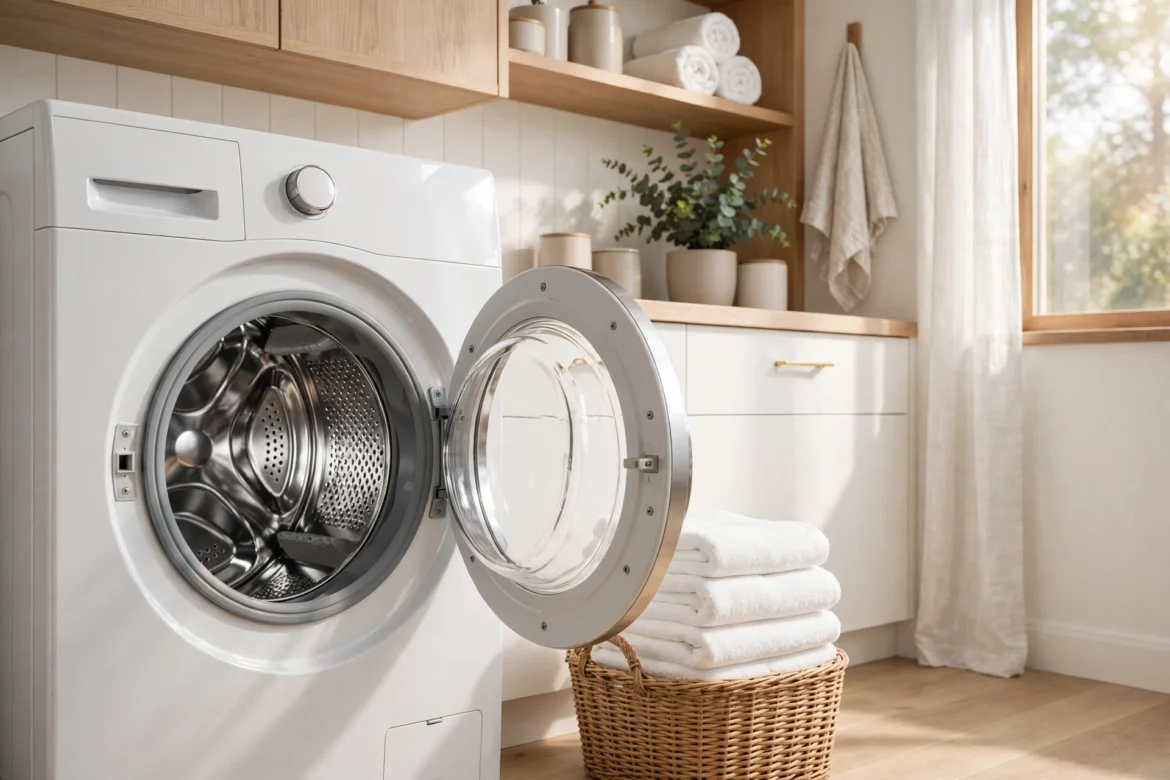
Your washing machine cleans your clothes every week, but who cleans the washing machine? Detergent residue, fabric softener, hard-water minerals and damp lint build up inside the drum, the drawer and the seals, and before long your laundry comes out smelling musty instead of fresh. Learning how to clean a washing machine properly takes less than an hour, and it keeps your clothes cleaner, your machine running better and your laundry room smelling fresh. This guide covers the full job, from the drum and the door seal to the dispenser drawer and the drain filter, with separate steps for top loaders and front loaders.
What You Will Need
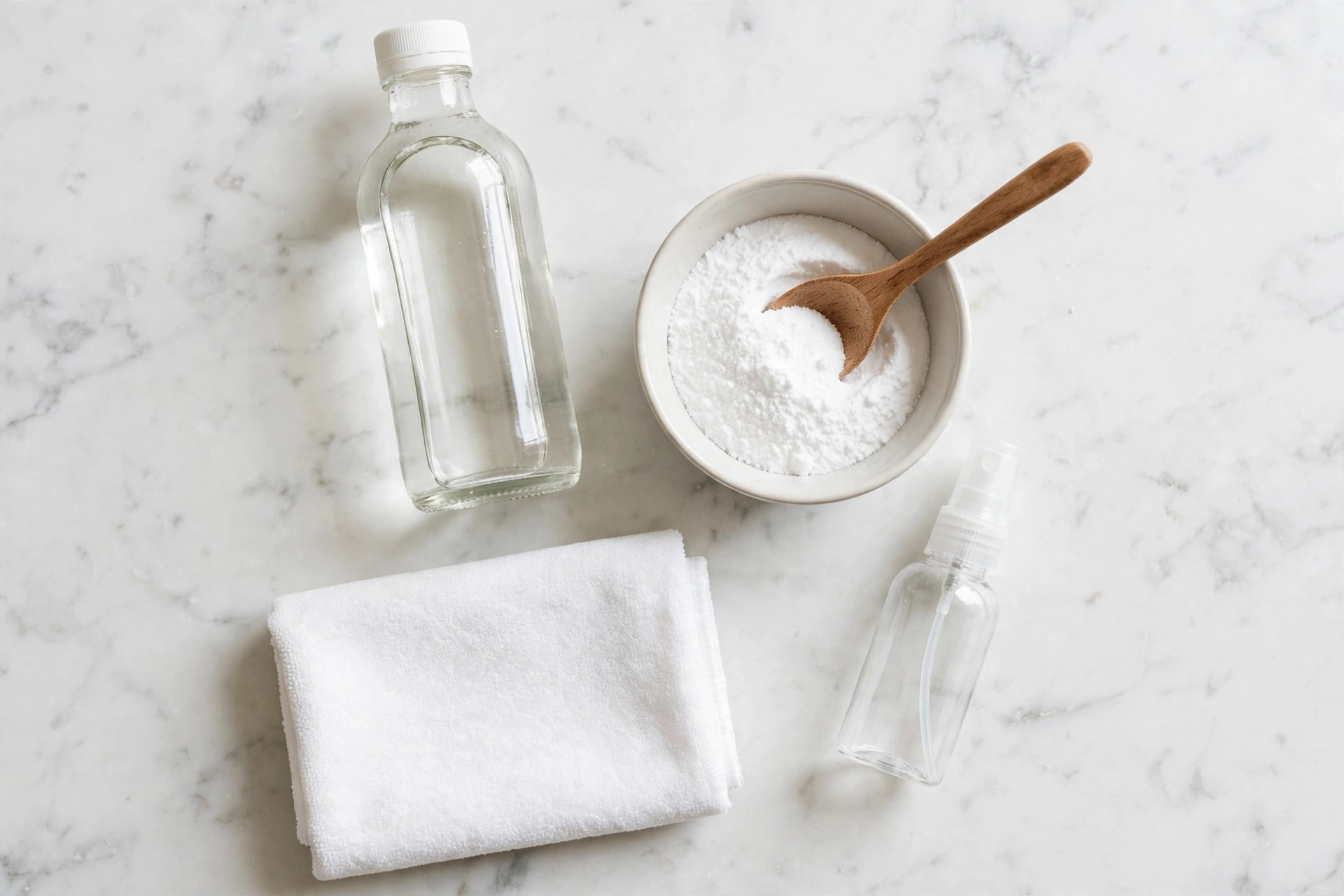
You do not need expensive products for this job. In fact, plain household items do most of the work. Gather distilled white vinegar, baking soda, two or three microfibre cloths, an old toothbrush or small brush, a spray bottle, warm water and a little mild dish soap. Keep a towel and a shallow tray or bowl nearby for the drain filter, and wear gloves if you like. If you prefer a shop-bought option, a washing machine cleaner tablet or powder works too, and we cover that in method 7. With these supplies in hand, you are ready to learn how to clean a washing machine at home.
1. How to Clean Top Load Washing Machine
Start with the machine empty — no clothes, no detergent. Set your top loader to its hottest water temperature, largest load size and longest wash setting, and let the tub start filling. As the water runs in, add four cups of white vinegar. Close the lid and let the machine agitate for a few minutes so the vinegar mixes through the water, then pause the cycle by lifting the lid. Let the hot vinegar water sit in the tub for at least an hour. This soak is what loosens soap scum, detergent residue and mineral deposits from the drum and the hoses.
After the soak, close the lid and let the cycle finish. Then add one cup of baking soda directly to the tub and run a second hot, long cycle. The baking soda neutralises the vinegar smell and scrubs away the grime the vinegar loosened. When the second cycle ends, wipe the rim, the agitator and the inside of the lid with a damp cloth. If your machine has a dedicated Tub Clean cycle, use that instead — it is designed for exactly this job. This method shows how to clean top load washing machine models properly, and for most households it is enough on its own.
2. How to Clean Front Load Washing Machine
Front loaders need one extra step first, because the rubber ring around the door — the gasket — traps water, hair and detergent, and it is where smells and mould usually start. Gently pull the gasket back and spray it with a solution of equal parts water and white vinegar. Leave it for a minute, then wipe away the grime with a damp microfibre cloth. For stubborn spots, work them with an old toothbrush. Do not scrub the rubber hard, and do not use undiluted vinegar on the seal every time — strong vinegar used too often can dry the rubber out.
Next, sprinkle half a cup of baking soda directly into the drum and pour two cups of white vinegar into the detergent dispenser. Close the door and run the machine on its longest, hottest setting, or on the Tub Clean cycle if yours has one. When the cycle finishes, run one extra rinse cycle to wash away any residue, then wipe the door glass and the inside of the drum with a clean cloth. Leave the door ajar for a few hours so the drum dries fully. That is the whole method for how to clean front load washing machine models, and it works because the hot water and the two cleaners reach every surface the laundry touches.
3. Clean the Detergent Dispenser Drawer
The dispenser drawer is easy to forget, but it collects a sticky film of detergent and softener, and black mould often grows in its corners. Pull the drawer out as far as it goes — most models have a small release tab to press — and soak it in a basin of warm, soapy water for 15 to 20 minutes. Scrub it with an old toothbrush, paying attention to the corners and the softener compartment, then rinse and dry it fully.
While the drawer soaks, spray the empty drawer cavity with your vinegar-and-water solution and wipe it out with a cloth. If you find mould, a cloth dampened with white vinegar will take care of it. Slide the drawer back only when it is completely dry, because a damp drawer is where the smell starts again.
4. Clean the Drain Pump Filter
A blocked drain pump filter is one of the most common causes of a smelly, slow-draining machine, and most people never touch it. The filter usually sits behind a small flap at the bottom front of the machine — check your manual if you cannot find it. Put a towel on the floor and a shallow tray under the flap, then unscrew the filter cap slowly. Water will drain out, so go gently and let the tray catch it.
Pull the filter out and pick off the lint, hair, coins and buttons trapped in it. Rinse it under the tap, wipe out the housing with a cloth, then screw the filter back in firmly. Do this every two to three months, or sooner if the machine drains slowly or smells even after a cleaning cycle. A clean filter also helps the machine spin properly, so it is worth the five minutes.
5. How to Clean Washing Machine Drum by Hand
The hot cycles do most of the work, but a quick hand-clean finishes the job properly. After the machine has run its cleaning cycles and cooled down, wipe the inside of the drum with a cloth dampened with your vinegar-and-water solution. Learning how to clean washing machine drum surfaces by hand matters most at the top rim and around the small holes, where residue collects and the water does not reach as well.
For a stubborn patch, make a paste of baking soda and a little water, spread it on the spot, leave it for 10 to 15 minutes, then scrub gently with a soft brush and wipe clean. Run a short rinse cycle afterwards to wash away any paste. Never use steel wool or a scouring pad inside the drum — they scratch the stainless steel, and scratched steel collects grime faster than a smooth surface does.
6. How to Remove Smell from Washing Machine
A washing machine smell is almost always bacteria or mould feeding on residue in a damp, warm, dark place — usually the seal, the drawer or the filter. The hot vinegar and baking soda cycles in methods 1 and 2 remove most of it, because baking soda absorbs odours instead of covering them up. If the smell survives one cleaning cycle, run a second empty hot cycle with two cups of vinegar in the dispenser, and clean the filter and drawer again before you blame the drum.
The habit that prevents the smell coming back is simple: leave the door or lid open between washes so the drum dries out. A sealed, damp machine is a perfect home for mildew. Baking soda is the same odour absorber we use to freshen a whole room, so if your laundry area smells stale, read our guide on how to clean carpet at home — the same sprinkle-and-vacuum trick works on carpets too.
7. Use a Washing Machine Cleaner
If you would rather not measure vinegar and baking soda, a shop-bought washing machine cleaner is a convenient alternative. These come as tablets, powders or liquids, and you use them in an empty machine on the hottest cycle, following the instructions on the packet. A good washing machine cleaner dissolves limescale and detergent build-up, and it is a sensible choice for a twice-yearly reset or for a machine with a strong, stubborn smell.
It does the same job as the vinegar method, but it costs more per clean, so most people use the homemade method month to month and keep the shop-bought cleaner for the occasional thorough clean. Check your manual first: some manufacturers recommend specific products and warn against others, especially for machines with a steam function or a self-cleaning cycle.
8. Wipe the Outside, Lid and Door Seal
The outside of the machine deserves a wipe too, because dust, detergent drips and laundry-room dampness leave a film on it. Wipe the top, sides and control panel with a damp cloth and a little mild dish soap, then dry with a clean cloth so no streaks are left. Clean around the lid or door hinges, where lint collects, and wipe the glass door of a front loader inside and out.
For front loaders, give the rubber seal one more wipe with a dry cloth after every wash, and leave the detergent drawer pulled out slightly between washes so air can circulate. These two tiny habits take seconds, and they stop the damp corners where mould starts.
9. Keep It Fresh Between Cleans
A clean machine stays clean if you build a few small habits around it. Leave the door or lid open after every wash. Use the right amount of detergent — too much does not clean better, it leaves residue that feeds smells. Run a hot wash now and then instead of always washing cold, and wipe the seal once a week. A clean machine also means cleaner clothes, and for marks that survive the wash, see our guide on how to remove stains from clothes.
So, how often to clean washing machine interiors properly? A full clean every one to three months suits most homes. Front loaders need it monthly, because the seal traps moisture and mildew grows fast. Top loaders can usually go every three to six months. Clean sooner if you wash heavily soiled loads, use a lot of fabric softener, or notice a smell. Smells travel between appliances as well — a fridge full of leftovers can make a whole kitchen smell stale — so it pays to know how to clean refrigerator interiors too.
Mistakes to Avoid
Knowing how to clean a washing machine also means knowing what to avoid. Never mix vinegar and bleach. Together they create toxic chlorine gas, so if you ever use bleach, run a full rinse cycle before any vinegar touches the machine. Do not pour undiluted vinegar onto the rubber seal again and again, because it can dry the rubber out over time. Do not use steel wool or abrasive pads on the drum, and do not leave wet clothes sitting in the machine for hours — that is how the musty smell starts. Finally, do not overload the machine: an overloaded drum does not clean the clothes properly, and it leaves more residue behind.
Frequently Asked Questions
How often should I clean my washing machine?
A full clean every one to three months is right for most homes — monthly for front loaders, every three to six months for top loaders. Clean sooner if you notice a smell, if the machine drains slowly, or if you wash a lot of heavily soiled laundry.
Can I use bleach to clean my washing machine?
Yes. Add three-quarters of a cup of liquid bleach to the drum of a top loader, or to the bleach dispenser of a front loader, and run the empty machine on its hottest cycle. Bleach is better than vinegar for mould. Never mix bleach with vinegar, and check your manual first, because some manufacturers advise against bleach.
Why does my washing machine still smell after cleaning?
The smell usually lives somewhere the cleaning cycle did not reach — the drain filter, the dispenser drawer or the folds of the door seal. Clean all three by hand, run a second hot empty cycle, and leave the door open between washes so the drum dries. If the smell persists, check the drain hose for a blockage.
Is vinegar safe for my washing machine?
Yes, in the amounts used here — two to four cups of white vinegar in a full hot cycle. It dissolves limescale and detergent residue and it deodorises. Avoid pouring undiluted vinegar directly onto rubber seals too often, and follow your manual if it gives specific cleaning advice for your model.
Conclusion
Now you know how to clean a washing machine from the drum to the drain filter, using nothing more than vinegar, baking soda and a little time. Start with the hot cycle for your machine type, then work through the drawer, the filter and the seal, and finish with the small habits that keep it fresh. A clean machine washes better, smells better and lasts longer — put a reminder in your calendar for the next clean in a month, and your laundry will thank you for it.