
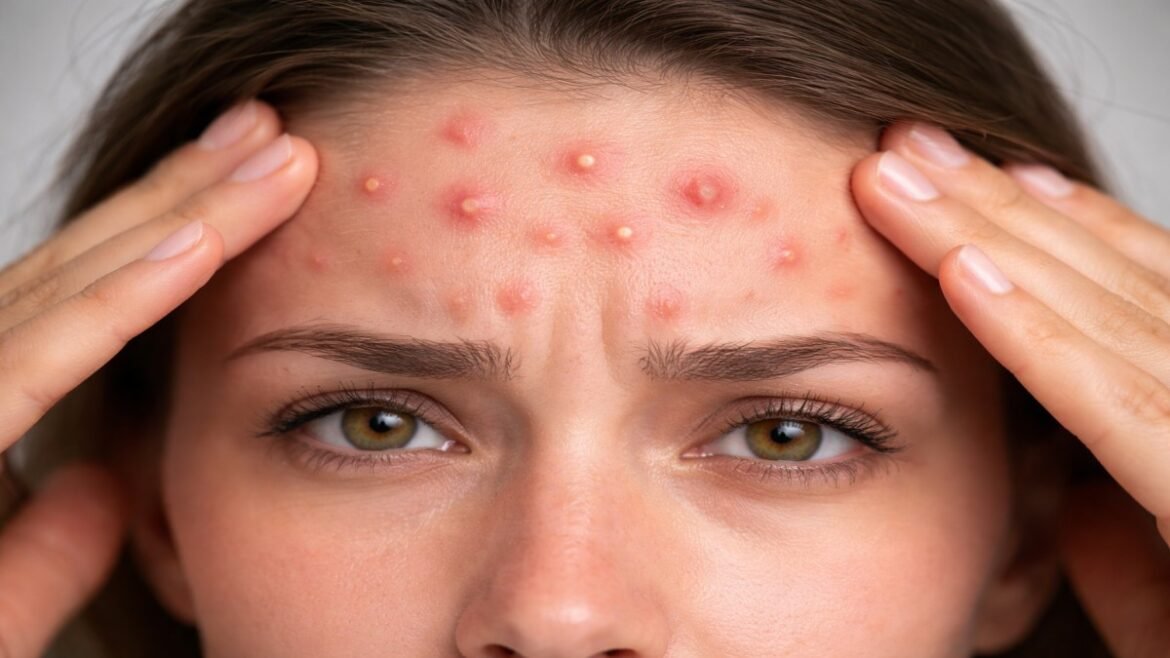
Understanding Forehead Pimples
Forehead pimples are a common skin concern that affects people of all ages, especially teenagers and young adults. These small bumps appear when pores become clogged with oil, dead skin cells, and bacteria. Because the forehead lies in the T-zone of the face, which naturally produces more oil, it is one of the most common areas where acne develops.
Common Causes of Pimples on Forehead
Several factors contribute to the development of pimples on the forehead. One of the most common causes is excess oil production. The sebaceous glands in the skin produce oil, also called sebum, to keep the skin hydrated. However, when these glands produce too much oil, it can mix with dead skin cells and clog pores, creating an ideal environment for acne.
Types of Forehead Acne
Not all forehead pimples look the same. Acne can appear in several different forms depending on the severity of the clogged pores and inflammation. Understanding the type of acne you have can help you choose the right treatment.
Whiteheads occur when pores are clogged but remain closed. They appear as small white bumps on the skin surface. Blackheads, on the other hand, occur when clogged pores remain open and the trapped oil oxidizes, turning dark.
More inflamed types of acne include papules and pustules. Papules are small red bumps that may feel tender, while pustules are similar but contain pus at the top. These pimples are usually caused by bacteria and inflammation within the pore.
Effective Treatments for Forehead Pimples
Treating forehead pimples requires a consistent skincare routine and the right products. Many over-the-counter acne treatments contain ingredients that help unclog pores and reduce bacteria.
Common ingredients used in acne treatments include salicylic acid, benzoyl peroxide, and retinoids. Salicylic acid helps remove dead skin cells and clear clogged pores, while benzoyl peroxide kills acne-causing bacteria. Retinoids encourage faster skin cell turnover, which helps prevent pores from becoming blocked.
Natural remedies may also help reduce mild acne. Some people use tea tree oil, aloe vera, or honey because of their antibacterial and soothing properties. These ingredients may help calm inflammation and reduce redness.
Keeping the skin clean is also essential. Washing the face twice a day with a gentle cleanser can remove excess oil, dirt, and sweat. However, over-washing can irritate the skin and make acne worse, so balance is important.
Lifestyle Changes to Prevent Pimples
Healthy lifestyle habits can make a significant difference in preventing forehead pimples. Diet, hygiene, and stress management all play a role in maintaining healthy skin.
A balanced diet that includes fruits, vegetables, whole grains, and plenty of water supports overall skin health. Foods high in sugar and processed ingredients may increase inflammation and worsen acne for some people.
Proper hygiene is also essential. Washing pillowcases regularly, avoiding touching the face, and keeping hair clean can reduce the chances of clogged pores. If you frequently wear hats or headbands, make sure they are clean to prevent bacteria buildup.
Managing stress is another important factor. Stress hormones can increase oil production in the skin, which may trigger breakouts. Activities such as exercise, meditation, or getting enough sleep can help reduce stress levels and support healthier skin.
Conclusion
Pimples on the forehead are a common skin issue caused by factors such as excess oil, hormonal changes, hair products, sweat, and clogged pores. While these breakouts can be frustrating, they are usually manageable with proper skincare and healthy lifestyle habits.
Using suitable skincare products, maintaining good hygiene, and understanding the triggers that cause breakouts can help keep the skin clear. With consistent care and patience, it is possible to reduce forehead acne and achieve healthier, more confident skin.
FAQs
1. Why do I keep getting pimples on my forehead?
Frequent forehead pimples are usually caused by excess oil, hormonal changes, sweat, hair products, or clogged pores.
2. How can I remove forehead pimples quickly?
Using products containing salicylic acid or benzoyl peroxide and maintaining a consistent skincare routine can help reduce pimples faster.
3. Can hair cause pimples on the forehead?
Yes. Oils, gels, and hair sprays can clog pores when they come into contact with the skin, leading to breakouts.
4. Do forehead pimples mean poor hygiene?
Not always. While hygiene plays a role, hormones, stress, diet, and genetics can also contribute to acne.
5. When should I see a dermatologist?
If acne is severe, painful, or leaving scars, it is best to consult a dermatologist for professional treatment.