
Your sofa is probably the hardest-working piece of furniture in your home. It holds family movie nights, afternoon naps, cups of tea and the occasional spilled snack, so it is no surprise that it starts to look dull and smell a little tired. The good news is that learning how to clean sofa at home is much easier than most people think. With a vacuum, a little baking soda and a few household supplies, you can bring a fabric or leather sofa back to life in under an hour, without hiring a professional cleaner.
In this guide, you will learn how to clean sofa at home step by step, whether yours is fabric or leather. We cover vacuuming, freshening, stain removal and odour control, plus the mistakes that can damage your sofa, so you can clean with confidence.
1. Check the Care Label Before You Start
Before you spray or scrub anything, find the care label on your sofa. It is usually hidden under a cushion or stitched along the base, and it carries a letter code that tells you exactly which cleaning method is safe for your fabric. Using the wrong cleaner can set a stain permanently or bleach the colour out, so this one-minute check matters more than any other step.
Here is what the codes mean. W means water-based cleaners are safe. S means solvent-only, dry-cleaning products, with no water at all. WS means both water-based and solvent-based cleaners are safe. X means vacuum only, with no liquids of any kind. If your sofa is coded S or X, skip the wet methods below and stick to vacuuming, brushing and a dry-cleaning solvent, or call a professional.
2. Vacuum the Whole Sofa, Including the Cushions
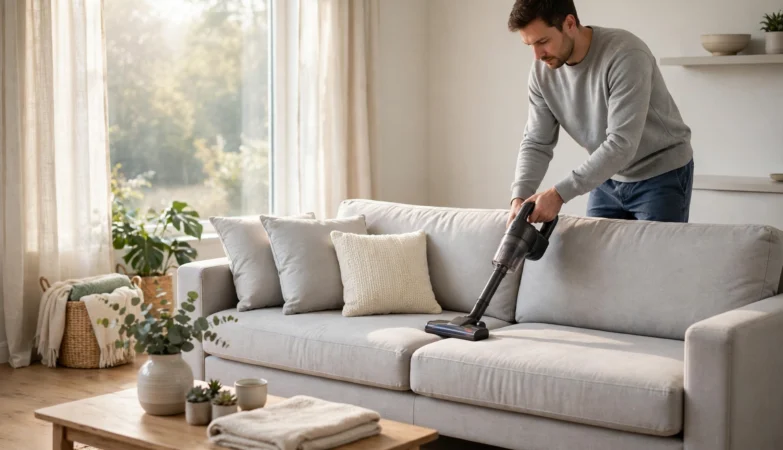
Every sofa clean should start with a thorough vacuum. Remove the cushions and vacuum the seat, back, arms and the base underneath, then vacuum both sides of each cushion. Use the upholstery attachment and a crevice tool for the seams and corners. Anyone learning how to clean couch cushions should pay special attention to these hidden spots, where crumbs, dust and pet hair collect. Learning how to clean couch cushions properly starts here, because dust and grit left in the fabric act like sandpaper and wear it out faster.
Give the cushions a good shake outside if you can, and brush the fabric lightly with a soft-bristle brush to lift flattened fibres. This dry step alone often makes a sofa look noticeably fresher, and it stops dirt turning into muddy streaks when you move on to wet cleaning.
3. Freshen the Fabric with Baking Soda
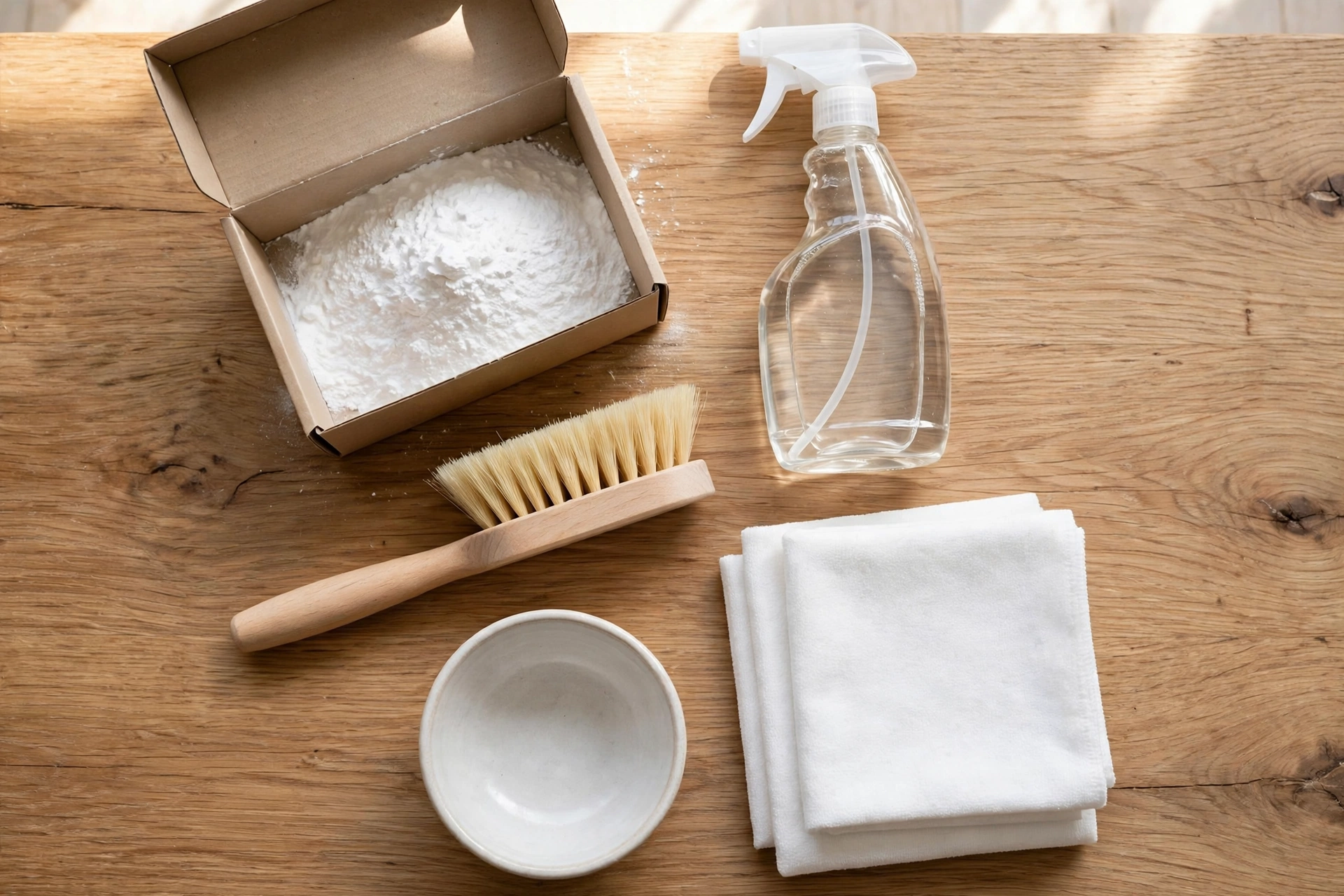
Baking soda is one of the simplest and cheapest ways to freshen a fabric sofa. Sprinkle a generous, even layer over the whole sofa and the cushions, brush it in lightly, and leave it for at least 30 minutes. For strong smells, such as cooking odours or pet smells, leave it for an hour or even overnight. Then vacuum it all away thoroughly.
Baking soda absorbs odours and surface oils without wetting the fabric, which makes it safe even for sofas you are nervous about cleaning. Do this once a month and your sofa will smell fresh between deeper cleans.
4. Wash a Fabric Sofa with a Mild Soap Solution
If your care label says W or WS, you can wash the fabric with a gentle homemade solution. Mix half a teaspoon of mild dish soap into one cup of warm water, and always spot-test it first on a hidden area, such as the back or underside of a cushion. Wait for the test spot to dry fully and check for any colour change before you continue.
To learn how to clean fabric sofa at home without leaving water marks, work in small sections. Dip a clean white cloth into the solution, wring it out well, and wipe the fabric in light, overlapping passes. Never soak the fabric or scrub hard, and rinse the cloth often. Let the sofa air-dry completely with a window open, and do not sit on it until it is fully dry. If you want to know how to clean fabric sofa at home on a regular basis, this gentle wash once every few months is enough for most households.
5. Remove Stains the Right Way
Stains are much easier to remove when you act fast, but the method matters more than the speed. Always blot a spill with a clean white cloth, working from the outside of the stain toward the centre, and never rub, because rubbing pushes the stain deeper into the fibres. The same blot-don’t-rub rule works on clothes too, as our guide on how to remove stains from clothes explains.
For everyday marks, a mix of one tablespoon of white vinegar, one teaspoon of dish soap and two cups of warm water works well on most W and WS fabrics. Dab it on with a cloth, let it sit for a few minutes, then blot with clean water. For grease, make a paste of baking soda and a little water, leave it for 15 minutes, then vacuum it off. If you need to know how to remove stains from sofa fabric after a coffee or wine spill, the vinegar solution above handles most of them, and repeating it once or twice is better than scrubbing once, hard. Remember that knowing how to remove stains from sofa cushions is mostly about patience: blot, treat, dry, and repeat.
6. Get Rid of Lingering Smells
A sofa can look clean and still smell stale, because fabric absorbs cooking smells, sweat and pet odours over time. If baking soda alone has not fixed it, the next step is a light mist of equal parts white vinegar and water, sprayed from about 30 cm away. Do not soak the fabric, just mist it, then let it air-dry with a window open. The vinegar smell disappears as it dries and takes the stale smell with it.
For pet smells, an enzyme cleaner made for upholstery works better than vinegar, because it breaks down the proteins that cause the odour. Sprinkle baking soda over the area first, leave it for an hour, vacuum, then apply the enzyme cleaner exactly as the label says. Anyone wondering how to remove smell from sofa cushions after a pet accident should know that the enzyme step is the one that actually solves the problem, rather than covering it up. And if you are still asking how to remove smell from sofa fabric in general, regular vacuuming plus a monthly baking soda treatment will keep most odours from building up in the first place.
7. Clean a Leather Sofa Gently
Leather needs a different approach from fabric, and the most common mistake is treating it like any other surface. Start by vacuuming with a soft brush attachment, then wipe it with a clean, dry microfibre cloth. For light grime on protected leather, a barely damp cloth with plain water is often enough, and you should always test any product on a hidden spot first.
To understand how to clean leather sofa at home safely, remember two rules: use only a pH-balanced leather cleaner, and never use vinegar, bleach, all-purpose sprays, baby wipes or a magic eraser, because they strip the protective finish and dry the leather out. Apply the cleaner to the cloth, not directly onto the sofa, and wipe in light, overlapping passes. After cleaning, condition the leather every 6 to 12 months with a leather-specific conditioner to keep it soft and stop it cracking. Knowing how to clean leather sofa at home is really about doing less, gently, and conditioning afterwards, rather than scrubbing it hard.
8. Deep Clean Once or Twice a Year
Even a well-kept sofa benefits from a proper deep clean once or twice a year. If your fabric is coded W or WS, a steam cleaner is a good option, because the hot steam lifts ground-in dirt without harsh chemicals. Work slowly in sections and let each section dry before moving on. Never steam a sofa coded S or X.
For a full deep clean, remove the cushion covers if they are washable and follow the label, clean the frame and legs, and vacuum underneath the sofa as well. Some people like to plan a whole-home deep-clean day, sofa included, and our guides on cleaning a microwave oven and cleaning a refrigerator cover the kitchen half of the same job. A yearly deep clean of your sofa keeps the fabric looking new for years, and it is also the best time to check for loose seams or sagging cushions.
9. Keep Your Sofa Clean for Longer
The easiest clean is the one you never have to do, and knowing how to clean sofa at home also means knowing how to keep it clean for longer. Use washable throws or arm covers on the spots that get the most use, and rotate and flip the cushions every couple of weeks so they wear evenly. A quick weekly vacuum takes five minutes and stops dust settling deep into the fabric.
Keep food and drinks away from light-coloured sofas when you can, and deal with spills the moment they happen. A sofa that is vacuumed weekly, freshened with baking soda monthly and deep cleaned once or twice a year will stay fresh, comfortable and good-looking for far longer than one that is only cleaned when it looks dirty.
Final Thoughts
Learning how to clean sofa at home is mostly about knowing your fabric, starting dry, and using gentle methods first. Check the care label, vacuum well, freshen with baking soda, treat stains by blotting rather than rubbing, and give leather a gentle clean followed by conditioner. Do those simple things regularly, and your sofa will stay fresh, spotless and comfortable for years, without expensive professional cleaning.