
Milk has been a staple in human diets for centuries. From childhood to adulthood, many people grow up hearing that drinking milk helps build strong bones and healthy bodies. While that idea is true, the benefits of milk go far beyond just bone health. Milk is a nutrient-dense beverage packed with vitamins, minerals, and protein that support many functions in the body.
A single cup of milk contains around 8 grams of protein and about 300 mg of calcium, making it one of the most convenient sources of essential nutrients. These nutrients help strengthen bones, support muscles, and maintain overall health. Because of its impressive nutritional profile, milk continues to be recommended by many nutrition experts as part of a balanced diet.
Let’s explore the major health benefits of milk and why it remains one of the most widely consumed drinks worldwide.
1. Rich Source of Essential Nutrients
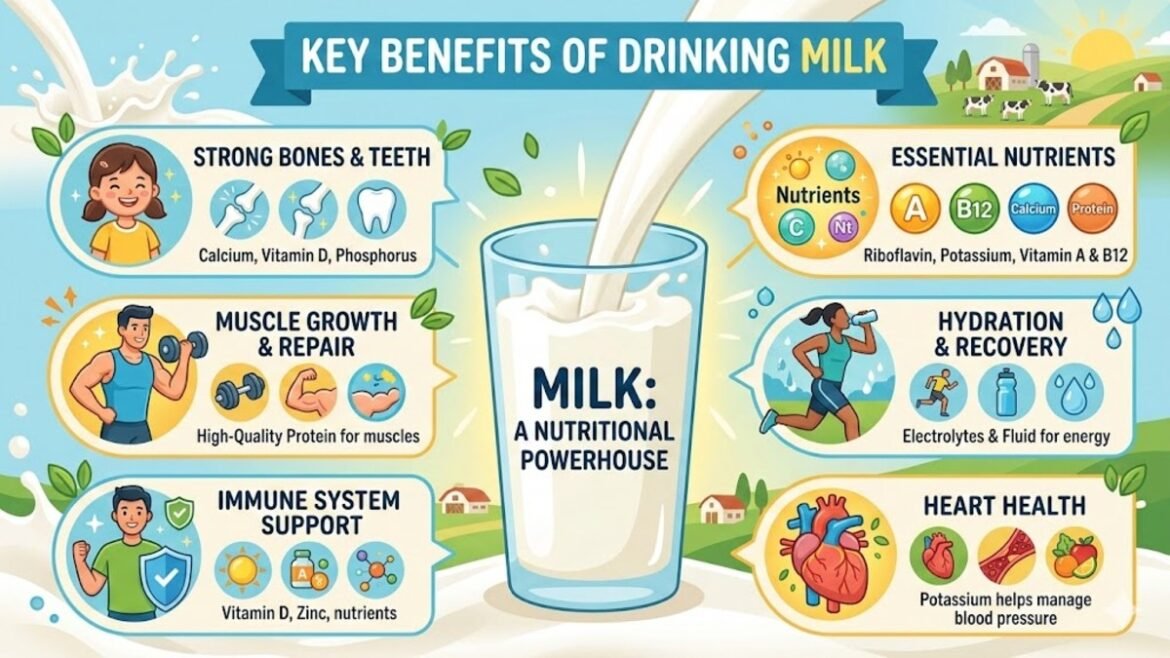
One of the biggest reasons milk is valued in nutrition is its wide range of essential nutrients. Unlike many beverages that offer little nutritional value, milk provides a powerful combination of vitamins, minerals, protein, and healthy fats.
Milk contains nutrients such as:
- Calcium
- Protein
- Vitamin D
- Vitamin B12
- Potassium
- Phosphorus
- Vitamin A
- Magnesium
Research shows that milk contains more than 15 essential nutrients that support overall health and body function. These nutrients help maintain healthy organs, strengthen the immune system, and support proper metabolism.
Because milk offers many nutrients in a single serving, it is often considered a complete and balanced beverage, especially for growing children and teenagers.
2. Strengthens Bones and Teeth
Milk is widely known for its role in building strong bones and teeth. This is mainly due to its high calcium content. Calcium is a vital mineral that helps maintain bone density and prevents bone weakness.
A single cup of milk typically provides around 300 mg of calcium, which contributes significantly to the daily recommended intake. Since about 99% of the body’s calcium is stored in bones and teeth, consuming calcium-rich foods like milk is essential for maintaining skeletal health.
Milk also contains vitamin D and phosphorus, which help the body absorb calcium more efficiently. Together, these nutrients help reduce the risk of bone diseases such as osteoporosis, particularly in older adults.
For children and teenagers whose bones are still developing, regular milk consumption can support stronger skeletal growth.
3. Supports Muscle Growth and Repair
Milk is an excellent source of high-quality protein, which plays a crucial role in muscle growth and repair. Each cup of milk contains roughly 7–8 grams of protein, including two important types: casein and whey protein.
These proteins contain all nine essential amino acids that the body needs but cannot produce on its own. Because of this, milk is often recommended as a post-workout drink for athletes and active individuals.
Protein helps:
- Repair muscle tissue
- Build lean muscle mass
- Support body recovery after exercise
- Maintain overall strength
4. Helps Maintain Healthy Heart Function
Milk also contributes to heart health. One of the important nutrients in milk is potassium, a mineral that helps regulate blood pressure by balancing sodium levels in the body.
A potassium-rich diet is associated with improved cardiovascular health and a lower risk of hypertension. Milk also contains magnesium and phosphorus, which support healthy circulation and heart function.
Conclusion
Milk remains one of the most nutritious beverages available. Packed with essential vitamins, minerals, and high-quality protein, it supports many aspects of health, including bone strength, muscle growth, immune function, and heart health. With about 300 mg of calcium and 8 grams of protein per cup, milk offers a powerful nutritional boost in a simple and convenient form.
While milk may not be suitable for individuals with lactose intolerance or dairy allergies, many people can benefit from including it as part of a balanced diet. Whether enjoyed in smoothies, cereals, or simply as a refreshing drink, milk continues to play an important role in healthy eating habits.
FAQs About the Benefits of Milk
1. Is drinking milk every day healthy?
Yes, drinking milk daily can be healthy for many people because it provides essential nutrients like calcium, protein, and vitamins that support overall health.
2. How much milk should a person drink per day?
Many nutrition guidelines suggest about 1–2 cups of milk or dairy products per day, depending on age, dietary needs, and health conditions.
3. Is milk good for bones?
Yes, milk is rich in calcium and vitamin D, which are essential nutrients for maintaining strong bones and teeth.
4. Can milk help build muscle?
Yes. Milk contains high-quality protein that supports muscle growth and recovery, making it a popular drink for athletes.
5. Are there alternatives for people who cannot drink milk?
Yes, people who are lactose intolerant can choose lactose-free milk or plant-based alternatives such as almond milk, soy milk, or oat milk.