

Your refrigerator works hard every single day, yet it is one of the most ignored appliances in the kitchen. Spills dry onto shelves, forgotten leftovers turn into strange smells, and dust slowly coats the parts you never see. Learning how to clean refrigerator properly takes less than an hour, and it keeps your food safer, your fridge running better, and your kitchen smelling fresh. Whether you call it a fridge or a refrigerator, the method is the same — this guide shows you how to clean fridge interiors, shelves and seals without harsh chemicals.
What You Need Before You Start
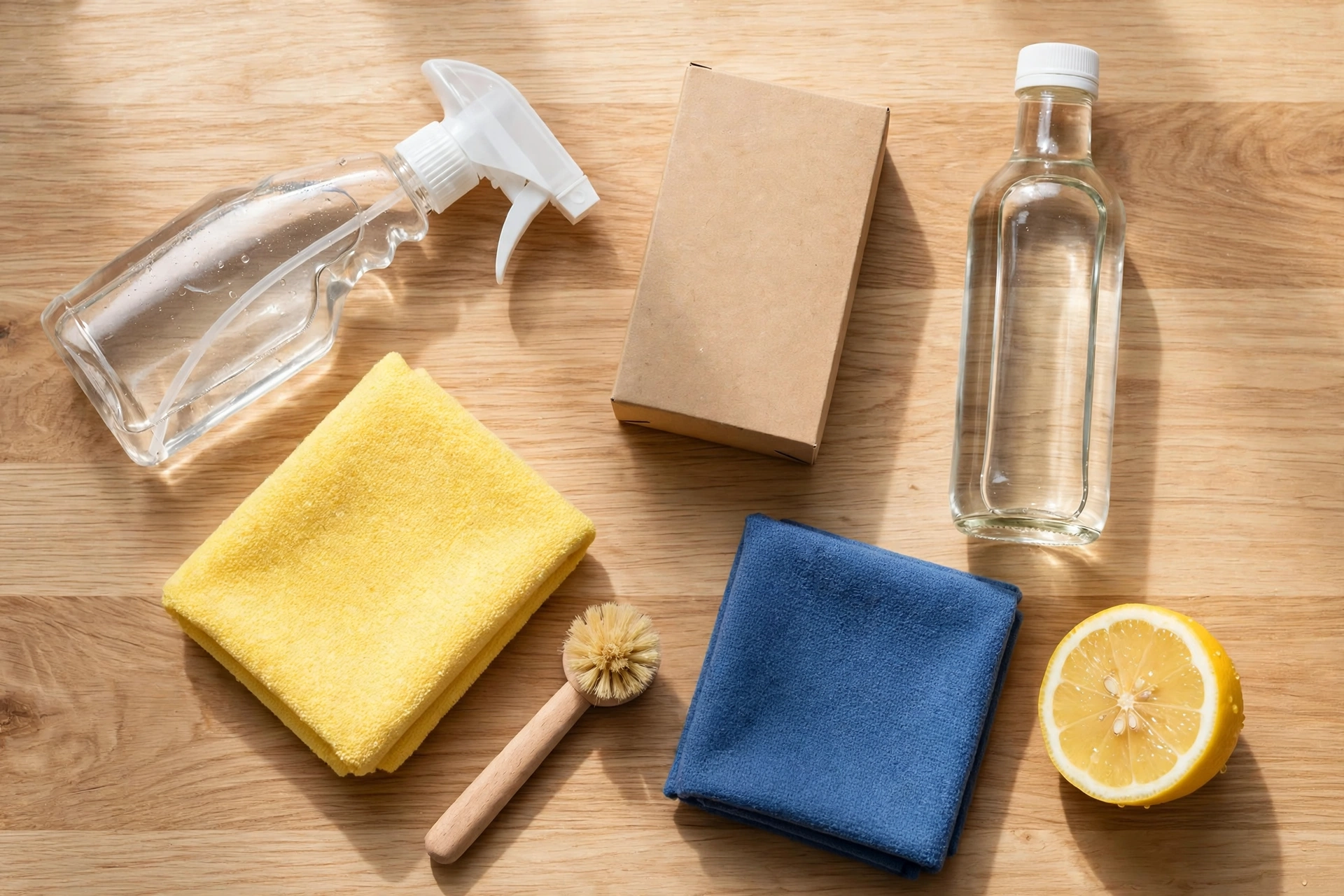
You do not need expensive cleaners for this job. In fact, plain household items work better, because strong chemical smells can transfer into your food. Gather a spray bottle, warm water, a few drops of mild dish soap, baking soda, white vinegar, two or three microfibre cloths, a soft brush, a cooler bag or a box with ice packs, and a pair of gloves if you like. Keep a bin bag nearby for anything that has passed its date.
Step 1: Empty the Fridge Completely
Take everything out, shelf by shelf. Put perishables like milk, meat and cooked food into a cooler bag with ice packs so they stay cold while you work. As you go, check every item: throw away anything expired, mouldy or past its best, and wipe the bottom of sticky jars and bottles before they go back in. An empty fridge is much faster to clean, and you will be surprised how much old food was hiding at the back.
Step 2: Remove the Shelves and Drawers
Pull out every removable shelf, drawer and door bin. Wash them in the sink with warm, soapy water and a soft sponge. Cleaning fridge with baking soda is the easiest way to lift dried-on stains without scratching the shelves: make a paste of baking soda and a little water, spread it on the stain, leave it for 10 to 15 minutes, then scrub gently and rinse. Let the pieces air-dry fully on a clean towel while you clean the inside — putting wet shelves back is how damp smells start.
Step 3: Wipe the Inside from Top to Bottom
Mix one tablespoon of baking soda into one litre of warm water, or use a solution of equal parts white vinegar and water in a spray bottle. Start at the top and work down, so crumbs and drips fall onto areas you have not cleaned yet. Wipe the walls, ceiling, floor and door shelves with a damp microfibre cloth. For sticky patches, hold a hot, damp cloth over the spot for a minute to loosen it, then wipe it away. Finish with a clean, dry cloth so no moisture is left behind.
Step 4: Clean the Door Seals
The rubber seals around the door trap crumbs and moisture, and a dirty seal does not close properly — which lets warm air in and makes the fridge work harder. Pull the folds of the seal back gently and wipe them with warm, soapy water and a soft brush or an old toothbrush. Rinse with a damp cloth and dry well. If you find any mould, a little white vinegar on a cloth will take care of it.
Step 5: Clean the Outside, Handles and Top
Wipe the doors, handles and sides with warm, soapy water or a mild all-purpose spray. Handles are touched dozens of times a day, so they deserve extra attention. For a stainless steel finish, wipe in the direction of the grain with a soft cloth and a little vinegar solution, then buff dry to avoid streaks. Do not forget the top of the fridge, where a surprising layer of dust and grease collects.
Step 6: Clean the Condenser Coils
The condenser coils, usually at the back or underneath the fridge, release heat from the appliance. When they are covered in dust and pet hair, the compressor has to work harder, uses more electricity and may wear out sooner. Unplug the fridge first, then gently brush the dust off the coils with a soft brush and vacuum up what falls with a brush attachment. Check your manual first — only clean coils your model says are user-cleanable. Doing this once or twice a year keeps the fridge efficient.
Step 7: How to Get Rid of Bad Smell in Fridge
Even a clean fridge can hold a smell if the cause is still inside. Learning how to get rid of bad smell in fridge starts with removing the culprit — usually an old container, spilled milk or forgotten vegetables. Wipe the spot with a vinegar-and-water solution, then place an open box of baking soda at the back of a shelf; baking soda absorbs odours without adding any scent of its own. A small bowl of coffee grounds or a few lemon halves also work for a day or two. Avoid air fresheners or scented sprays inside the fridge — they only mask the smell and can flavour your food.
Step 8: Put Everything Back in Order
Once the inside is completely dry, slide the shelves and drawers back in. Wipe the outside of jars and bottles before returning them, and group similar foods together — dairy on one shelf, sauces in the door, vegetables in the crisper. Keeping things organised means you can see what you have, so less food is forgotten and wasted. A tidy fridge is also much easier to wipe down next time.
Step 9: Keep It Clean with Small Weekly Habits
A deep clean every three to six months is enough for most homes, but a few small habits keep the fridge fresh in between. Once you know how to clean refrigerator interiors properly, keeping it clean is easy: wipe up spills the same day, check the contents once a week and toss anything past its date, and replace the open box of baking soda every month or so. These tiny jobs take five minutes and mean the next deep clean is far quicker.
How Often Should You Clean Your Refrigerator?
So, how often should you clean your refrigerator? For most households, a full clean every three to six months is a good routine, with a quick wipe of shelves and handles once a week. Clean sooner if you notice a smell, a spill, or food going off faster than usual. If your fridge has a freezer that builds up frost, defrost it when the ice is thicker than about half a centimetre, following your manual’s instructions.
Common Mistakes to Avoid
Do not use bleach or strong chemical cleaners inside the fridge — the smell lingers and can get into food. Do not use a scouring pad on shelves, as scratches trap dirt. Never pour hot water directly onto cold glass shelves, because they can crack. And do not forget to plug the fridge back in after cleaning the coils — it is the easiest step to miss.
Conclusion
Now you know how to clean refrigerator from the shelves to the seals and coils, using nothing more than baking soda, vinegar and a little time. A clean fridge keeps your food fresher, cuts down on waste, removes bad smells and even helps the appliance use less energy. Put a reminder in your calendar for the next clean in three months — your future self will thank you.
Related reading: if you keep fresh ginger in the fridge, see our guide on how to store ginger so it stays fresh for weeks.