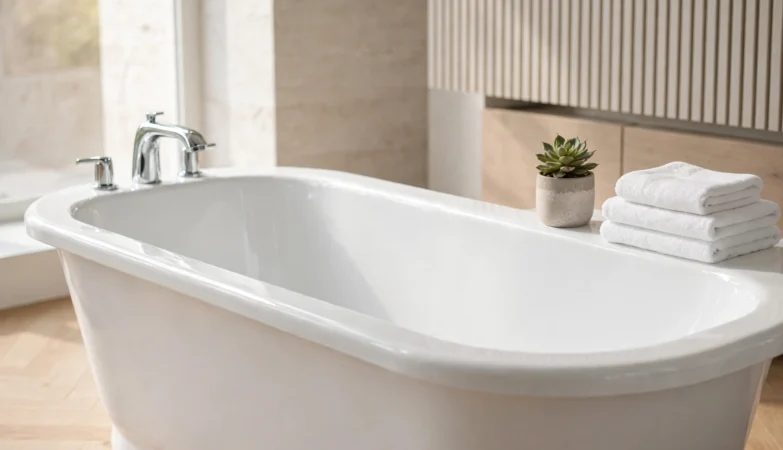
A bathtub should be the cleanest place in the bathroom, yet it is often the dirtiest. Soap scum, body oils, hard-water marks and mildew build up a little every day, and before long the tub looks dull no matter how often you rinse it. Learning how to clean bathtub properly takes less time than most people think, and you do not need harsh chemicals to do it. With baking soda, white vinegar, dish soap and a few basic tools, you can bring back the shine in under half an hour. This guide walks you through nine simple methods that actually work, from a quick weekly wipe-down to a full deep clean of a neglected tub.
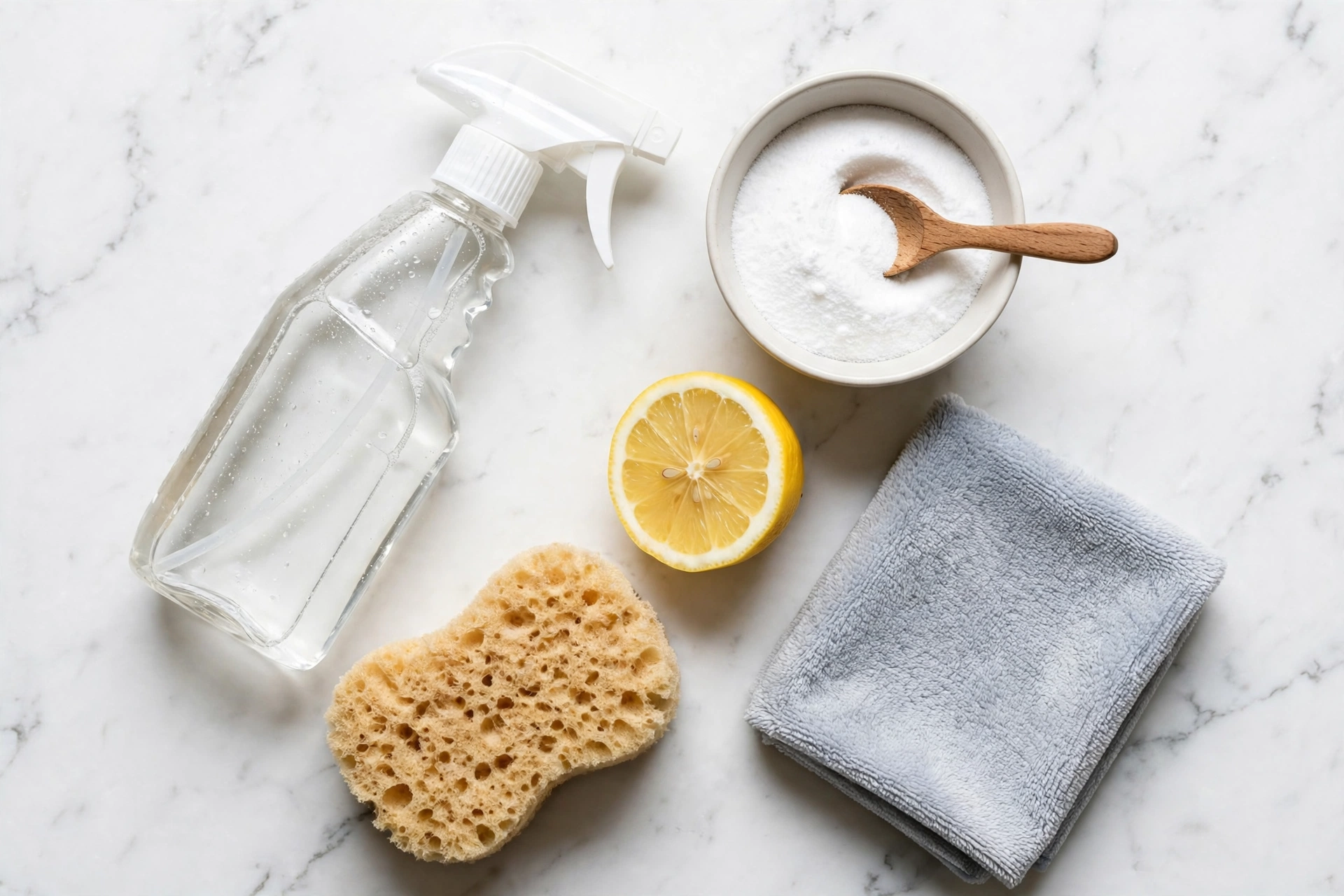
What you will need: baking soda, white distilled vinegar, liquid dish soap or Castile soap, 3% hydrogen peroxide (for yellow stains), a non-scratch sponge, an old toothbrush, a microfibre cloth, a spray bottle and a pair of rubber gloves. Rinse the tub with warm water first so loose dirt and hair wash away before you start scrubbing.
1. How to Clean Bathtub With Baking Soda
Baking soda is the gentlest place to start, and for most tubs it is all you need for everyday grime. It is a mild abrasive with a pH of around 8 to 9, so it scours soap scum and dirt away without scratching the surface. Sprinkle a generous, even coat over the whole tub, heaviest where the grime is worst, then add just enough warm water to make a paste. A paste clings to the surface; a runny mix slides straight down the drain.
Let the paste sit for two to three minutes for everyday dirt, or 15 to 30 minutes for a stubborn ring around the water line. Scrub gently with a non-scratch sponge, working in small circles, then rinse well with warm water. For greasy patches, add a squirt of dish soap to the paste before you scrub — the soap cuts the grease while the baking soda does the scouring. Baking soda is safe on fibreglass, porcelain, acrylic, ceramic, cast iron and cultured marble, but skip it on stone resin, where it can leave a film and damage the finish.
2. How to Clean Bathtub With Vinegar
Baking soda handles grime, but hard-water marks need an acid, and that is where vinegar earns its place. White vinegar has a pH of around 2.4, which dissolves the chalky limescale and mineral deposits that baking soda alone cannot shift. Mix equal parts white vinegar and warm water in a spray bottle and spray the stained areas generously. Let it sit for 15 to 30 minutes, then scrub gently and rinse.
Use the two cleaners one after the other, never premixed in the same bottle. Baking soda is a base and vinegar is an acid, so mixed together they cancel each other out into salty water and do very little cleaning. Spray the vinegar first, let it work, then follow with the baking soda paste from method one. Avoid vinegar on natural stone such as marble, which acid can etch. If hard-water marks keep coming back all over the bathroom, our guide to removing hard water stains covers taps, shower doors and sinks too.
3. How to Clean Bathtub Stains
Most stains in a tub are soap scum, the cloudy white or grey film left when soap mixes with the minerals in hard water. This is the method to use when you need to know how to clean bathtub stains without damaging the finish. It feels sticky, looks dull, and ordinary rinsing never removes it. Spray the film with the vinegar solution from method two and let it sit for at least 15 minutes. Then scrub the same area with a paste of baking soda and water. The vinegar loosens the mineral part of the scum and the paste lifts the rest away.
For scum that has been building up for weeks, add a squirt of dish soap to the paste and let it sit for 15 to 20 minutes before you scrub. Pay attention to the corners, the drain area and the space behind the taps, where soap buildup hides. Rinse thoroughly with warm water afterwards so no gritty residue is left behind. A quick wipe with a microfibre cloth at the end leaves the surface gleaming instead of streaky.
4. How to Remove Bathtub Stains That Won’t Budge
Some marks survive the first three methods, and those need to be matched to the right cleaner. Start by working out what the stain is. Yellow or brown stains are usually hard-water deposits or ageing enamel. Spray them with vinegar and leave a vinegar-soaked cloth on the stain for 30 minutes, or apply a paste of baking soda and 3% hydrogen peroxide, leave it for 20 to 30 minutes, scrub gently and rinse.
Reddish-brown stains are usually rust, and neither baking soda nor vinegar will touch them. Use a cleaner based on oxalic acid, such as Bar Keepers Friend, made into a paste, scrubbed gently and rinsed well. Black stains are usually mould. Spray the area with undiluted white vinegar, let it sit for an hour, then apply a baking soda paste, scrub with an old toothbrush and rinse. Two safety rules matter here: never mix vinegar and hydrogen peroxide, and never mix bleach with vinegar or ammonia, because both combinations create harmful fumes. Rinse thoroughly between different cleaners.
5. How to Clean a Dirty Bathtub From Top to Bottom
This is the full routine for anyone who needs to know how to clean bathtub surfaces that have been ignored for months. Start by removing the drain cover and the plug, and clean them separately with warm soapy water. Rinse the whole tub with warm water, then spray every surface with the vinegar solution and leave it for 30 minutes while you clean the taps and the overflow plate.
Next, sprinkle baking soda over the damp surface, add a little dish soap, and scrub the floor of the tub, the sides and the rim with a sponge or a soft brush. Work on the stained patches from method four if any are left. Rinse everything with warm water, then dry the tub with a microfibre cloth so water spots do not form as it dries. A neglected tub is a lot like a washing machine that has never been deep-cleaned — the same patient soak-and-scrub routine brings both back to life, as our guide to cleaning a washing machine shows.
6. How to Clean Bathtub Drain and Stop Slow Water
A clean tub still feels dirty if the water drains slowly, so the drain deserves its own step. Pull out any visible hair with tweezers or a drain snake, then pour half a cup of baking soda down the drain, followed by half a cup of white vinegar. Let it fizz for 10 to 15 minutes, then flush with a kettle of hot water. The fizzing action loosens soap residue and light buildup inside the pipe.
Repeat this once a month to keep the drain clear, and fit a simple hair catcher over the drain if hair is the usual problem. This simple routine is how to clean bathtub drain clogs before they turn into a plumber’s bill. If the water still drains slowly after two rounds, the blockage is probably deeper in the pipe, and a plumber’s snake or a professional is the safer next step than pouring in a strong chemical drain cleaner, which can damage older pipes and enamel.
7. How to Clean Fiberglass Bathtub Without Scratching It
Fibreglass tubs need a lighter touch than porcelain or cast iron. Knowing how to clean fiberglass bathtub surfaces the gentle way matters, because the wrong pad does permanent damage. Never use abrasive scouring pads, scouring powder or steel wool on fibreglass, because the scratches they leave trap dirt and make the tub harder to clean next time. A baking soda paste and a soft sponge are safe and effective, and vinegar spray is safe on fibreglass too. Avoid acetone, paint thinner and other solvents, which can soften the surface.
A pumice stone can work wonders on stubborn marks, but only on porcelain or ceramic tubs — never use one on fibreglass or acrylic. For a fibreglass tub, patience beats pressure: let the paste sit for the full 20 to 30 minutes, then scrub gently and rinse. If your tub is old and the surface has gone rough or chalky, a gentle polish with a non-abrasive bathroom cleaner can smooth it and make future cleaning much easier.
8. How to Pick the Best Bathtub Cleaner
The best bathtub cleaner for your home depends on your tub and your stains, not on the brightest label in the shop. A homemade mix of baking soda, vinegar and dish soap handles soap scum, everyday grime and light hard-water marks on almost every tub, and it costs very little. For rust or heavy mineral buildup, a targeted shop-bought cleaner with oxalic acid or a limescale remover will do a better job than any home remedy.
When you buy a cleaner, check the label for your tub’s material first. Bleach-based sprays are strong on mould but can damage coloured grout and fibreglass, and they must never be mixed with vinegar or ammonia. Citric-acid cleaners are a good middle ground for hard water, and they are safer on most surfaces. Whatever you choose, spray a small hidden patch first and wait a few minutes to make sure it does not discolour the finish.
9. Keep It Clean With a 5-Minute Weekly Routine
The real secret behind how to clean bathtub and keep it clean is routine, not elbow grease. Wipe the tub down after each use with a squeegee or a dry cloth, which takes less than a minute and stops soap scum from setting. Clean the whole tub once a week, or every three to five days if it gets daily use. Keep shampoo and soap bottles on a rack instead of on the rim, where they leave rings, and leave the bathroom door open or the fan running after a bath so damp air does not feed mould.
The same weekly habit that keeps a carpet fresh between deep cleans works for the tub: a little, often, beats a big scrub once a month. Once the routine is in place, the tub never gets bad enough to need the deep clean in method five, and every clean takes five minutes instead of half an hour.
Frequently Asked Questions
How often should you clean a bathtub?
Once a week is enough for most homes. If the tub is used every day, clean it every three to five days, and wipe it down after each use to stop soap scum and hard-water marks from building up.
Can I use bleach in the bathtub?
Yes, on porcelain or enamel tubs, with the window open or the fan running. Never mix bleach with vinegar or ammonia, and avoid bleach on fibreglass, acrylic and coloured grout, which it can damage or discolour.
What is the fastest way to clean a bathtub?
Spray the whole tub with equal parts white vinegar and warm water, leave it for 15 minutes, then scrub with a baking soda paste and rinse. The whole job takes about 20 minutes, including the waiting time.
Why does my bathtub turn yellow?
Yellow stains usually come from hard-water minerals or from ageing enamel. A paste of baking soda and 3% hydrogen peroxide, left for 20 to 30 minutes, lifts most yellow marks. If the whole surface has yellowed evenly, the enamel itself may be worn, and a professional refinish is the lasting fix.
Conclusion
A sparkling tub does not need expensive products or a whole afternoon. Baking soda lifts the grime, vinegar dissolves the mineral marks, and a short weekly routine stops both from coming back. Start with the paste and the spray, match the cleaner to the stain when something stubborn appears, and keep the drain clear once a month. Now you know how to clean bathtub the simple way — pick a method, set a timer, and enjoy a tub that looks as good as it feels to soak in.