

Dark spots on the face are one of the most common skin complaints, and the good news is that most of them can be faded at home. If you want to know how to remove dark spots on face without harsh treatments, this guide covers nine simple, gentle methods that actually work, from daily sunscreen and vitamin C to home remedies such as aloe vera and turmeric. None of them works overnight, but with steady use for four to eight weeks, most people start to see their skin look clearer and more even.
What Causes Dark Spots on the Face?
Dark spots, also called hyperpigmentation, appear when the skin makes extra melanin, the pigment that gives skin its colour. The most common triggers are sun exposure, marks left behind after pimples heal, hormonal changes such as pregnancy, and natural ageing. Sun damage is the biggest driver: ultraviolet light tells the pigment-making cells to work harder, which is why spots often appear on the cheeks, forehead and nose, the areas that catch the most sun.
Most dark spots are harmless, but a new spot that changes size, shape or colour, looks uneven, or bleeds or itches should always be checked by a doctor first. The methods below are for ordinary, benign dark spots only.
1. Wear Sunscreen Every Day
No dark spot treatment works if you skip sunscreen. Ultraviolet light reactivates the pigment-making cells and can darken existing spots within hours, undoing weeks of progress. Use a broad-spectrum sunscreen of SPF 30 or higher every morning, all year round, even on cloudy days, and reapply every two hours when you are outdoors. Mineral formulas with zinc oxide or titanium dioxide suit sensitive skin well. Think of sunscreen as the foundation of every other method in this list: without it, the rest cannot do its job.
2. Use a Vitamin C Serum in the Morning
A vitamin C serum for dark spots is one of the best-studied home treatments available. Vitamin C is an antioxidant that slows down melanin production by blocking tyrosinase, the enzyme that drives pigmentation, and it also helps the skin defend itself against sun damage. Look for a stable serum with 10 to 20 percent L-ascorbic acid, apply four to five drops to clean, dry skin in the morning, wait a minute or two, then follow with moisturiser and sunscreen. Do not mix it with benzoyl peroxide or retinol in the same step. Used daily, it brightens the skin gradually and helps new spots from forming.
3. Apply Fresh Aloe Vera Gel
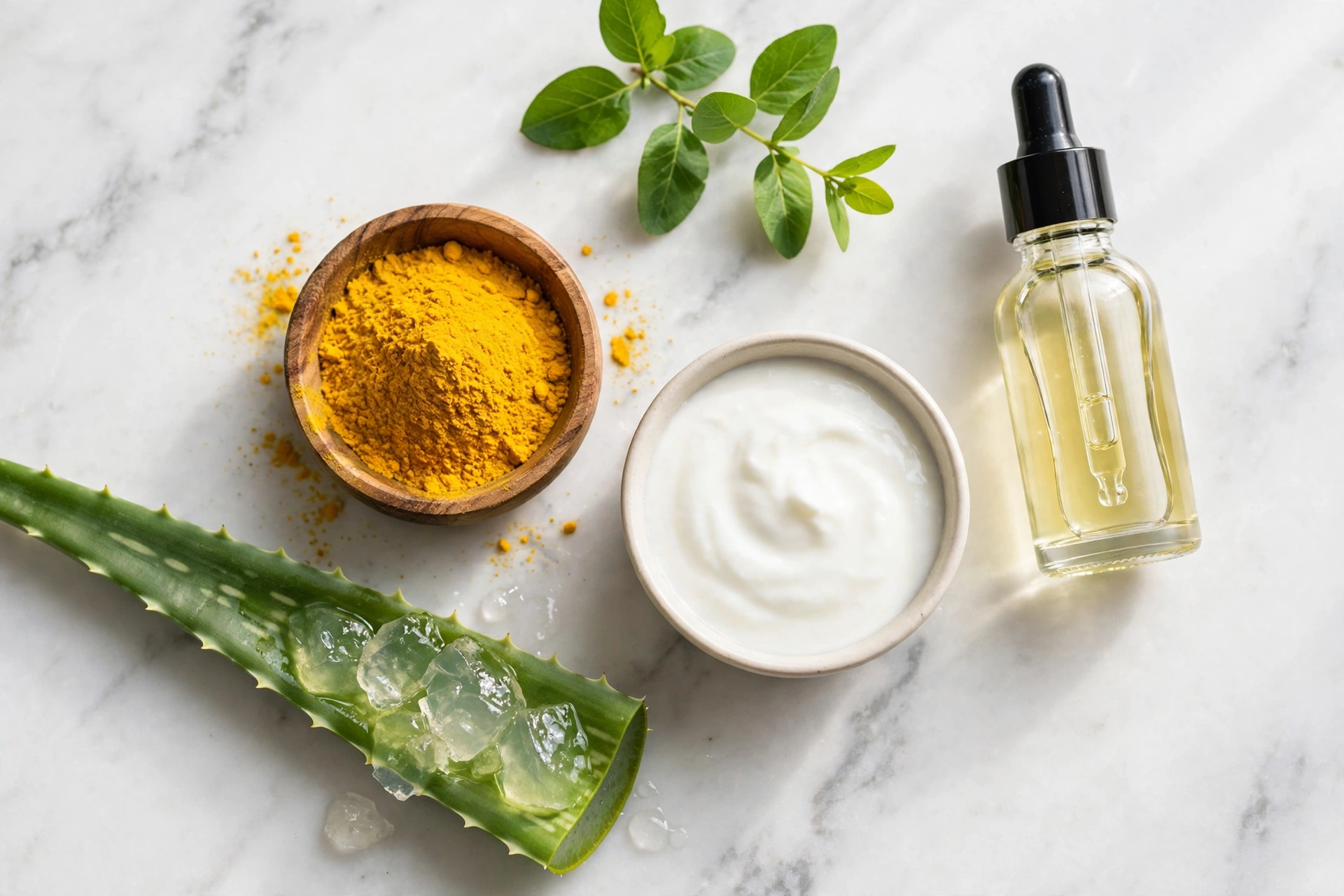
Aloe vera contains aloin, a natural compound that has been shown in studies to reduce melanin production by calming the same tyrosinase enzyme. It is also soothing and anti-inflammatory, which makes it especially helpful for the dark marks pimples leave behind. Apply fresh aloe vera gel to the dark spots twice a day, or leave it on overnight as a mask. It suits all skin types, including sensitive skin. If you want to prepare it yourself, our guide on how to make aloe vera gel at home shows the simple steps for fresh, pure gel.
4. Try a Turmeric and Yogurt Mask
Turmeric is another gentle way to learn how to remove dark spots on face naturally. Its active compound, curcumin, is a strong inhibitor of tyrosinase and also calms inflammation. Mix half a teaspoon of turmeric powder with one tablespoon of plain yogurt or honey, apply the paste to the dark spots for 15 to 20 minutes, then rinse with lukewarm water. Use it three to four times a week. Two warnings: turmeric stains skin and fabric yellow, so rinse well and do not leave it on for more than 30 minutes, and always patch test first, as some people develop sensitivity to curcumin.
5. Use Plain Yogurt as a Gentle Exfoliant
Plain yogurt contains lactic acid, a mild alpha-hydroxy acid that gently exfoliates the top layer of skin and helps pigmented cells shed more evenly. Apply plain, unflavoured yogurt directly to the dark spots, leave it for 20 to 30 minutes, then rinse. Use it three to four times a week. It is one of the mildest options on this list and works well alongside the other methods, especially for people whose skin reacts badly to stronger acids.
6. Add Niacinamide to Your Routine
Niacinamide, also known as vitamin B3, helps fade dark spots by stopping excess pigment from moving up into the visible layers of the skin, and it also strengthens the skin barrier. A moisturiser with four to five percent niacinamide, used morning and night, pairs well with a morning vitamin C serum. It is gentle enough for most skin types, and it also helps with redness and uneven texture, so it improves the overall look of the skin while the spots fade.
7. Exfoliate Gently, One to Three Times a Week
Gentle exfoliation helps dark marks fade more evenly by removing the dull, pigmented surface cells so fresher skin can show through. Use a mild exfoliant one to three times a week, never every day, and stop if your skin feels sore or looks red. Over-exfoliating damages the skin barrier and can actually make pigmentation worse, so less is more here. A simple routine works best: cleanse, treat, moisturise, and protect with sunscreen.
8. Choose the Right Dark Spot Cream
If you prefer a ready-made product, the best cream for dark spots on face is usually one built around proven brightening ingredients rather than a single miracle claim. Look for creams or gels containing kojic acid, azelaic acid, liquorice extract, or niacinamide, and use them exactly as directed. For stubborn spots, a dermatologist may prescribe a 2 to 4 percent hydroquinone cream, but that should only be used under medical supervision, as it can irritate the skin if used wrongly. Whatever cream you choose, give it at least four weeks before judging it, and always pair it with daily sunscreen.
9. Know When to Ask a Dermatologist
If consistent home care does not help after eight to twelve weeks, a dermatologist can offer stronger options, such as chemical peels with glycolic or mandelic acid, or pigment-targeting laser treatments. These work faster on deeper or long-standing pigmentation, but they must be done by a qualified professional, and they still need daily sunscreen afterwards or the spots can return. This step is also the right one if you are unsure what kind of spot you have. Many people who want to know how to get rid of dark spots on face fast find that a short professional treatment, combined with the home routine above, gives the quickest visible change.
What to Avoid When Treating Dark Spots
Some popular home remedies can make dark spots worse. Raw lemon juice is the biggest one: although it contains vitamin C, it is unstable and irritating on skin, and sunlight after applying it can cause a reaction that leaves patches darker than the original spot. The same goes for apple cider vinegar, baking soda, and undiluted essential oils, all of which can burn or irritate the skin and trigger more pigmentation. Strong home peels should also be left to professionals. If a remedy stings, burns, or leaves the skin red, stop using it and give your skin time to calm down.
How Long Does It Take to Remove Dark Spots?
Patience is part of the treatment. Mild spots usually start to fade in four to eight weeks, with clearer results by eight to twelve weeks, while deeper pigmentation can take two to three months. The exact time depends on how deep the pigment sits and how consistent the routine is. Take a photo in the same light every two weeks so you can see the slow change, which is easy to miss day by day. And remember that prevention matters as much as treatment: daily sunscreen, a gentle routine, and not picking at pimples all help stop new spots from forming. If dark circles under the eyes are your main concern rather than spots on the cheeks, our guide on how to remove dark circles at home covers that separately.
A Simple Daily Routine to Follow
Keep it short so you will actually do it every day. In the morning, wash with a gentle cleanser, apply your vitamin C serum for dark spots, moisturise, and finish with broad-spectrum sunscreen. In the evening, cleanse again, apply aloe vera gel or your chosen dark spot cream, and moisturise. Two or three times a week, add the turmeric and yogurt mask or the plain yogurt treatment, and exfoliate gently on a different day. A gentle toner such as rose water can sit between cleansing and treatment if your skin likes it.
Conclusion
Learning how to remove dark spots on face comes down to three simple ideas: protect the skin from the sun every day, use proven brightening ingredients such as vitamin C, niacinamide and aloe vera, or the best cream for dark spots on face that suits your skin type, and give the routine eight to twelve weeks to work. Skip the harsh home remedies, patch test anything new, and see a dermatologist if a spot looks unusual or does not improve. With a gentle, steady routine, most dark spots fade, and the skin underneath looks brighter and more even.