
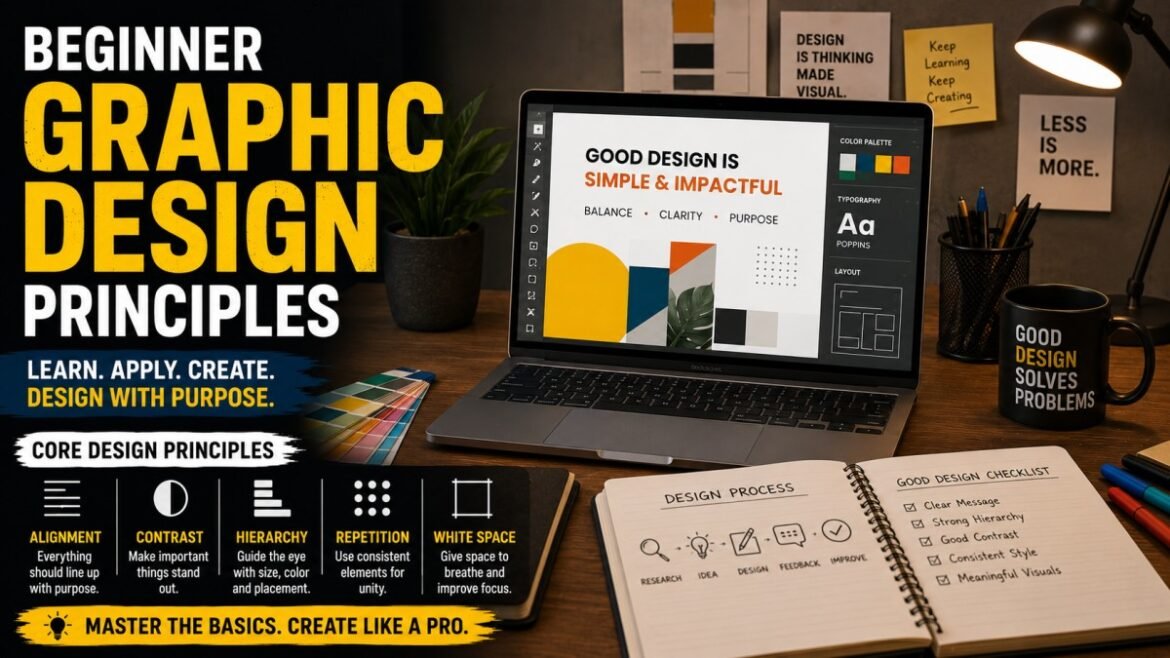
Graphic design is no longer limited to professional designers working in agencies. Today, students, freelancers, content creators, business owners, and digital marketers all use design skills to create social media posts, presentations, logos, advertisements, and websites. That is why beginner graphic design principles has become a popular search among people who want to start designing without any prior experience.
Learning beginner graphic design principles helps you create designs that look clean, professional, and visually appealing. You do not need expensive software or years of experience to understand the basics. Once you learn a few important principles, your designs immediately become more attractive and easier to understand.
The secret to good design is not adding more elements—it is using the right elements effectively.
Beginner Graphic Design Principles: The Foundation of Great Design
Understanding beginner graphic design principles starts with knowing that every professional design follows a few basic rules. These principles help organize information, improve readability, and guide the viewer’s attention naturally.
The growing interest in beginner graphic design principles comes from the increasing demand for digital content across India. Whether you create YouTube thumbnails, Instagram posts, presentations, or marketing materials, applying these principles makes your work look much more professional.
Good design is about communication before decoration.
Keep Your Design Simple
One of the biggest mistakes beginners make is adding too many elements.
Instead:
- Use only necessary graphics.
- Leave enough empty space.
- Focus on one main message.
- Avoid clutter.
Simple designs often create the strongest impact.
Use Proper Alignment
Alignment helps organize content neatly.
Make sure:
- Text lines match properly.
- Images are balanced.
- Elements follow a clear structure.
Well-aligned designs appear more professional.
Create Visual Hierarchy
Not every element should receive equal attention.
Highlight important information by changing:
- Font size.
- Font weight.
- Colors.
- Position.
- Spacing.
Guide viewers naturally through your design.
Understand Color Balance
One of the most important beginner graphic design principles is choosing colors carefully.
Good color usage includes:
- Limited color palettes.
- High contrast.
- Readable text.
- Consistent branding.
Too many colors often confuse viewers.
Choose Readable Fonts
Typography plays a major role in design.
Good practices include:
- Using simple fonts.
- Limiting font styles.
- Keeping text readable.
- Maintaining consistent font sizes.
Readable designs communicate more effectively.
Use White Space Wisely
White space is the empty area around elements.
It helps:
- Improve readability.
- Reduce clutter.
- Increase focus.
- Make designs feel cleaner.
Empty space is an important design element.
Maintain Consistency
Consistency creates a professional appearance.
Keep the following consistent:
- Colors.
- Fonts.
- Button styles.
- Icons.
- Spacing.
Consistency strengthens your visual identity.
Common Graphic Design Mistakes
Many beginners struggle because they:
- Overuse colors.
- Choose difficult fonts.
- Ignore spacing.
- Copy designs completely.
- Add unnecessary effects.
Simple improvements often produce better results than complicated designs.
Best Habits for Beginner Designers
Successful designers usually:
- Practice regularly.
- Study professional designs.
- Learn basic color theory.
- Focus on simplicity.
- Accept feedback.
- Improve continuously.
- Experiment carefully.
- Build a personal style.
Daily practice helps develop creative confidence.
Benefits of Learning Graphic Design
Graphic design skills provide many advantages.
They help with:
- Freelancing.
- Personal branding.
- Social media marketing.
- Business promotion.
- Career opportunities.
- Creative expression.
Design is one of the most valuable digital skills today.
Future of Graphic Design in India
The demand for graphic designers continues growing rapidly.
Businesses increasingly require:
- Social media graphics.
- Website visuals.
- Digital advertisements.
- Brand identity.
- Content marketing assets.
AI tools may speed up design work, but human creativity remains essential.
Conclusion
Learning beginner graphic design principles is the first step toward creating attractive and professional digital content.
By keeping designs simple, using proper alignment, choosing readable fonts, maintaining consistency, understanding color balance, and applying visual hierarchy, beginners can improve their work significantly. Strong design is not about using complicated software—it is about communicating ideas clearly through visuals.
For students, freelancers, and creators across India, graphic design will remain one of the most valuable creative skills in 2026 and beyond.
FAQs
1. What are graphic design principles?
They are basic rules that help create clear and attractive visual designs.
2. Can beginners learn graphic design?
Yes. Anyone can learn through practice and understanding design fundamentals.
3. Why is white space important?
It improves readability and makes designs look cleaner.
4. How many fonts should I use?
Using one or two fonts is usually enough.
5. Why is color important in design?
Colors attract attention and improve communication.