
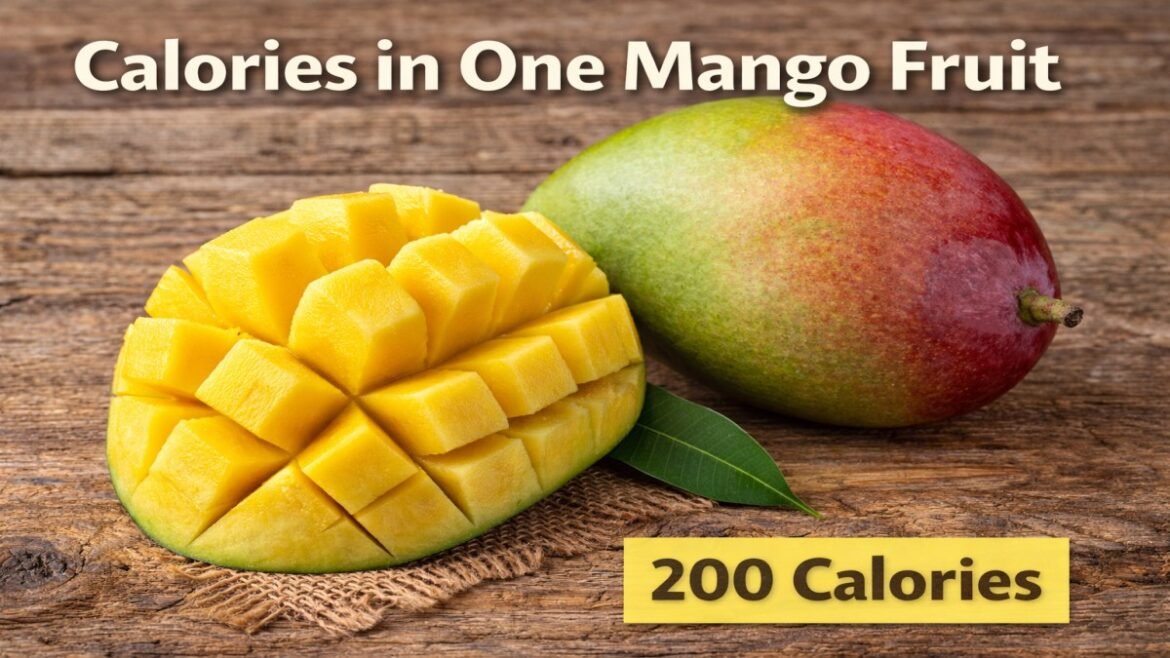
Calories in One Mango Fruit. Mango is often called the “king of fruits” and for good reason. It’s juicy, naturally sweet, and packed with nutrients. But if you’re watching your calorie intake, you may wonder:
How many calories are in one mango fruit?
The answer depends on the size of the mango. Let’s explore the calorie content, nutritional value, health benefits, and how mango fits into different diets.
How Many Calories Are in One Mango Fruit?
A whole mango’s calories depend on its size and variety.
🥭 Average Calorie Content
- Small mango (200g with skin, ~140g edible): ~90–100 calories
- Medium mango (300g with skin, ~200g edible): ~130–150 calories
- Large mango (400g+ with skin, ~300g edible): ~200–210 calories
On average, one medium mango contains about 135–150 calories.
Most of these calories come from natural sugars (carbohydrates).
Mango Nutrition Facts (Per 1 Cup, 165g Sliced Mango)
- Calories: ~99
- Carbohydrates: 25g
- Sugar: 22g
- Fiber: 2.6g
- Protein: 1.4g
- Fat: 0.6g
- Vitamin C: 60–70% of daily value
- Vitamin A: 20–25% of daily value
- Folate
- Potassium
- Antioxidants
Despite being sweet, mango is low in fat and rich in vitamins.
Why Mango Calories Are Not “Empty Calories”
Unlike processed sugary snacks, mango provides:
- Natural fiber
- Essential vitamins
- Antioxidants
- Phytochemicals
So while mango contains sugar, it also delivers nutritional value that benefits your body.
Calories in Mango by Serving Size
Here’s a quick breakdown:
| Serving Size | Calories |
|---|---|
| 1 slice | ~10–15 calories |
| ½ cup diced | ~50 calories |
| 1 cup diced | ~99 calories |
| 1 whole medium mango | ~135–150 calories |
This makes portion control simple if you’re tracking calories.
Is Mango High in Calories?
Compared to other fruits:
- Apple (medium): ~95 calories
- Banana (medium): ~105 calories
- Orange (medium): ~60 calories
- Mango (medium): ~135 calories
Mango is slightly higher in calories than some fruits because it contains more natural sugar — but it’s still considered moderate in calories.
Can You Eat Mango During Weight Loss?
Yes — in moderation.
Why Mango Can Fit Into a Weight Loss Diet:
- Low fat content
- Contains fiber (helps you feel full)
- Natural sweetness may reduce cravings
- High water content
The key is portion size. Instead of eating two large mangoes, stick to one serving (½–1 cup).
Does Mango Increase Belly Fat?
No single fruit causes belly fat.
Weight gain occurs when you consistently consume more calories than you burn. Mango contains natural sugar, but when eaten in reasonable portions, it does not directly cause fat gain.
In fact, replacing desserts with mango can reduce overall calorie intake.
Is Mango Good for Diabetics?
Mango has a moderate glycemic index (GI around 51–60).
This means:
- It raises blood sugar gradually
- Portion control is important
- Pairing it with protein (like yogurt or nuts) can reduce sugar spikes
People with diabetes can enjoy mango in small portions under medical guidance.
Health Benefits of Mango Beyond Calories
Calories are just one part of the picture. Mango offers several health benefits.
1. Rich in Vitamin C
A single cup provides more than half your daily vitamin C needs.
Vitamin C supports:
- Immune health
- Skin glow
- Collagen production
2. Supports Eye Health
Mango contains vitamin A and beta-carotene.
These nutrients help maintain:
- Good vision
- Night vision
- Eye protection
3. Aids Digestion
Mango contains:
- Fiber
- Natural digestive enzymes
These help break down food and improve gut health.
4. Boosts Skin and Hair Health
Antioxidants in mango may:
- Reduce skin aging
- Improve complexion
- Support hair growth
5. Supports Heart Health
Potassium & antioxidants help maintain:
- Healthy blood pressure
- Reduced inflammation
Fresh Mango vs Mango Juice Calories
Be careful with mango juice.
| Type | Calories |
|---|---|
| 1 whole mango | ~135–150 |
| 1 cup mango juice (store-bought) | 120–150+ |
| Mango smoothie with sugar | 250–400+ |
Juice removes fiber and increases sugar concentration. Whole mango is always the healthier choice.
Conclusion
So, how many calories are in one mango fruit?
A medium mango contains approximately 135–150 calories, mostly from natural carbohydrates. While mango is slightly higher in calories than some fruits, it offers impressive nutritional benefits — from vitamin C to antioxidants.
The key is balance.
Enjoy mango in reasonable portions, pair it with a healthy diet, and you can savor its sweetness without guilt.
Sometimes, healthy eating isn’t about restriction — it’s about smart choices.
Frequently Asked Questions (FAQs)
1. How many calories are in half a mango?
About 60–75 calories, depending on size.
2. Is mango good for weight loss?
Yes, in moderation. It can help satisfy sweet cravings while providing nutrients.
3. Does mango have more calories than banana?
A mango typically has slightly more calories than a banana due to higher natural sugar.
4. Can I eat mango every day?
Yes, one serving per day is generally safe for healthy individuals.
5. Is dried mango higher in calories?
Yes. Dried mango is more calorie-dense because water is removed, concentrating sugars.
6. Does mango spike blood sugar?
It can raise blood sugar moderately, but fiber slows absorption. Portion control is important.