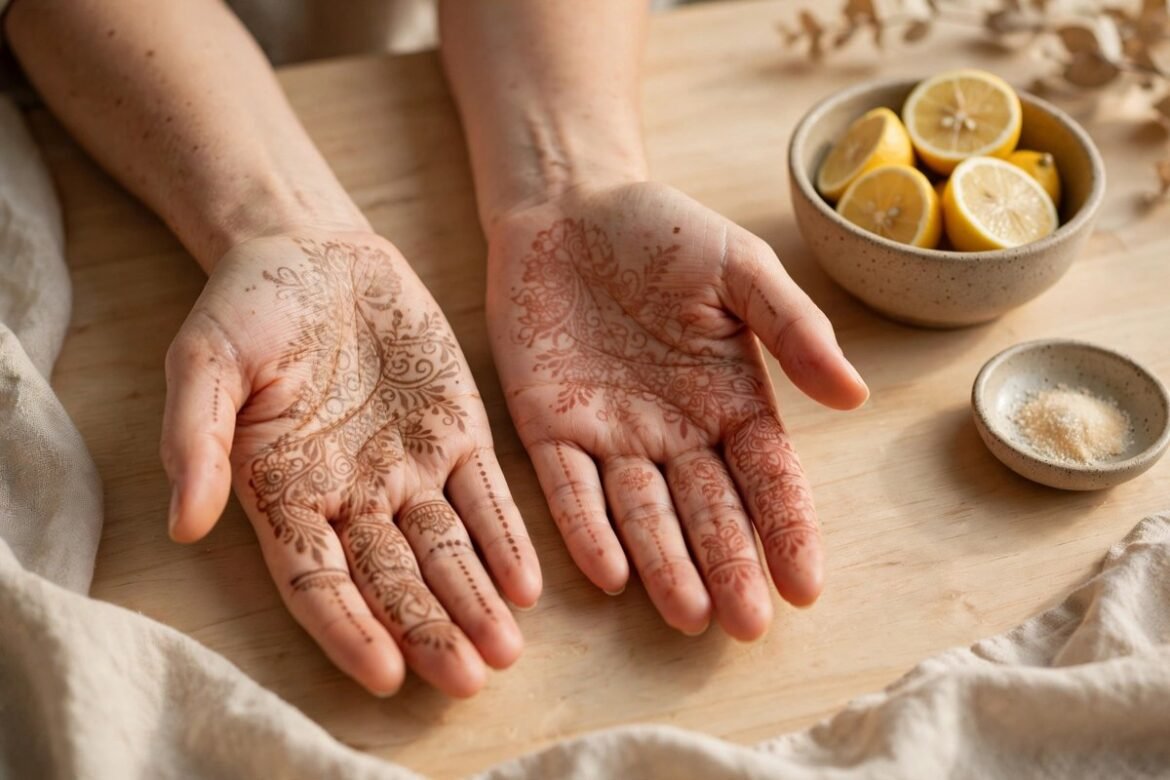
Mehndi looks beautiful on the day it is applied, but the stain does not always fade when you want it to. If you have a function, a job interview or a photoshoot coming up, you may be wondering how to remove mehndi from hands quickly without harming your skin. The good news is that you do not need any special product. Simple things from your kitchen, used the right way, can lighten the stain a lot in a single day.
Mehndi, or henna, stains the top layers of the skin. The colour is darkest in the first two days and then fades on its own as the skin renews itself. That is why no home method removes it completely in one wash. What the methods below do is speed up that natural fading by gently exfoliating the stained skin and breaking down the dye. Used together, they can make a real difference.
1. Lemon juice and sugar scrub
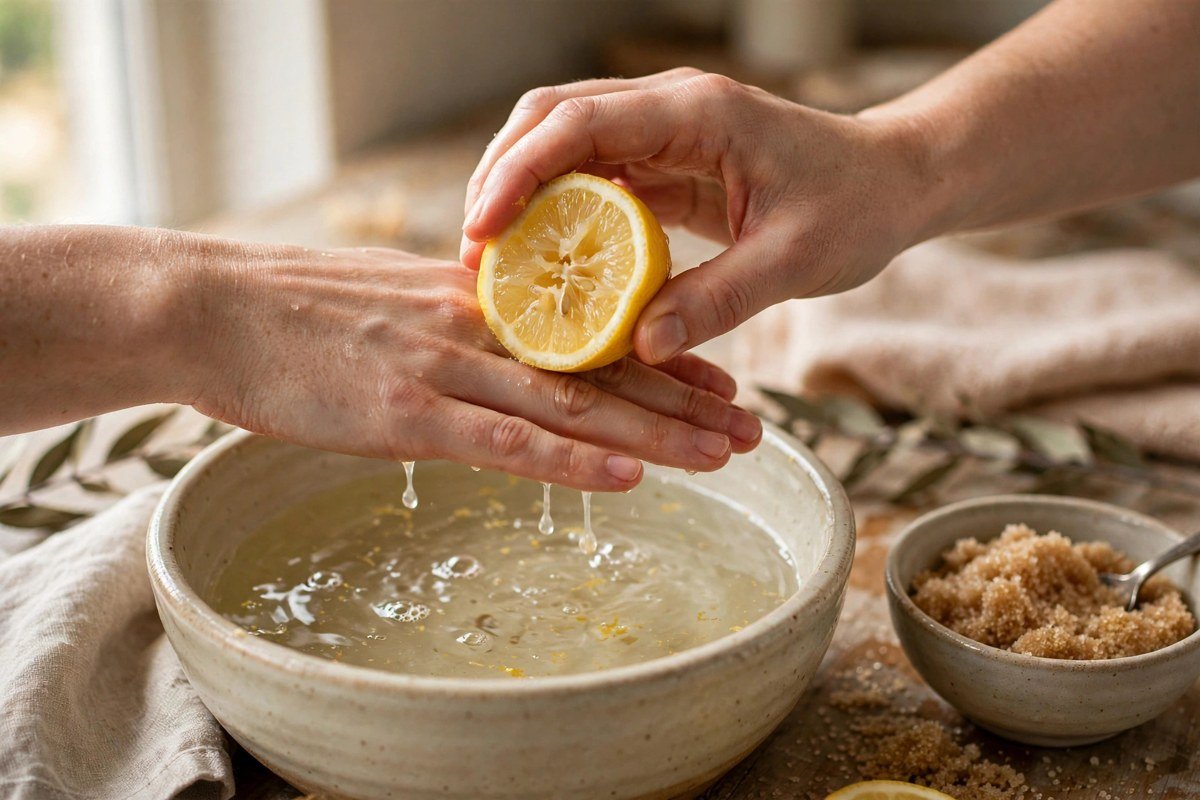
If you want to know how to remove mehndi from hands instantly, lemon juice is one of the most popular home remedies, or at least as fast as home remedies allow. Its mild acidity helps break down the henna dye, while sugar works as a gentle scrub.
Squeeze half a lemon into a small bowl and mix in a spoon of sugar. Rub the mixture over the stained areas in slow circles for three to five minutes, then leave it on for another five minutes. Rinse with lukewarm water and apply moisturiser. Repeat this twice a day and you should see the stain lighten clearly. Avoid this method if you have cuts or cracked skin, because lemon juice will sting.
2. Baking soda paste
Baking soda is a mild exfoliant, which makes it useful if you are wondering how to remove mehndi stain from hands. Mix one spoon of baking soda with a little water to make a thick paste. Spread it over the stain and rub gently for two to three minutes. Let it sit for five more minutes, then wash it off with warm water. Because baking soda can dry the skin, always follow it with a good hand cream or a few drops of coconut oil.
3. Warm soapy water soak
Sometimes the simplest method works well. Soak your hands in a bowl of warm water with a little mild soap or hand wash for ten to fifteen minutes. The warm water softens the top layer of skin, and the soap helps loosen the dye. After soaking, rub the stain gently with a soft cloth or your palms. Do this two or three times a day. It is the gentlest option on this list, so it suits sensitive skin and children.
4. Olive oil or coconut oil massage
Oil is a good choice if your skin feels dry after the scrub methods. Warm a little olive oil or coconut oil and massage it into the stained skin for five to ten minutes. Oil helps dissolve the dye and lifts it as you rub. Wipe the oil away with a cotton pad or a soft cloth, then wash your hands with soap. This method is slower than lemon or baking soda, but it keeps your skin soft and is safe to repeat often.
5. Exfoliating scrub
A regular body scrub or a homemade scrub of sugar and honey can help if you are wondering how to remove mehndi in one day, especially when used alongside the other methods. Exfoliation removes the dead skin cells that hold the colour, so each scrub session makes the stain a little lighter. Massage the scrub gently over your hands for a few minutes, rinse, and moisturise. Do not scrub hard or use a rough brush, because damaged skin will only look worse and take longer to heal.
6. Makeup remover or micellar water
If you need a quick fix before going out, micellar water or a gentle makeup remover can lighten the stain on the surface. Soak a cotton pad and hold it on the darkest parts of the design for a minute, then wipe slowly. It will not remove the stain completely, but it takes the edge off the darkest lines and makes the design look softer and older.
7. Salt water soak
Salt water is another simple way to fade henna. Dissolve a spoon of salt in a bowl of warm water and soak your hands for ten minutes. Salt gently exfoliates the skin and helps the colour fade faster. Rinse with clean water and moisturise afterwards, because salt can leave the skin feeling dry.
How to remove mehndi from nails
Mehndi often stains the nails too, especially around the edges. To remove mehndi from nails, rub a paste of baking soda and lemon juice over each nail with a soft toothbrush, then rinse. A little nail polish remover on a cotton pad also works on the nail plate itself, since nails are harder than skin. Do not use it on the skin around the nails, and always wash your hands and apply cuticle oil afterwards. If you deal with nail colour often, you may also like our guide on how to remove nail polish without remover, which uses the same gentle approach.
What not to do
Do not use bleach, hair-removal cream or strong chemicals on your skin to remove mehndi. They can cause burns, rashes and permanent marks, and they are not worth it for a stain that fades on its own in a few days. Avoid scrubbing with steel wool, rough stones or harsh brushes. If a method stings, makes your skin red or feels painful, stop right away and wash the area with plain water.
Aftercare: protect your skin while the stain fades
Whichever method you choose, your skin needs care while the colour is fading. Moisturise your hands after every wash, and use sunscreen if you go out in the sun, because sun exposure can darken a fading mehndi stain again. Drink enough water and avoid washing your hands with very hot water. With gentle care, most mehndi stains fade noticeably within one to three days.
Conclusion
Learning how to remove mehndi from hands is mostly about patience and the right combination of gentle methods. Lemon and sugar, baking soda, warm soapy water and oil all help the stain fade faster, and none of them needs anything you cannot find at home. Try one or two methods that suit your skin, repeat them through the day, and moisturise well after each one. The stain will lighten, and your hands will be back to normal before you know it.