
Intro
Finding clumps of hair on your pillow, in the shower drain and on your brush is frightening, and the first instinct is to look for a fix that works right now. Learning how to stop hair fall immediately starts with an honest fact: no product regrows hair overnight, but you can stop the damage that is making shedding worse today, and you can start the treatments that slow real hair fall within weeks. Most people lose 50 to 100 hairs a day, which is normal. The problem begins when shedding stays heavy for weeks, your parting widens, or your ponytail feels thinner than it used to.
Hair falls for many reasons — genetics, hormonal changes, stress or illness, low iron, zinc or vitamin D, a sore or flaky scalp, and harsh styling habits. The fix depends on the cause, which is why this guide covers both quick wins and proven treatments. The nine methods below show you how to stop hair fall immediately by cutting out the damage first, then strengthening the hair you have, and finally using the treatments dermatologists actually recommend.
Why Hair Falls Out
Before the methods, it helps to know which kind of hair fall you have. There are two main types. Shedding happens at the root: hairs fall out with the bulb attached, often a few months after a trigger such as stress, a high fever, surgery, childbirth or a crash diet. Dermatologists call this telogen effluvium, and it usually slows down on its own once the trigger passes. Breakage happens along the shaft: hair snaps off because it is dry, over-processed or pulled too tight, and it leaves short, uneven pieces instead of full-length strands.
The most common cause of lasting hair fall is pattern hair loss, which is genetic and related to hormones, and it runs in families. Nutritional deficiencies can also play a part — low iron, zinc, vitamin D or protein weakens hair and increases shedding. A flaky, itchy scalp can make shedding worse too, because scratching and inflammation damage the roots. If your hair is falling out in patches, or your scalp is red, painful or scaly, skip the home remedies and see a dermatologist first — those signs need a diagnosis, not a shampoo.
1. Use the Best Shampoo for Hair Fall
The first step in how to stop hair fall immediately is to switch to a shampoo that protects your hair instead of stripping it. The best shampoo for hair fall is a mild, sulphate-free formula that cleans the scalp without drying it out. Some shampoos contain caffeine or ketoconazole, which support scalp health, but be honest with yourself: no shampoo alone regrows lost hair. What a good shampoo does is keep the scalp clean and calm, reduce breakage, and create the right conditions for the treatments in the later methods to work.
Wash two to three times a week with lukewarm water, never hot, and massage the shampoo into your scalp with your fingertips, not your nails. Rinse thoroughly, because residue left on the scalp can irritate it and feed flaking. If your scalp is oily, wash a little more often; if it is dry, wash less and use a gentle formula. And use conditioner only on the lengths, not on the scalp, where it can weigh hair down and clog follicles.
2. Massage Your Scalp With Coconut Oil
A warm coconut oil massage is one of the simplest hair fall home remedies, and it works by protecting the hair you already have. Coconut oil contains lauric acid, and studies suggest it penetrates the hair shaft better than other oils, which helps reduce protein loss and mechanical damage. Warm two tablespoons of virgin coconut oil, massage it gently into your scalp for five to ten minutes with small circular movements, and leave it for an hour or overnight before washing it out with a mild shampoo.
Use it two to three times a week. The massage itself matters as much as the oil — it improves blood flow to the follicles and helps you notice any sore or flaky patches early. For a deeper look at which oils suit different hair types, see our ultimate guide to hair growth oil. Wash the oil out within a day, because oil left on the scalp for days attracts dust and can make an oily scalp worse.
3. Try Onion Juice Twice a Week
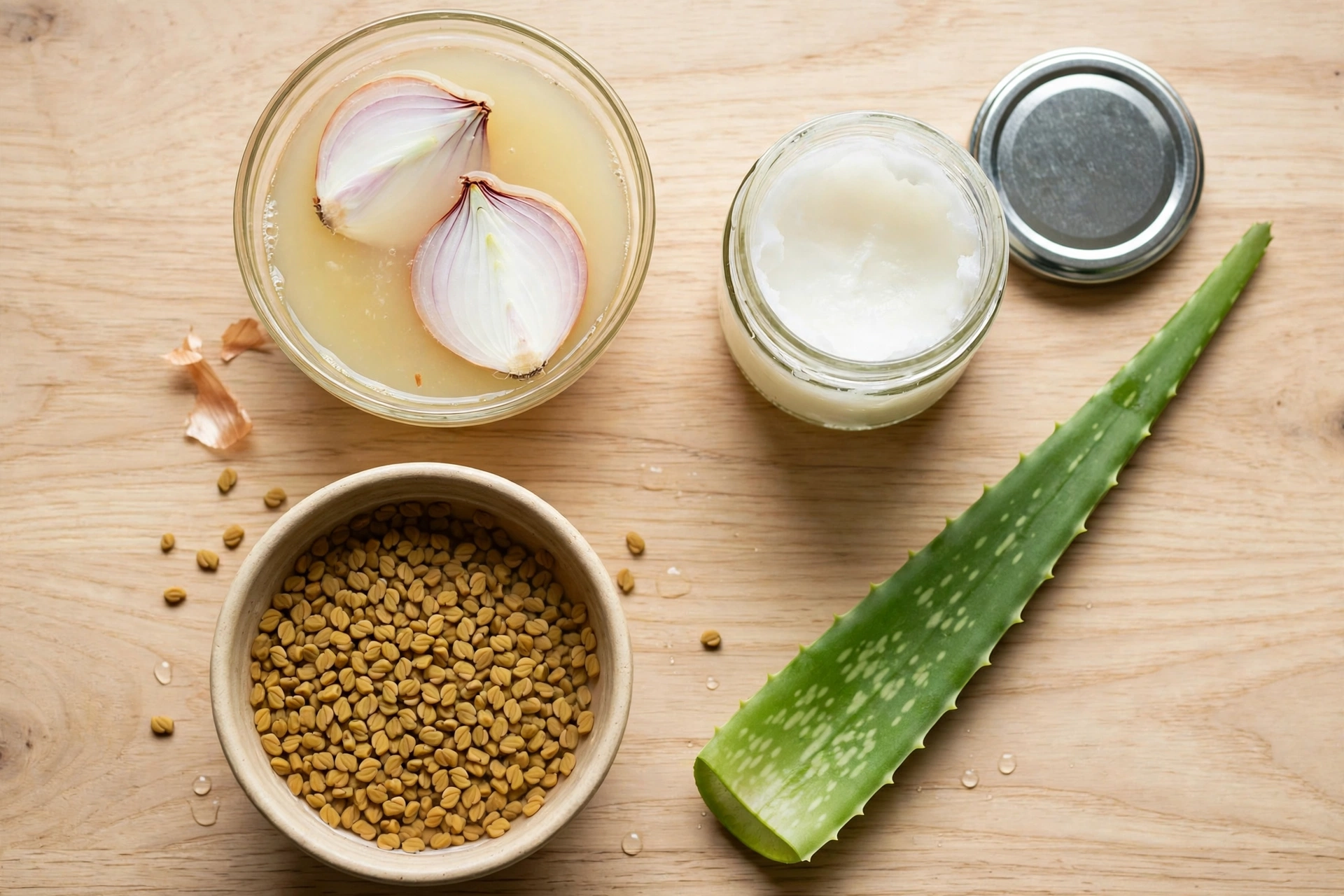
Onion juice is the most talked-about of all hair fall home remedies, and it has more evidence behind it than most. Onion juice is rich in sulphur, which supports collagen production and improves blood circulation to the follicles. A clinical study published in the Journal of Dermatology found increased hair regrowth in patients with alopecia areata who used onion juice on their scalps. Grate an onion, extract the juice, and apply it to your scalp with a cotton ball, making sure the roots are covered. Leave it for 20 to 30 minutes, then rinse it out with a mild shampoo.
Use it twice a week, and do a patch test on your inner arm first — onion juice can irritate sensitive skin, and if it gets in your eyes it burns. The smell is strong, so use it on a day when you are staying home, and rinse well. Onion juice is a supporting remedy, not a replacement for medical treatment when the cause is genetic or hormonal, but for many people it is the remedy that visibly slows shedding first.
4. Eat for Stronger Hair
Hair is mostly protein, so a diet low in protein, iron, zinc or vitamin D will show up on your scalp before anywhere else. Add eggs, lentils, chickpeas, spinach, nuts, seeds and citrus fruits to your daily meals — they cover protein, iron, zinc and vitamin D between them. Vitamin B12 matters too, especially for vegetarians, and low B12 is a known cause of weak hair and extra shedding.
Be careful with supplements. Biotin, iron and vitamin D pills only help hair growth when you are actually deficient in that nutrient — there is no research showing that extra vitamins improve hair when your levels are already adequate. A blood test from your doctor is cheaper than months of useless supplements and tells you exactly what is missing. If you do need a supplement, take it on a doctor’s advice, not on a social media recommendation.
5. How to Reduce Hair Fall by Washing Gently
Much of what looks like hair fall is actually breakage, and learning how to reduce hair fall starts with treating wet hair gently. Wet hair is at its weakest, so never rub it hard with a towel — press it dry with a soft towel or an old cotton t-shirt instead. Detangle with a wide-tooth comb, starting from the ends and working up to the roots, and never rip a brush through tangled wet hair.
Stop the habits that pull and burn your hair. Tight ponytails, braids and buns pull on the roots every day and can cause a type of hair fall called traction alopecia. Daily heat styling — straighteners, curling irons and very hot blow-drying — dries the shaft and snaps it. If you must use heat, use the lowest setting and a heat-protectant spray, and give your hair at least two heat-free days a week. Small changes here show results fast, because breakage stops the moment the damage stops.
6. How to Control Hair Fall by Managing Stress and Sleep
Stress is one of the most common triggers of sudden shedding, and learning how to control hair fall means dealing with it, not just with your hair. A major illness, surgery, childbirth, a bereavement or months of poor sleep can push large numbers of hairs into the shedding phase at once, and the fall usually shows up two to three months after the event. The shedding is temporary, but it only settles when the stress eases and the body recovers.
Aim for seven to eight hours of sleep, eat regular meals, and move your body every day — even a 20-minute walk helps. These are not vague wellness tips; sleep and stress directly affect the hormones and nutrient levels that control the hair cycle. If you have been through a major stressor, give your hair three to six months after the trigger passes before you judge whether the shedding has settled. If it has not, that is the time to see a dermatologist rather than trying another remedy.
7. How to Stop Hair Fall Naturally With a Fenugreek Mask
A fenugreek, or methi, mask is a traditional way to learn how to stop hair fall naturally, and it suits people who prefer kitchen remedies. Fenugreek seeds are rich in protein and nicotinic acid, which are traditionally believed to strengthen hair roots. Soak two tablespoons of fenugreek seeds in water overnight, grind them into a smooth paste in the morning, apply it to your scalp and the roots of your hair, and leave it for 30 minutes before washing it out with a mild shampoo.
Use it once a week, and be patient — natural remedies take at least two to three months of consistent use to show visible results. Rinse thoroughly, because paste left in the hair dries hard and is difficult to remove. If essential oils suit your scalp, rosemary oil is another popular natural option — see our rosemary oil benefits guide for how people use it for hair and scalp care. Like onion juice, a fenugreek mask supports the hair you have; it cannot reverse genetic hair loss on its own.
8. Try Minoxidil the Right Way
When home remedies are not enough, minoxidil is the treatment dermatologists reach for first. It is approved by the U.S. Food and Drug Administration for hair loss in both men and women, and it is sold as a foam or liquid in 2% and 5% strengths. It works by widening blood vessels in the scalp, which improves blood flow to the follicles, and by extending the growth phase of the hair cycle. Apply it to the scalp once or twice daily, every single day — consistency is everything.
Be prepared for two things. First, some shedding in the first two to six weeks is normal, and it settles. Second, visible results take at least three to six months, and if you stop using it, the hair fall usually comes back. Finasteride is another proven option, but it is a prescription pill for male pattern hair loss only, and it needs a doctor’s consultation because it affects hormones and must not be used by anyone who may become pregnant. Do not start prescription treatments without medical advice.
9. Build a Routine That Keeps Shedding Away
The last method is the one that makes the other eight work: a routine you actually keep. Hair grows slowly, about a centimetre a month, so nothing in this guide can be judged in a week. Pick three or four methods that suit you — a gentle shampoo, weekly oiling, onion juice twice a week, and a stress or sleep fix — and do them for three months before you decide what is working. Take a photo of your parting and your hairline on day one and again after three months, because daily mirror checks hide slow progress.
Keep a simple note of how much hair you shed each week, and watch for the warning signs that mean it is time for a doctor: shedding that stays heavy for more than two to three weeks, patchy bald spots, a scalp that is red, painful or scaly, or hair that does not grow back after a few months. Once shedding slows, growth becomes the goal — our guide on how to make your hair grow faster has more scalp-friendly habits that pair well with this routine.
Frequently Asked Questions
How to stop hair fall immediately?
There is no treatment that regrows hair overnight, but you can see a difference fast by stopping the damage: wash gently with lukewarm water, stop tight hairstyles and daily heat styling, detangle wet hair with a wide-tooth comb, and start a weekly oiling routine. Those changes cut breakage within days. For shedding at the root, a medicated route such as minoxidil takes three to six months to show visible regrowth, and home remedies need two to three months of consistent use.
Is losing 50 to 100 hairs a day normal?
Yes. Most people lose 50 to 100 hairs a day as part of the normal hair cycle, and the hair grows back. It becomes a problem when shedding stays heavy for weeks, your parting widens, your ponytail feels thinner, or you see patchy bald spots.
Can hair fall come back after it stops?
Yes. Shedding often returns if the cause comes back — a new period of stress or illness, stopping minoxidil, or going back to tight hairstyles and harsh products. A steady maintenance routine and dealing with the underlying cause are what keep it away.
Does oiling hair stop hair fall?
Oiling helps with breakage and strength, because oils like coconut oil reduce protein loss and protect the shaft, but oiling alone cannot cure genetic or hormonal hair fall. Use it as part of a routine, alongside a gentle shampoo and, if needed, a proven treatment such as minoxidil.
When should I see a dermatologist?
See a dermatologist if your hair is not growing back after a few months, if the loss is sudden or patchy, if shedding stays heavy for more than two to three weeks, or if your scalp is red, swollen, painful or scaly. Early diagnosis matters, because treatments work best before the follicles are damaged, and a dermatologist can find causes — such as thyroid problems or deficiencies — that no home remedy can fix.
Conclusion
Hair fall feels frightening because it is visible every single day, but most causes are treatable once you know what you are dealing with. Start with the quick wins — gentle washing, no tight styles, weekly oiling — then add the remedies that suit you, and give the routine three months before you judge it. Now you know how to stop hair fall immediately and how to keep it away — pick your methods, stay consistent, and see a dermatologist if the shedding does not settle.