
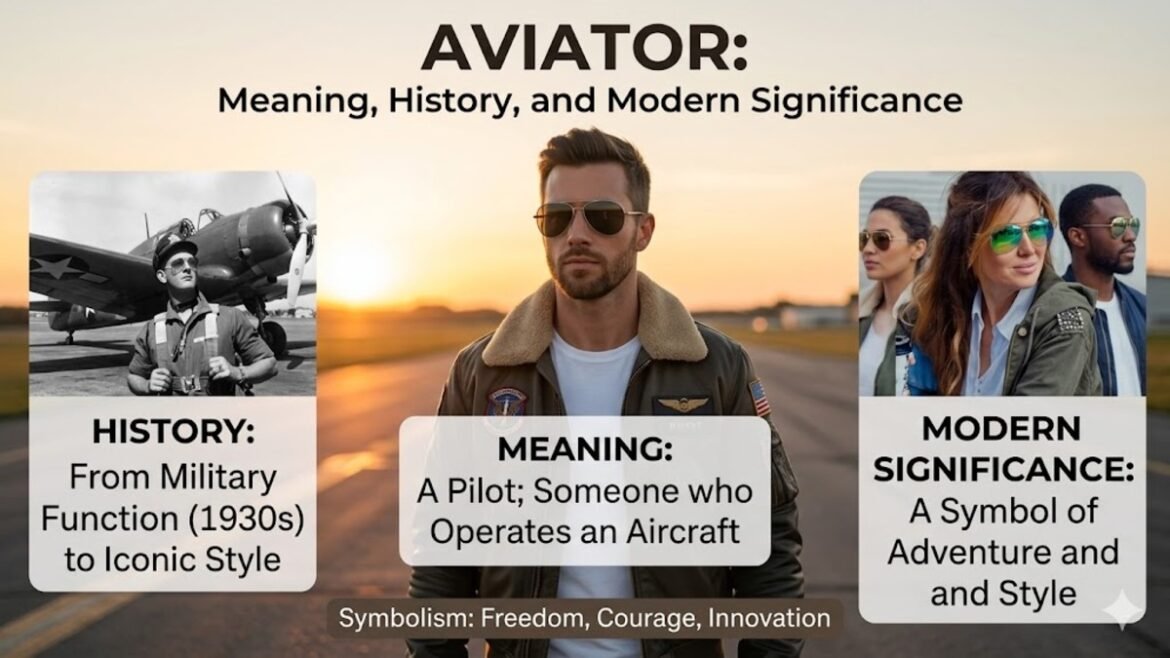
The word aviator is commonly used to describe a person who flies an aircraft. From early pioneers of aviation to modern commercial airline pilots, aviators have played a crucial role in the development of air travel and aerospace technology. Today, the term represents skill, courage, and innovation in the field of aviation.
This article explores the meaning of aviator, its history, different types of aviators, and the impact they have had on modern transportation.
What Is an Aviator?
An aviator is a person who operates or pilots an aircraft, such as airplanes, helicopters, or other flying machines. The term is often used interchangeably with “pilot,” but historically it referred to early aircraft pioneers who helped shape aviation.
Aviators are trained professionals who understand aircraft systems, weather conditions, navigation, and flight safety. Their primary responsibility is to safely transport passengers or cargo through the air.
History of Aviators
The history of aviators began in the early 20th century when human flight first became possible. Early aviation pioneers experimented with aircraft designs and flight techniques that laid the foundation for modern aviation.
One of the most significant milestones in aviation history was the first powered flight in 1903. This event marked the beginning of a new era of transportation.
As aviation technology advanced, aviators became essential in both civilian and military sectors. During World Wars I and II, pilots played critical roles in reconnaissance, transportation, and aerial combat.
Today, aviators continue to push the boundaries of technology with modern aircraft, drones, and even space exploration.
Types of Aviators
There are several types of aviators depending on the aircraft they operate and their professional roles.
1. Commercial Aviators
Commercial aviators are airline pilots who transport passengers and cargo across cities, countries, and continents. They work for airlines and follow strict safety regulations.
2. Military Aviators
Military aviators operate aircraft for defense and national security missions. They may fly fighter jets, transport aircraft, or surveillance planes.
These aviators require advanced training and must handle challenging conditions during operations.
3. Private Aviators
Private aviators fly aircraft for personal or recreational purposes. They usually hold private pilot licenses and operate smaller aircraft.
Many aviation enthusiasts become private aviators as a hobby.
4. Test Aviators
Test aviators evaluate new aircraft designs and technologies. Their role involves flying experimental aircraft and ensuring safety standards before the aircraft enters production.
Skills Required to Become an Aviator
Becoming an aviator requires a combination of education, training, and experience. Pilots must develop several essential skills, including:
- Strong decision-making ability
- Excellent communication skills
- Knowledge of aviation systems
- Ability to stay calm under pressure
- Good physical and mental health
Training usually includes flight school, simulator practice, and supervised flight hours.
The Role of Aviators in Modern Aviation
Aviators play an essential role in connecting the world. They ensure safe and efficient air travel for millions of passengers every day.
Modern aviators also rely on advanced technologies such as:
- GPS navigation systems
- Autopilot features
- Weather monitoring tools
- Advanced cockpit instruments
Despite these technologies, the expertise and judgment of aviators remain critical for flight safety.
Famous Aviators in History
Several aviators have made remarkable contributions to aviation history.
Some pioneers helped develop early airplanes, while others set records for long-distance flights or explored new aviation technologies.
Their achievements inspired future generations to pursue careers in aviation and aerospace.
Future of Aviators
The future of aviators is closely connected to technological advancements in the aerospace industry. Innovations such as electric aircraft, autonomous flight systems, and space travel are shaping the next generation of aviation.
While automation is increasing, skilled aviators will continue to be essential for managing complex flight operations and ensuring safety.
Frequently Asked Questions (FAQs)
1. What does the word aviator mean?
An aviator is a person who flies or pilots an aircraft, including airplanes, helicopters, and other flying machines.
2. Is an aviator the same as a pilot?
Yes, the terms are often used interchangeably, although “aviator” historically referred to early aviation pioneers.
3. How can someone become an aviator?
To become an aviator, a person must complete flight training, obtain a pilot license, and gain the required flight experience.
4. What skills are needed to be an aviator?
Important skills include decision-making, communication, technical knowledge, and the ability to handle stressful situations.
5. Are aviators still important with modern technology?
Yes. Even with advanced automation, aviators remain essential for managing aircraft operations and ensuring passenger safety.