
Introduction to Leaf Insects
Ever looked at a leaf and thought it might suddenly walk away? Sounds strange, right? But in the world of insects, that’s not as crazy as it seems. Enter the leaf insect—one of nature’s most impressive illusionists.
What Is a Leaf Insect?
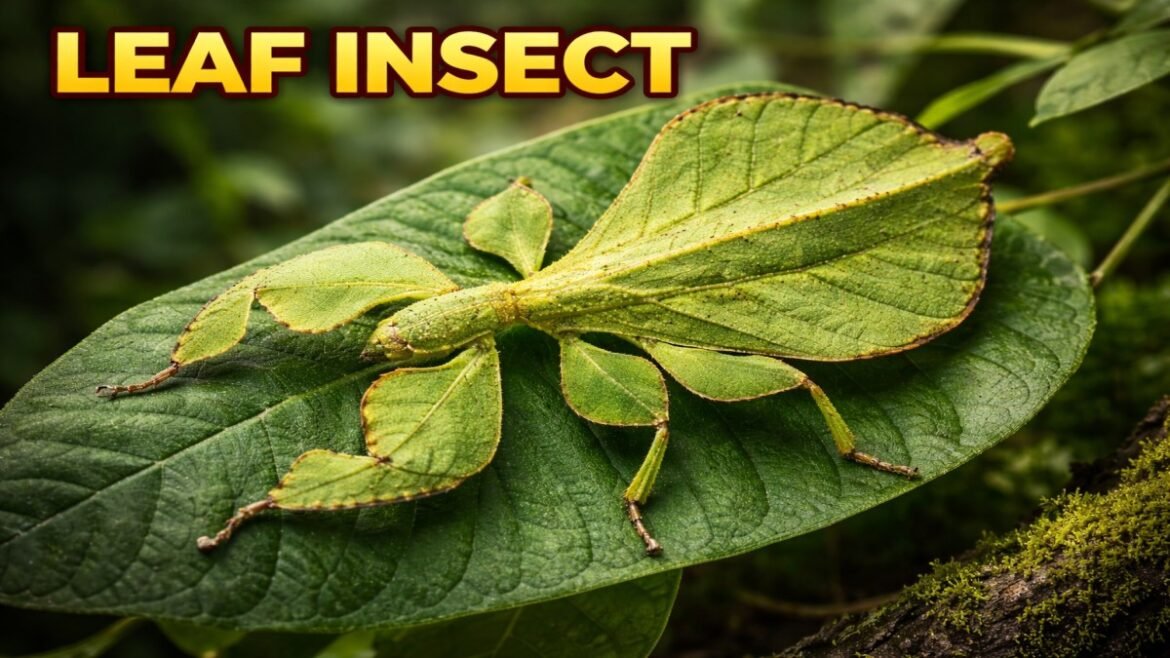
A leaf insect is exactly what its name suggests: an insect that looks almost identical to a leaf. Belonging to the family Phylliidae, these insects have evolved to mimic leaves so perfectly that even experienced biologists sometimes miss them in the wild.
Why Leaf Insects Fascinate Scientists and Nature Lovers
Leaf insects aren’t just visually stunning; they’re a textbook example of evolution and survival. Their uncanny resemblance to leaves sparks curiosity, wonder, and a deep appreciation for nature’s creativity.
Taxonomy and Scientific Classification
Understanding where leaf insects fit in the animal kingdom helps explain their unique traits.
Family Phylliidae
Leaf insects belong to the order Phasmatodea, the same order as stick insects. Within this order, the family Phylliidae is dedicated solely to leaf mimics.
Key Genera and Species
Some well-known genera include Phyllium, Pulchriphyllium, and Chitoniscus. Each genus contains species with subtle differences in shape, size, and coloration.
Physical Characteristics of Leaf Insects
If camouflage were an Olympic sport, leaf insects would take home gold every time.
Leaf-Like Body Structure
Their bodies are flat, wide, and veined like real leaves. Even the edges often look chewed or torn, mimicking insect-damaged foliage.
Color Variations and Patterns
Most leaf insects are green, but some appear yellow, brown, or even reddish depending on age, environment, or season.
Differences Between Males and Females
Females are larger, broader, and more leaf-like. Males are slimmer, smaller, and usually have wings, allowing them to fly in search of mates.
Habitat and Geographic Distribution
Leaf insects thrive where leaves thrive.
Tropical Forests of Asia and Oceania
They are commonly found in countries like India, Malaysia, Indonesia, Papua New Guinea, and Australia.
Preferred Environmental Conditions
Warm temperatures, high humidity, and dense vegetation are essential for their survival.
Camouflage and Mimicry Explained
This is where leaf insects truly shine.
How Leaf Insects Imitate Leaves
From shape and color to vein patterns and even fungal spots, leaf insects replicate every detail of a real leaf.
Evolutionary Advantages of Camouflage
This disguise protects them from predators like birds and reptiles. When you look like lunch but also look like a leaf, predators often look right past you.
Behavior and Daily Life
Leaf insects live slow, deliberate lives.
Movement and Stillness
They sway gently, mimicking leaves moving in the wind. This subtle motion makes their disguise even more convincing.
Defense Mechanisms Against Predators
If discovered, some species drop to the ground and play dead. Others rely purely on remaining still and blending in.
Diet and Feeding Habits
Their diet is as leafy as their appearance.
What Do Leaf Insects Eat?
They primarily feed on leaves from plants like guava, bramble, mango, and rose.
Feeding Patterns in the Wild and Captivity
They usually feed at night, leaving minimal evidence behind—just like a well-planned heist.
Life Cycle of a Leaf Insect
Like many insects, leaf insects go through several stages.
Eggs and Their Seed-Like Appearance
Their eggs resemble plant seeds and are often dropped to the forest floor.
Nymph Stage
Nymphs hatch looking like ants, a clever trick to avoid predators during their most vulnerable stage.
Adult Stage
As they mature, they gradually develop their iconic leaf shape.
Reproduction and Parthenogenesis
Leaf insects have one of the most fascinating reproductive strategies in the insect world.
Sexual Reproduction
Males locate females using scent and visual cues, often flying long distances.
Asexual Reproduction Explained
Some species can reproduce without males through parthenogenesis, producing clones of themselves. Nature’s backup plan at its finest.
Conclusion
Leaf insects are living proof that nature doesn’t just adapt—it perfects. With their astonishing camouflage, gentle behavior, and unique life cycle, they remind us that sometimes the most incredible creatures are hiding right in plain sight. Whether you’re a scientist, a nature lover, or just someone who enjoys a good illusion, leaf insects are impossible to ignore—once you finally see them.
FAQs
What is a leaf insect?
A leaf insect is a camouflaged insect that mimics the appearance of a leaf for survival.
Where do leaf insects live?
They are mainly found in tropical forests of Asia and Oceania.
Are leaf insects dangerous to humans?
No, they are completely harmless.
Can leaf insects fly?
Males can fly; females usually cannot.
Can leaf insects be kept as pets?
Yes, with proper care, they can be kept in captivity.