If you’ve ever watched a drone glide silently across the sky and thought, “That’s impressive,” you’re not alone. UAV drones have quietly transformed the way we see the world—from how wars are fought to how weddings are filmed. These flying machines are no longer sci-fi gadgets. They’re part of everyday life.
So, what exactly is a UAV drone, and why is everyone talking about it? Let’s break it down in simple, human language.
What Is a UAV Drone?
Definition of UAV
UAV stands for Unmanned Aerial Vehicle. Simply put, it’s an aircraft that flies without a human pilot onboard. It can be controlled remotely by a human or fly autonomously using pre-programmed instructions.
Think of it like a flying robot—smart, precise, and surprisingly versatile.
UAV vs Drone – Is There a Difference?
Here’s the truth:
- UAV is the technical term
- Drone is the popular term
All drones are UAVs, but not all UAVs are called drones in professional or military settings. In everyday conversation, though, people use both words interchangeably.
History and Evolution of UAV Drones
Early Military UAVs
UAV drones didn’t start as toys or cameras. They were born on the battlefield. Early versions were used for reconnaissance and surveillance, helping militaries see enemy positions without risking lives.
Back then, they were bulky, expensive, and limited—but revolutionary.
Rise of Commercial and Consumer Drones
Fast forward to the 2010s, and everything changed. Lighter materials, better batteries, GPS, and cameras made drones affordable. Suddenly, photographers, farmers, engineers, and hobbyists joined the party.
UAV drones went from secret weapons to everyday tools.
How UAV Drones Work
Core Components of a UAV
Flight Controller
This is the drone’s brain. It processes sensor data and keeps the drone stable in the air. Without it, your UAV would behave like a kite in a storm.
Sensors and GPS
Sensors measure altitude, speed, and orientation. GPS allows precise navigation and features like return-to-home. Together, they give drones their uncanny accuracy.
Communication Systems
The controller on the ground communicates with the UAV via radio signals. This link allows real-time control, video streaming, and telemetry data.
Types of UAV Drones
Fixed-Wing UAVs
These look like airplanes. They’re efficient and can fly long distances but can’t hover. Ideal for mapping and military missions.
Rotary-Wing UAVs
These are the most common drones. Quadcopters and hexacopters fall into this category. They can hover, take off vertically, and maneuver easily.
Hybrid UAVs
A blend of both worlds—fixed-wing efficiency with vertical takeoff. These are becoming popular in advanced commercial applications.
UAV Drone Sizes and Classifications
Nano and Micro Drones
Tiny, lightweight, and often used indoors or for training. Great for beginners and research.
Tactical and Strategic UAVs
Large drones used by military forces. They can fly for hours or even days and carry heavy payloads.
Common Uses of UAV Drones
Military and Defense
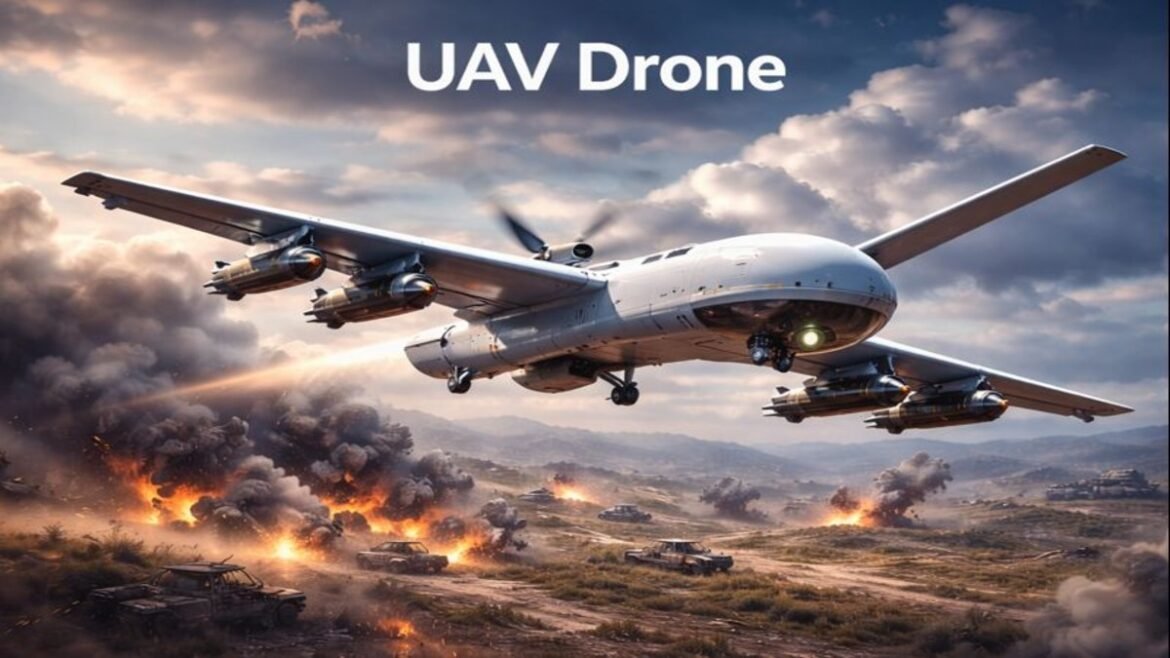
UAV drones handle surveillance, reconnaissance, and even combat missions. They reduce risk to human pilots and provide real-time intelligence.
Commercial Applications
From inspecting power lines to delivering packages, businesses use UAVs to save time and money.
Consumer and Hobby Use
This is where most people meet drones—flying for fun, capturing memories, or learning aerial skills.
UAV Drones in Agriculture
Crop Monitoring
Farmers use UAV drones to scan fields, identify disease, and check crop health. It’s like giving crops a regular medical checkup.
Precision Farming
Drones help apply fertilizers and pesticides only where needed. Less waste, better yield.
UAV Drones in Photography and Filmmaking
Aerial Photography
UAV drones give photographers a bird’s-eye view without helicopters. Weddings, real estate, travel—you name it.
Cinematic Video Production
Smooth, dramatic shots once reserved for Hollywood are now accessible to independent creators.
UAV Drones for Surveillance and Security
Border and Area Monitoring
Governments use UAVs to monitor borders and large areas efficiently.
Disaster Response
After earthquakes or floods, drones reach places humans can’t. They save time—and lives.
Conclusion
UAV drones are no longer futuristic toys—they’re powerful tools shaping modern life. From farms and film sets to disaster zones and defense systems, their impact is massive and growing fast.
Whether you’re a hobbyist or a professional, understanding UAV drones helps you stay ahead in a world that’s increasingly looking up.
The sky isn’t the limit anymore—it’s just the beginning.
FAQs
1. What does UAV stand for?
UAV stands for Unmanned Aerial Vehicle.
2. Are UAV drones legal to use?
Yes, but laws vary by country. Always follow local regulations.
3. Can UAV drones fly autonomously?
Yes, many UAVs use GPS and AI for autonomous missions.
4. How long can a UAV drone fly?
Consumer drones average 20–40 minutes; military UAVs can fly for hours.
5. Are UAV drones expensive?
Prices range from under $100 to millions, depending on size and purpose.