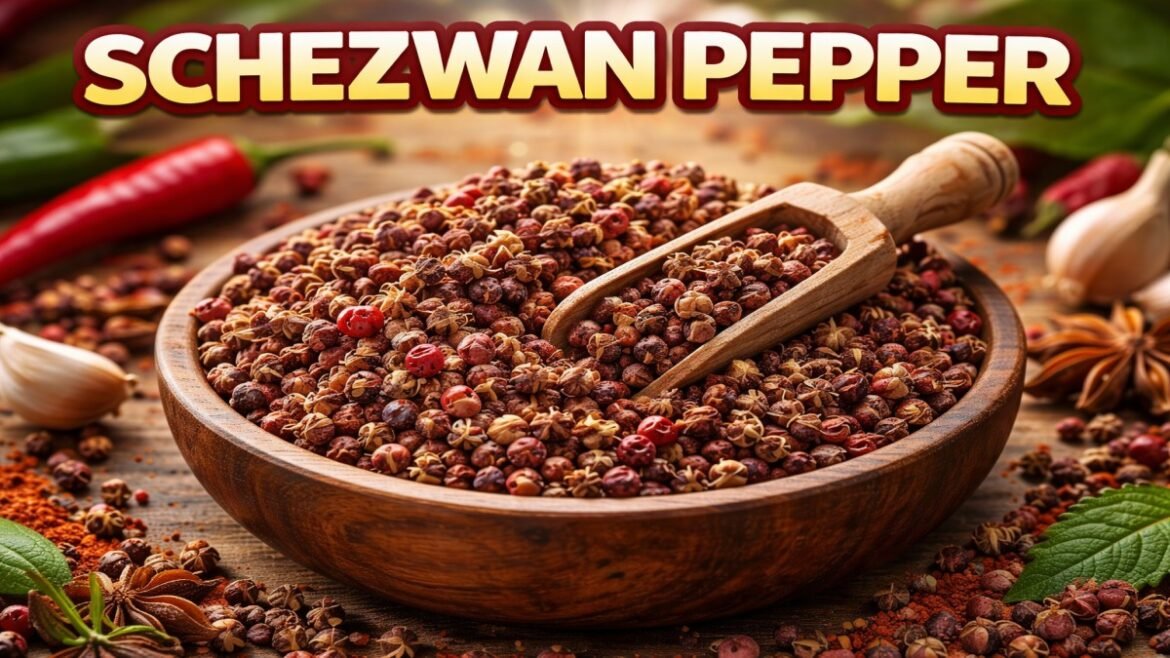
Schezwan pepper is one of those ingredients that instantly wakes up your taste buds. It doesn’t just bring heat—it delivers a unique, tingling, almost electric sensation that sets it apart from ordinary spices. If you’ve ever eaten authentic Sichuan or Schezwan cuisine and wondered “What is that numbing, citrusy spice?”—you’ve already met schezwan pepper.
In this in-depth guide, we’ll explore what schezwan pepper really is, where it comes from, how it’s used, its health benefits, and why it plays such a starring role in Asian cooking.
What Is Schezwan Pepper?
Schezwan pepper, also known as Sichuan pepper, is not actually a pepper in the traditional sense. Surprisingly, it’s not related to black pepper or chili peppers at all.
It comes from the dried husks of berries from plants in the Zanthoxylum genus. These berries are native to China and parts of Asia and are famous for creating a numbing, tingling sensation called “má.”
Scientific Name and Classification
- Scientific Name: Zanthoxylum species
- Family: Rutaceae (the citrus family)
- Common Names:
- Schezwan pepper
- Sichuan pepper
- Chinese prickly ash
- Szechuan peppercorn
Because it belongs to the citrus family, schezwan pepper has subtle lemony and floral notes.
Origin and History of Schezwan Pepper
Roots in Sichuan Cuisine
Schezwan pepper originates from the Sichuan province of China, where bold, spicy, and complex flavors dominate local cuisine. For centuries, it has been used alongside chili peppers to create the iconic má là flavor—numbing (má) plus spicy (là).
Traditional and Medicinal Use
Historically, schezwan pepper was also used in traditional Chinese medicine for digestion, pain relief, and circulation.
Flavor Profile of Schezwan Pepper
Schezwan pepper doesn’t burn like chili peppers. Instead, it delivers:
- A citrusy aroma
- Mild warmth
- A tingling, numbing sensation on the tongue
Think of it like a gentle electric buzz mixed with lemon zest—unexpected, but addictive.
Schezwan Pepper vs Black Pepper
| Feature | Schezwan Pepper | Black Pepper |
|---|---|---|
| Heat | Numbing, mild | Sharp and hot |
| Flavor | Citrusy, floral | Earthy, pungent |
| Family | Citrus | Piperaceae |
| Sensation | Tingling | Burning |
They may look similar, but they behave very differently in cooking.
Types of Schezwan Pepper
Red Schezwan Pepper
- More citrusy
- Slightly milder
- Common in Chinese cooking
Green Schezwan Pepper
- Fresher and brighter
- More intense numbing effect
- Popular in modern Asian dishes
Both types are aromatic and powerful in small amounts.
Culinary Uses of Schezwan Pepper
In Traditional Chinese Cooking
Schezwan pepper is essential in:
- Kung Pao chicken
- Mapo tofu
- Hot pots
- Dry-fried dishes
In Schezwan Sauce
The famous Schezwan sauce blends schezwan pepper with:
- Red chilies
- Garlic
- Ginger
- Soy sauce
This sauce is widely used in Indo-Chinese cuisine.
Modern and Fusion Uses
Today, chefs use schezwan pepper in:
- Spice rubs
- Oils
- Noodles
- Fried rice
- Even chocolates and cocktails
How to Use Schezwan Pepper in Cooking
Whole vs Ground
- Whole: Toast lightly for aroma
- Ground: Easier to blend into dishes
Best Cooking Tips
- Toast briefly to release oils
- Use sparingly—it’s potent
- Combine with chilies for balanced heat
A little goes a long way.
Health Benefits of Schezwan Pepper
Aids Digestion
Schezwan pepper stimulates digestive enzymes and improves gut health.
Anti-Inflammatory Properties
It contains compounds that help reduce inflammation and pain.
Improves Blood Circulation
Traditionally used to promote circulation and warmth in the body.
Antibacterial Effects
Schezwan pepper has natural antibacterial and antifungal properties.
Nutritional Value of Schezwan Pepper
While used in small quantities, schezwan pepper contains:
- Antioxidants
- Essential oils
- Minerals like iron and potassium
It adds flavor without calories or fat.
Is Schezwan Pepper Spicy?
Not in the usual way. It doesn’t burn—it numbs. When combined with chili, it creates a layered heat experience that feels exciting rather than painful.
Conclusion
Schezwan pepper is a spice that breaks all the rules. It’s not hot like chili, not sharp like black pepper, yet unforgettable in every bite. With its citrusy aroma, numbing sensation, and deep cultural roots, it has earned its place as a star ingredient in Asian and global cuisine.
Whether you’re cooking authentic Sichuan dishes or experimenting in your kitchen, schezwan pepper adds drama, depth, and delight. Once you try it, there’s no going back.
FAQs
1. Is schezwan pepper the same as chili pepper?
No, schezwan pepper is not a chili. It causes numbing rather than burning heat.
2. Can schezwan pepper be eaten daily?
Yes, in small amounts. Moderation is key.
3. Why does schezwan pepper make the mouth numb?
It contains hydroxy-alpha-sanshool, which triggers nerve receptors.
4. Is schezwan pepper used outside Chinese cuisine?
Yes, it’s widely used in Indo-Chinese and fusion cooking.
5. Can I substitute schezwan pepper with black pepper?
Not really. The flavor and sensation are completely different.