Introduction: Why Olive Trees Are Gaining Attention in India
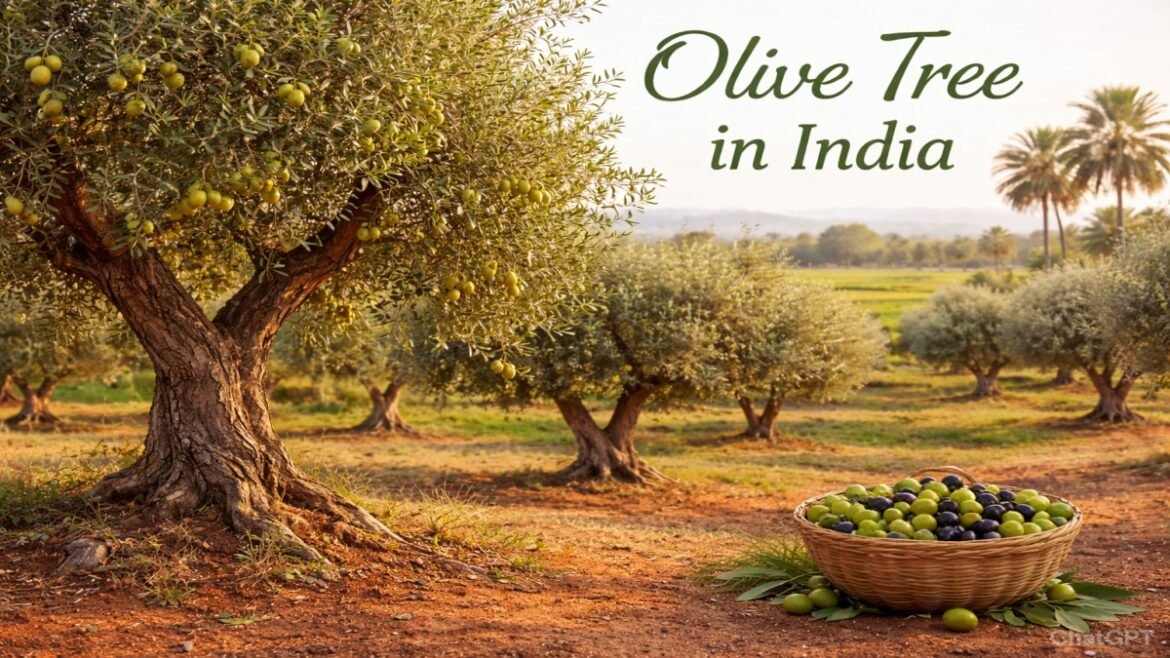
A few decades ago, the idea of Olive Tree in India sounded almost impossible. Olives were seen as a Mediterranean crop—meant for Spain, Italy, or Greece, not South Asia. But times have changed. With rising demand for olive oil, climate experimentation, and agricultural innovation, olive trees have quietly found a place in Indian soil.
Today, olive cultivation in India is no longer a novelty—it’s an emerging opportunity. Farmers, researchers, and policymakers are all exploring whether olives could become India’s next sustainable cash crop.
What Is an Olive Tree in India? A Quick Overview
The olive tree (Olea europaea) is a hardy, evergreen tree known for its long lifespan and economic value. Some olive trees live for hundreds—even thousands—of years. They thrive in semi-arid climates and are prized for their fruit, which is used to produce olive oil and table olives.
Key Characteristics of Olive Trees
- Drought-resistant once established
- Require well-drained soil
- Prefer mild winters and hot summers
- Long juvenile phase but productive for decades
History of Olive Cultivation in India
Olive cultivation in India officially began in the early 2000s. The initiative was largely driven by the need to reduce India’s dependence on imported edible oils.
Government-Led Experiments
Pilot projects were launched with international collaboration. Improved saplings, drip irrigation, and modern farming techniques were introduced to test whether olives could adapt to Indian conditions.
Regions Suitable for Olive Trees in India
Not all parts of India are suitable for olive farming. The tree needs specific climatic and soil conditions.
Rajasthan: India’s Olive Pioneer
Rajasthan emerged as the most promising state due to:
- Semi-arid climate
- Low humidity
- Cool winters
Other Potential Regions
- Parts of Himachal Pradesh
- Jammu & Kashmir
- Some dry regions of Gujarat
These areas offer similar temperature ranges and soil profiles suitable for olive cultivation.
Climate Requirements for Olive Trees
Understanding climate is crucial if olives are to succeed in India.
Temperature Needs
- Ideal range: 15°C to 30°C
- Can tolerate heat up to 40°C
- Require mild chilling in winter for flowering
Rainfall and Humidity
- Low to moderate rainfall
- Excess humidity increases disease risk
Soil Conditions for Successful Olive Farming
Olive trees are not too picky—but drainage is non-negotiable.
Best Soil Types
- Sandy loam
- Gravelly soils
- Slightly alkaline pH (6.5–8.5)
Waterlogged soils can damage roots and reduce yield.
Olive Varieties Grown in India
Imported cultivars have shown better adaptability than traditional varieties.
Popular Olive Varieties
- Barnea
- Arbequina
- Picual
- Picholine
These varieties are chosen for oil yield, climate tolerance, and disease resistance.
How Olive Trees Are Cultivated in India
Olive farming in India relies heavily on modern techniques.
Planting and Spacing
- Saplings planted 5–7 meters apart
- High-density plantations are also being tested
Irrigation Methods
Drip irrigation is essential. It conserves water and ensures steady moisture supply in dry regions.
Time Required for Olive Trees to Bear Fruit
Patience is key with olive trees.
- Initial fruiting: 3–4 years
- Commercial yields: 6–8 years
- Full productivity: After 10 years
Once established, the tree can remain productive for decades.
Olive Oil Production in India
India’s olive oil production is still small but growing.
Cold-Pressed Olive Oil
Locally produced olive oil is often cold-pressed, retaining flavor and nutritional value.
Quality vs Quantity
While yields are lower than Mediterranean countries, quality standards are improving steadily.
Health Benefits of Olive Oil
One major reason for olive cultivation is health awareness.
Nutritional Advantages
- Rich in monounsaturated fats
- High in antioxidants
- Supports heart health
- Anti-inflammatory properties
These benefits are driving consumer demand across India.
Economic Benefits for Indian Farmers
Olive trees offer long-term financial stability.
Why Farmers Are Interested
- High market value of olive oil
- Lower water requirement than many crops
- Long productive lifespan
Though initial investment is high, returns improve significantly over time.
Conclusion: Are Olive Trees the Future of Indian Agriculture?
Olive trees may not replace staple crops, but they offer something equally valuable—diversification. In a country facing water stress and rising health awareness, olives present a smart, forward-looking option.
With patience, support, and innovation, olive trees could redefine how India thinks about edible oils and sustainable farming.
Frequently Asked Questions (FAQs)
1. Can olive trees grow successfully in India?
Yes, especially in semi-arid regions like Rajasthan with proper irrigation and care.
2. How long does an olive tree take to produce olives?
Initial fruiting begins in 3–4 years, with full yields after 6–8 years.
3. Is olive farming profitable in India?
It can be profitable in the long term, though initial costs are high.
4. Which olive variety is best for India?
Varieties like Barnea and Arbequina have shown good adaptability.
5. Does olive cultivation require a lot of water?
No. Olive trees are drought-tolerant and require less water than many traditional crops.