Introduction to Multipoint Control Unit
Modern communication systems rely heavily on real-time collaboration tools. Video conferencing, online meetings, remote education, and telemedicine all depend on technologies that allow multiple users to communicate simultaneously. One key technology enabling these multi-participant communications is the Multipoint Control Unit (MCU).
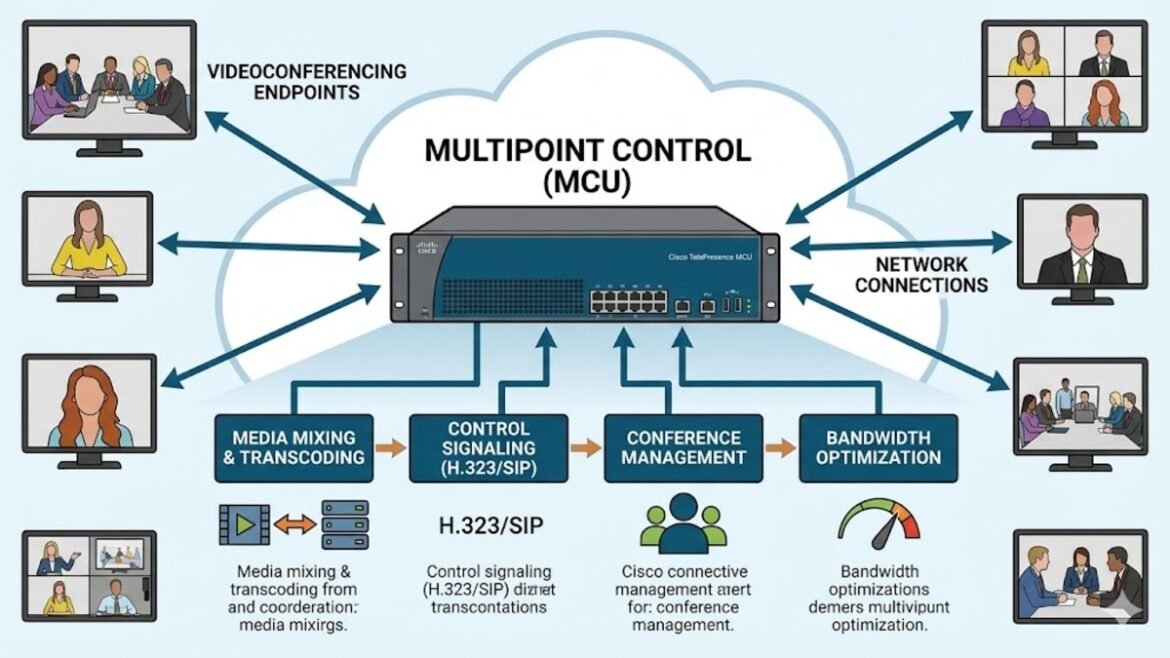
A Multipoint Control Unit acts as the central hub of a video conferencing system. Imagine a digital meeting room where people from different locations connect through cameras and microphones. Without a central management component, each participant would need to connect directly to every other participant, creating a complex network of connections. The MCU simplifies this process by acting as a bridge that manages all communication streams.
As remote collaboration continues to grow, understanding how a multipoint control unit works is essential for network engineers, IT professionals, and students studying computer networking or telecommunications.
Definition of Multipoint Control Unit
A Multipoint Control Unit (MCU) is a device or software server used in video conferencing systems to connect three or more communication endpoints into a single conference session.
In simple terms, it acts like a digital bridge where multiple participants join a meeting. Instead of sending data streams directly to each other, all participants send their audio and video streams to the MCU. The MCU processes these streams and redistributes them to every participant in the conference.
This centralized structure improves efficiency and simplifies network management. According to networking standards used in video conferencing, an MCU manages audio, video, and data streams while controlling conference resources and participant communication.
Basic Concept of MCU in Networking
The basic idea behind an MCU is similar to a conference call operator. In a traditional telephone conference call, multiple callers dial into a central bridge that connects everyone together. The MCU performs the same role for multimedia communication systems.
Instead of simply connecting audio signals, however, the MCU handles complex media streams including video, audio, and presentation data. It processes these streams and ensures that all participants receive synchronized communication.
Modern MCU systems also support advanced capabilities such as layout management, video transcoding, echo cancellation, and compatibility between different communication protocols.
Architecture of Multipoint Control Unit
The architecture of an MCU is designed to manage multimedia streams efficiently while maintaining real-time communication performance. Most MCU implementations follow a structured architecture consisting of two primary components: the Multipoint Controller (MC) and the Multipoint Processor (MP).
Multipoint Controller (MC)
The Multipoint Controller is responsible for controlling the conference session and managing communication between participating endpoints.
Role of Multipoint Controller
The MC handles signaling protocols that establish connections between participants. It determines the capabilities of each endpoint, such as supported video formats, audio codecs, and bandwidth availability. Based on this information, the MC coordinates the communication session so that all participants can interact effectively.
This component also manages conference control tasks such as participant joining, leaving, and overall session management.
Multipoint Processor (MP)
The Multipoint Processor performs the actual media processing tasks required for video conferencing.
Media Processing Functions
The MP processes incoming streams by decoding, mixing, and re-encoding audio and video signals. This allows the MCU to combine multiple streams into a single output or distribute selected streams to participants.
Typical processing tasks include:
- Video mixing and layout creation
- Audio mixing and synchronization
- Transcoding between different codecs
- Stream switching based on active speakers
These functions allow the MCU to deliver a seamless conferencing experience even when participants use different devices or network conditions.
Conclusion
The Multipoint Control Unit (MCU) is a fundamental component of many video conferencing systems. It acts as a centralized hub that manages audio, video, and data streams for multiparty communication.
By collecting, processing, and redistributing media streams, MCUs allow organizations to conduct real-time meetings between participants located around the world. Their architecture, which includes multipoint controllers and processors, ensures efficient conference management and media handling.
Although newer architectures such as SFUs have emerged, MCUs remain important for environments requiring centralized media processing, compatibility, and advanced conferencing features.
FAQs
1. What is a Multipoint Control Unit?
A Multipoint Control Unit (MCU) is a device or server used in video conferencing systems to connect multiple participants into a single communication session.
2. What is the main function of an MCU?
Its main function is to manage, mix, and distribute audio and video streams between participants in a multipoint conference.
3. What are the components of an MCU?
An MCU typically consists of a Multipoint Controller (MC) and one or more Multipoint Processors (MP) that handle conference control and media processing.
4. Where are MCUs used?
They are widely used in video conferencing systems, telemedicine, online education platforms, and enterprise communication networks.
5. What is the difference between MCU and SFU?
An MCU mixes media streams into a single output, while an SFU simply forwards streams between participants without processing them.