Introduction to Langur Monkeys
Langur monkeys are among the most fascinating primates you’ll ever encounter. With their long tails, expressive faces, and calm demeanor, they often look like wise old philosophers of the forest. Found mainly across South and Southeast Asia, langur monkeys have adapted beautifully to forests, mountains, and even bustling cities. But there’s far more to these graceful creatures than meets the eye.
Scientific Classification of Langur Monkeys
Langur monkeys belong to the Old World monkey family, scientifically known as Cercopithecidae. Unlike New World monkeys, langurs don’t have prehensile tails, but what they lack in grip, they make up for in balance and agility.
Genus and Species Overview
Langurs are divided into several genera, including Semnopithecus, Trachypithecus, and Presbytis. Each genus contains multiple species adapted to specific regions and environments.
Old World Monkeys Explained
Old World monkeys generally have narrow noses, downward-facing nostrils, and well-developed social systems. Langurs fit this description perfectly and are especially known for their leaf-based diet.
Physical Characteristics of Langur Monkeys
Langur monkeys are medium to large-sized primates with slim bodies and exceptionally long tails, often longer than their bodies.
Size, Fur, and Color Variations
Their fur color ranges from silvery gray and golden yellow to deep black, depending on the species. Adult langurs typically weigh between 10 to 25 kilograms.
Tail Length and Function
The tail isn’t just for show. It acts like a balancing pole when they leap across trees, making them excellent acrobats of the canopy.
Types of Langur Monkeys
There are several well-known types of langur monkeys, each with unique traits.
Gray Langur
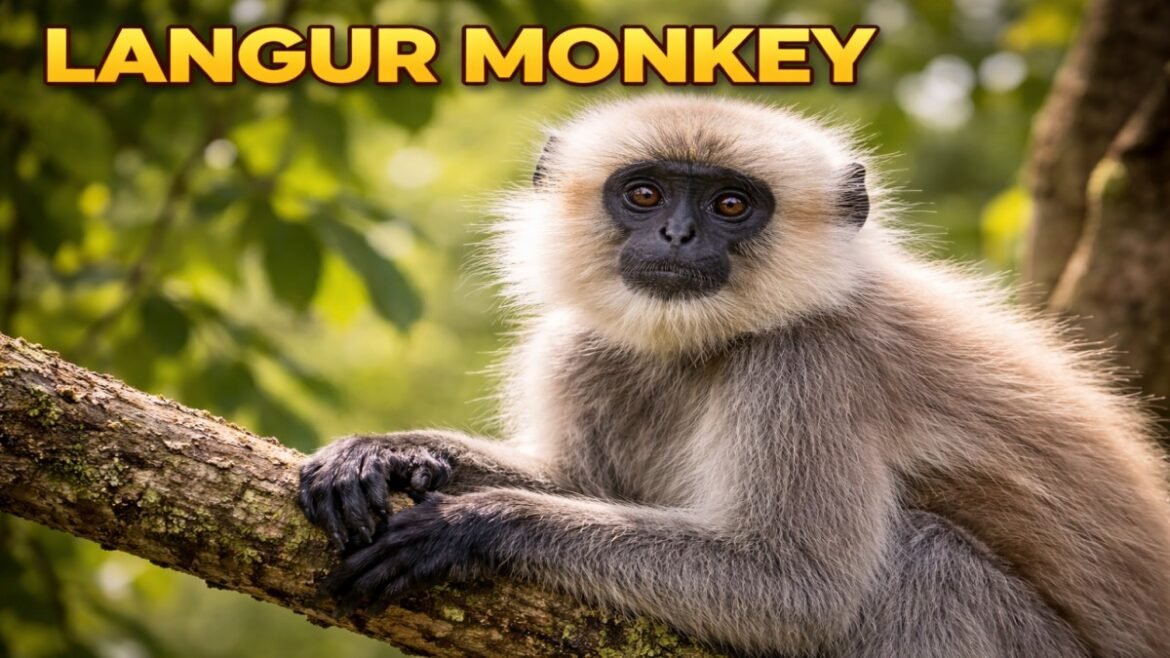
The gray langur is the most common and widely recognized species, especially in India. It’s often seen near temples and urban areas.
Golden Langur
With its striking golden fur, this endangered species is found mainly in parts of India and Bhutan.
Nilgiri Langur
Native to the Western Ghats of India, the Nilgiri langur has glossy black fur and a gentle temperament.
Natural Habitat and Distribution
Langur monkeys are incredibly adaptable. They live in tropical rainforests, dry deciduous forests, mountainous regions, and even city outskirts.
Forests, Mountains, and Urban Areas
From Himalayan foothills to busy towns, langurs manage to coexist with humans better than many other wildlife species.
Diet and Feeding Habits
Langurs are primarily herbivores, with a digestive system specially adapted for breaking down tough plant material.
Herbivorous Preferences
Their diet includes leaves, fruits, flowers, seeds, and bark. Leaves form the bulk of their meals.
Seasonal Diet Changes
When fruits are scarce, langurs rely heavily on mature leaves, showcasing their dietary flexibility.
Social Structure and Group Behavior
Langurs live in groups called troops, which can range from a few individuals to over 50 members.
Troop Size and Hierarchy
Most troops have a dominant male, several females, and their offspring. Social bonds are strong and maintained through grooming.
Communication Methods
Langur monkeys communicate using a mix of sounds, facial expressions, and body postures.
Vocal Sounds and Body Language
Alarm calls warn the troop of predators, while softer sounds maintain group cohesion.
Daily Life and Activity Patterns
Langurs are diurnal, meaning they’re active during the day. Their routines include feeding, resting, grooming, and playing.
Reproduction and Life Cycle
Langur monkeys have a relatively slow reproductive rate.
Mating and Infant Care
Females usually give birth to one infant after a gestation period of about six months. Babies cling tightly to their mothers.
Langur Monkeys and Humans
Langurs share a complex relationship with humans.
Cultural and Religious Importance
In Hindu culture, langurs are associated with Lord Hanuman and are often protected and fed.
Human–Wildlife Conflict
Despite reverence, conflicts arise when langurs raid crops or homes for food.
Predators and Natural Threats
Leopards, large birds of prey, and snakes pose natural threats, especially to young langurs.
Conservation Status
While some species are stable, others face serious risks.
Endangered Species and Protection Efforts
Habitat loss, deforestation, and illegal wildlife trade threaten certain langur species. Conservation programs and protected areas are vital for their survival.
Conclusion
Langur monkeys are a perfect example of nature’s balance—graceful, intelligent, and adaptable. Whether swinging through forest canopies or sitting calmly near temples, they remind us of the delicate connection between wildlife and humans. Protecting langurs means preserving ecosystems, cultural heritage, and biodiversity for future generations.
FAQs
1. Are langur monkeys dangerous to humans?
Generally no. They are calm but can become aggressive if threatened or provoked.
2. What do langur monkeys eat the most?
Leaves are their primary food source, supplemented by fruits and flowers.
3. Where are langur monkeys found?
Mostly in India, Nepal, Bhutan, Sri Lanka, and parts of Southeast Asia.
4. Are langur monkeys endangered?
Some species like the Golden Langur are endangered, while others are stable.
5. Why are langur monkeys considered sacred?
They are linked to Lord Hanuman in Hindu mythology and symbolize strength and devotion.