A sharp, well-defined jawline is often associated with youth, confidence, and facial symmetry. With the rise of face yoga and natural fitness trends, jawline exercises have become extremely popular. Social media is filled with promises of chiselled jaws, reduced double chins, and tighter facial skin without surgery or expensive treatments.
But do jawline exercises actually work, or are they just another internet myth?
Let’s break it all down in a clear, honest, and practical way—what jawline exercises are, how they work, their real benefits, limitations, and how to do them correctly.
What Are Jawline Exercises?
Jawline exercises are targeted facial movements designed to activate and strengthen the muscles around the jaw, chin, neck, and lower face. These exercises focus on muscles such as the masseter, platysma, and surrounding facial muscles.
Think of them as a mini workout for your face similar to how gym exercises tone your arms or legs.
Why Jawline Exercises Have Become So Popular
The popularity of jawline exercises comes from three major factors:
- Non-invasive – No needles, surgery, or downtime
- Low cost – Can be done anywhere, anytime
- Aesthetic appeal – Promises of a slimmer face and defined jaw
With growing awareness around natural beauty and self-care, people are increasingly exploring facial fitness as part of their daily routine.
Do Jawline Exercises Really Work?
This is the big question.
The Honest Answer
Jawline exercises can help improve muscle tone, posture, and awareness of facial tension. However, they do not magically burn fat in the face.
What They Can Do
- Strengthen jaw and neck muscles
- Improve facial muscle control
- Slightly enhance definition over time
- Reduce muscle stiffness and tension
What They Can’t Do
- Spot-reduce fat
- Replace weight loss
- Dramatically change bone structure
Jawline exercises work best when combined with overall fat loss, good posture, hydration, and a healthy lifestyle.
Benefits of Jawline Exercises
1. Improved Jaw Definition
Consistent practice can make jaw muscles firmer, which may enhance the appearance of the jawline.
2. Reduced Facial Tension
Many people clench their jaws due to stress. These exercises help relax tight muscles and may reduce discomfort.
3. Better Neck and Chin Appearance
Exercises that target the neck and chin can help improve posture and reduce sagging caused by muscle weakness.
4. Enhanced Blood Circulation
Facial movement increases blood flow, which may support skin health and give a natural glow.
5. Mind–Body Awareness
Jaw exercises make you more conscious of facial habits like clenching, grinding, or poor posture.
Best Jawline Exercises You Can Do at Home
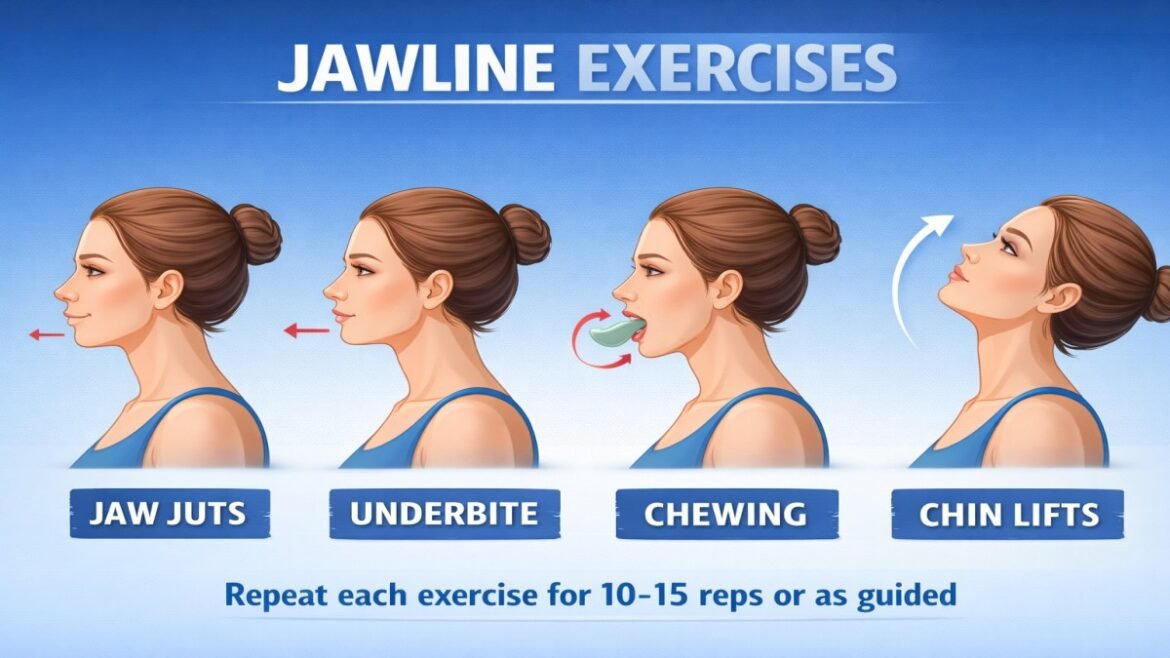
1. Chin Lift Exercise
How to do it:
- Look up toward the ceiling
- Pucker your lips as if kissing the ceiling
- Hold for 5–10 seconds
- Repeat 10 times
Benefits: Targets jaw, chin, and neck muscles.
2. Jaw Clench Exercise
How to do it:
- Sit straight and clench your jaw
- Smile while keeping teeth clenched
- Hold for 5 seconds
- Repeat 10–15 times
Benefits: Activates masseter muscles for jaw strength.
3. Lion Pose (Face Yoga)
How to do it:
- Open your mouth wide
- Stick your tongue out fully
- Hold for 8–10 seconds
- Repeat 5 times
Benefits: Reduces facial tension and tones lower face.
4. Neck Curl-Up
How to do it:
- Lie on your back
- Lift your head slightly and look at the ceiling
- Hold for 10 seconds
- Repeat 10 times
Benefits: Strengthens neck and under-chin muscles.
5. Vowel Exercise
How to do it:
- Open your mouth and exaggerate vowels “O” and “E”
- Repeat slowly for 1–2 minutes
Benefits: Tones facial and jaw muscles.
How Often Should You Do Jawline Exercises?
Consistency matters more than intensity.
Recommended routine:
- 10–15 minutes per day
- 5–6 days a week
- Results may appear in 4–8 weeks
Overdoing exercises can lead to muscle fatigue or jaw discomfort, so moderation is key.
Conclusion
Jawline exercises are not a miracle solution—but they’re not useless either. When done correctly and consistently, they can help improve muscle tone, posture, and facial awareness. However, true jawline definition depends largely on genetics, overall fat levels, and lifestyle habits.
Think of jawline exercises as a supporting tool, not a magic shortcut. Combine them with healthy living, and you’ll see the best version of your natural facial structure shine through.
FAQs About Jawline Exercises
1. How long does it take to see results from jawline exercises?
Most people notice subtle changes in 4–8 weeks with consistent practice.
2. Can jawline exercises remove face fat?
No. Fat loss occurs through overall weight loss, not spot reduction.
3. Are jawline exercises safe?
Yes, when done gently and correctly. Avoid over-clenching.
4. Can jawline exercises cause jaw pain?
Overdoing or improper technique can cause discomfort. Moderation is key.
5. Do jaw exerciser tools work better than exercises?
Not necessarily. Simple facial exercises are usually enough and safer.