Introduction to Ivory Material
What Is Ivory Material?
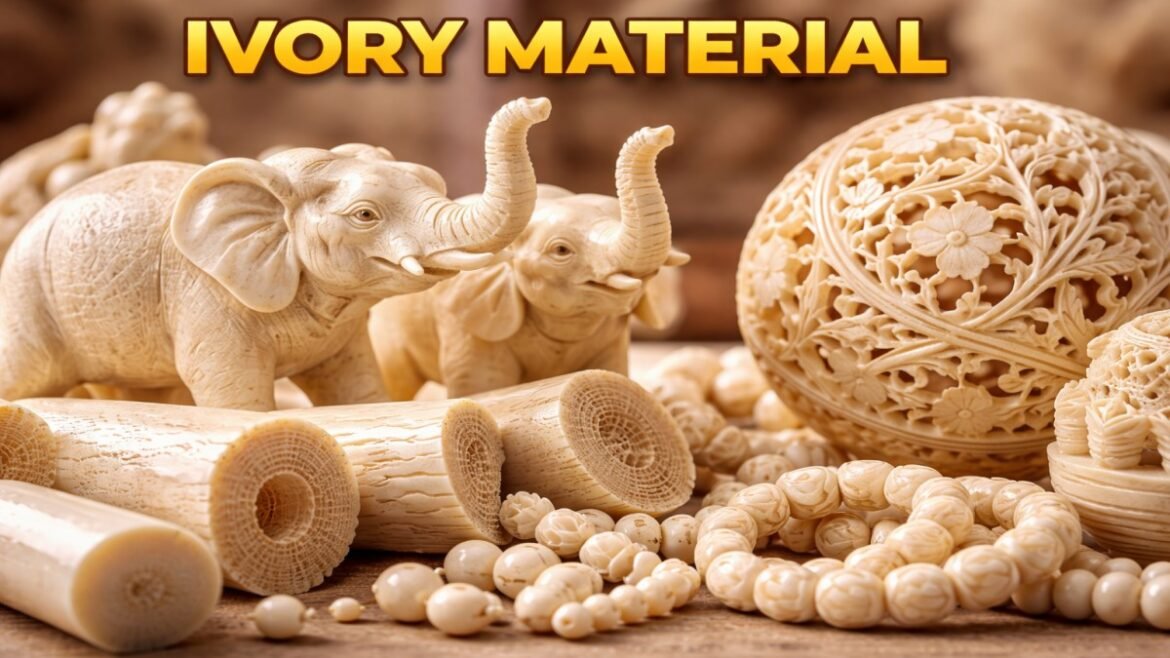
Ivory material is a hard, creamy-white substance traditionally obtained from the tusks and teeth of certain animals, most famously elephants. It has a smooth texture, fine grain, and a natural elegance that made it one of the most desirable materials in human history. Long before plastics and metals dominated manufacturing, ivory was prized for its beauty and versatility.
Why Ivory Has Fascinated Humans for Centuries
There’s something undeniably captivating about ivory. Think of it as nature’s version of luxury marble—rare, smooth, and easy to shape. For centuries, artisans carved ivory into everything from jewelry to religious icons, associating it with wealth, power, and refinement.
Historical Background of Ivory
Ancient Civilizations and Ivory Use
Ancient Egyptians used ivory for jewelry, combs, and ceremonial objects. In Mesopotamia and the Indus Valley, ivory carvings symbolized status and craftsmanship. Even early Chinese dynasties valued ivory for seals and ornaments.
Ivory in Art, Religion, and Royalty
Ivory found its way into royal courts and sacred spaces. From Christian religious relics to Buddhist statues, ivory became a spiritual medium, believed to represent purity and divine beauty.
Ivory Trade Routes in History
Ivory trade routes once stretched across Africa, Asia, and Europe. These routes were economic lifelines—but they also planted the seeds of overexploitation that would later devastate wildlife populations.
Sources of Natural Ivory
Elephant Ivory
Elephant tusks are the most well-known source of ivory. Their large size and workable texture made them ideal for carvings and tools.
Walrus, Hippo, and Narwhal Ivory
Other animals like walruses and hippos also produce ivory, often denser and harder than elephant ivory. Narwhal tusks, sometimes called “unicorn horns,” were historically surrounded by myth and legend.
Differences Between Ivory Sources
Each type of ivory has unique grain patterns and density, which skilled artisans could identify almost instantly.
Physical and Chemical Properties of Ivory
Texture, Color, and Grain
Ivory is smooth yet slightly porous, with subtle grain lines that form natural patterns. Its color ranges from creamy white to pale yellow.
Durability and Workability
Ivory is strong but not brittle, making it easy to carve without shattering—one of its biggest advantages over bone.
How Ivory Ages Over Time
Like fine wine, ivory changes with age. Exposure to light and air can cause yellowing, adding character but also fragility.
Traditional Uses of Ivory Material
Musical Instruments
Piano keys, violin bows, and bagpipe fittings once relied heavily on ivory for its tactile quality.
Jewelry and Decorative Items
From bangles to chess pieces, ivory symbolized luxury and artistry.
Tools, Handles, and Carvings
Knife handles, billiard balls, and intricate carvings were common ivory applications.
Ivory in Modern Times
Decline of Ivory Usage
As awareness grew about animal conservation, ivory usage declined sharply, replaced by safer alternatives.
Ivory in Antiques and Collectibles
Today, ivory is mostly found in antiques, often protected under strict regulations.
Ethical Concerns Surrounding Ivory
Impact on Wildlife
The demand for ivory led to dramatic declines in elephant populations, pushing some species to the brink of extinction.
Poaching and Illegal Trade
Despite bans, illegal ivory trade persists, fueled by black markets and high profits.
Conservation Challenges
Protecting animals while respecting cultural heritage remains a global challenge.
Legal Status of Ivory Worldwide
International Ivory Bans
Organizations like CITES have imposed global bans on ivory trade.
Ivory Laws in Different Countries
Many countries allow limited trade in antiques but ban new ivory entirely.
Exceptions and Regulations
Permits, documentation, and age verification are often required.
Ivory Identification
How to Identify Real Ivory
Real ivory shows unique grain patterns called Schreger lines.
Common Imitations
Plastic, resin, and bone are often used to mimic ivory.
Scientific Testing Methods
Advanced testing like radiocarbon dating can confirm authenticity.
Conclusion
Ivory material tells a powerful story—one of beauty, craftsmanship, and caution. While it once symbolized luxury and skill, it now stands as a reminder of the consequences of unchecked demand. Thanks to modern alternatives and stricter laws, we’re finally learning how to appreciate history without harming the future. The legacy of ivory lives on, not in trade, but in education and conservation.
FAQs
1. Is ivory still legal to buy or sell?
In most countries, new ivory is illegal, but antiques may be allowed under strict regulations.
2. What is the best alternative to ivory?
Synthetic ivory and vegetable ivory are the most popular and ethical alternatives.
3. How can I tell if an item is real ivory?
Look for natural grain patterns or consult a professional appraiser.
4. Why was ivory so valuable historically?
Its durability, beauty, and ease of carving made it highly desirable.
5. Does owning antique ivory harm wildlife today?
Owning antiques doesn’t directly harm wildlife, but trade must follow legal guidelines.