
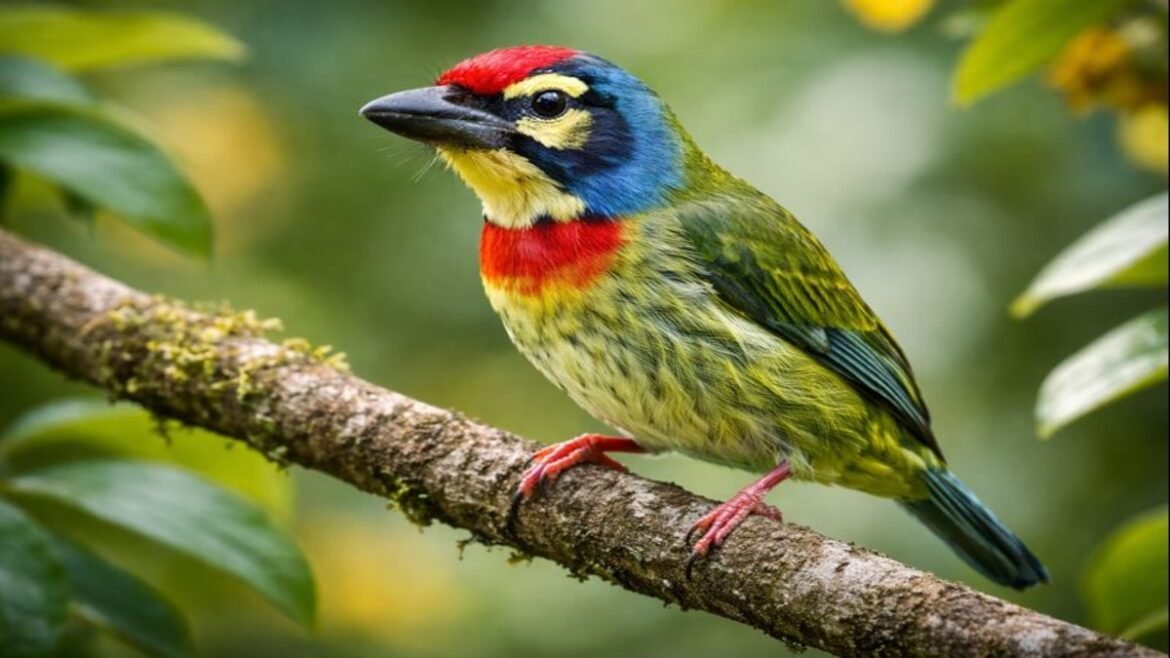
Introduction to the Barbet Bird
If you’ve ever heard a rhythmic “kutur-kutur” echoing through a forest, chances are you were near a barbet bird. Bright, bold, and surprisingly vocal, barbets are among the most charming birds found in tropical regions. Often called the forest’s drummers, these birds bring both color and sound to the wild.
What Is a Barbet Bird?
Barbets are medium-sized birds known for their stout bodies, thick necks, and strong beaks. They belong to a group of birds that love forests, fruit trees, and tree cavities.
Why Barbet Birds Are Unique
What makes barbets stand out is their rainbow-like plumage combined with repetitive, mechanical calls. They may not sing like nightingales, but their steady calls are unforgettable.
Scientific Classification of Barbet Birds
Family and Genus
Barbet birds belong to the family Megalaimidae (Asian barbets), Lybiidae (African barbets), and Capitonidae (American barbets). Despite regional differences, their behavior and appearance remain quite similar.
Relationship with Woodpeckers and Toucans
Barbets are closely related to woodpeckers and toucans. Like woodpeckers, they nest in tree cavities, and like toucans, they love fruits.
Physical Characteristics of Barbet Birds
Size and Shape
Barbets are compact birds, usually ranging from 15 to 30 cm in length. Their bodies are sturdy, making them look almost chunky on tree branches.
Plumage and Colors
Their feathers are a painter’s dream—greens, reds, yellows, blues, and blacks often appear in striking combinations. It’s like nature decided not to hold back on color.
Beak Structure
Their thick, powerful beaks are perfect for chiseling wood and crushing fruits. Bristles around the beak protect their eyes while feeding.
Types of Barbet Birds
Asian Barbets
Found across South and Southeast Asia, species like the Coppersmith Barbet and Blue-throated Barbet are common sights in India.
African Barbets
African barbets are more diverse and often smaller. Some are solitary, while others live in family groups.
American Barbets
These barbets inhabit Central and South America, especially rainforests, and are known for their vibrant coloration.
Habitat and Distribution
Natural Habitats
Barbets thrive in forests, woodlands, plantations, and even gardens with large trees.
Geographic Range
They are found across Asia, Africa, and the Americas, mainly in tropical and subtropical regions.
Urban and Forest Adaptations
Some species have adapted well to urban environments, often seen perched on fruit trees in cities.
Diet and Feeding Habits
Fruits and Berries
Barbets are primarily frugivorous. Figs, berries, and wild fruits make up most of their diet.
Insects and Small Prey
During breeding seasons, they also eat insects to provide protein to their chicks.
Behavior and Lifestyle
Vocalization and Calls
Barbets are famous for their repetitive calls that sound like hammering. These calls help mark territory and attract mates.
Social Behavior
Most barbets are monogamous and territorial. Some species are seen in pairs, while others form small family groups.
Breeding and Nesting
Nesting in Tree Cavities
Barbets excavate holes in dead or soft wood to create nests—hard work, but worth it.
Eggs and Parental Care
They usually lay 2–4 eggs. Both parents share incubation and feeding duties, showing strong parental teamwork.
Role of Barbet Birds in the Ecosystem
Seed Dispersal
By eating fruits and spreading seeds, barbets help forests regenerate naturally.
Forest Health Indicators
A healthy barbet population often signals a healthy forest ecosystem.
Barbet Birds in the Indian Subcontinent
Common Species in India
- Coppersmith Barbet
- Brown-headed Barbet
- Lineated Barbet
Cultural Significance
In India, the Coppersmith Barbet’s call is often associated with early mornings and rural life.
Threats and Conservation Status
Habitat Loss
Deforestation and urban expansion reduce nesting and feeding areas.
Conservation Efforts
Most barbet species are listed as Least Concern, but habitat conservation remains crucial.
Interesting Facts About Barbet Birds
- Their call sounds like metal striking metal.
- They can stay still for long periods while calling.
- Both parents dig nesting holes together.
How to Spot a Barbet Bird
Best Time and Places
Early mornings near fruiting trees are ideal.
Tips for Birdwatchers
Listen first—barbets are easier to hear than see.
Conclusion
The barbet bird is a living splash of color and sound in tropical forests. From their vibrant feathers to their rhythmic calls, they add personality to the natural world. Whether you’re a birdwatcher, a nature lover, or just curious, barbets remind us that nature loves to be loud, bright, and full of life.
FAQs
1. Is the barbet bird a woodpecker?
No, but it is closely related and shares nesting habits.
2. What does a barbet bird eat?
Mostly fruits, berries, and insects.
3. Are barbet birds found in cities?
Yes, some species adapt well to urban areas.
4. Why is it called the Coppersmith Barbet?
Because its call sounds like a coppersmith hammering metal.
5. Are barbet birds endangered?
Most species are not endangered, but habitat protection is important.