Introduction to Black Soil
Black soil is one of the most valuable natural resources for agriculture. Farmers often call it “the farmer’s best friend” because of its incredible fertility and moisture-holding power. If soil were a sponge, black soil would be the premium-quality one—soaking up water and nutrients and releasing them slowly to crops.
What Is Black Soil?
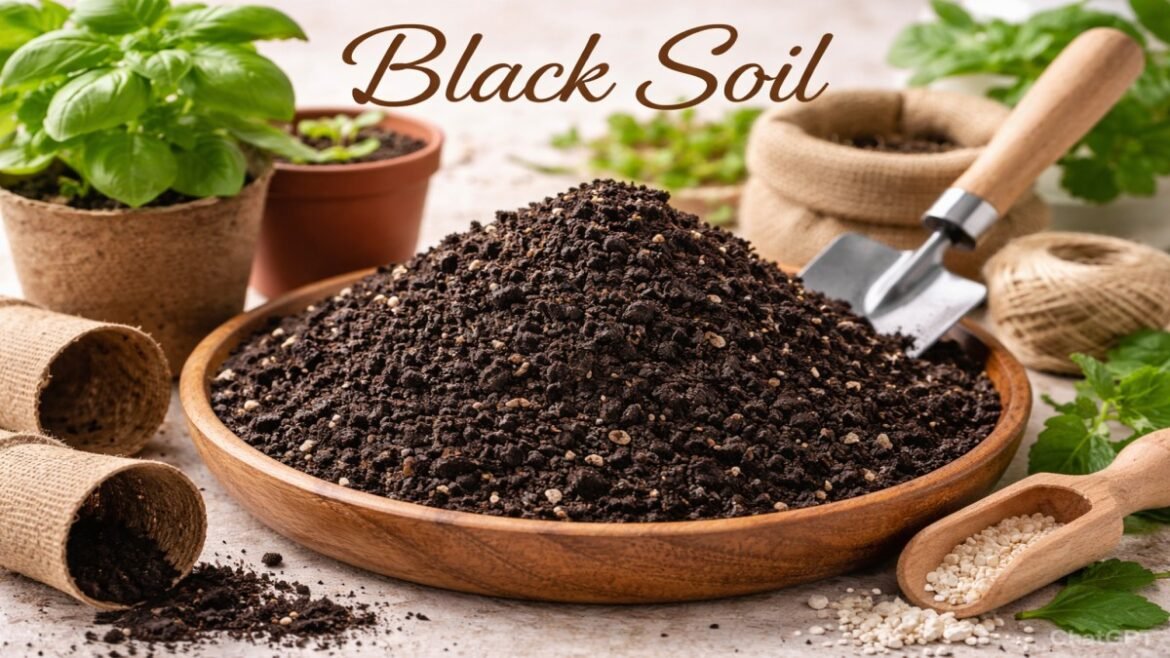
Black soil is a type of soil known for its dark color, high clay content, and exceptional ability to retain moisture. It is especially suitable for farming in regions with irregular rainfall.
Origin and Formation
Black soil is formed mainly from the weathering of volcanic rocks. Over thousands of years, lava flows broke down into fine particles rich in minerals. These particles mixed with organic matter, giving the soil its dark color and nutrient-rich nature.
Why Is It Called Black Soil?
The deep black or dark brown color comes from the presence of iron, magnesium, and organic compounds. This color also helps the soil absorb heat, which benefits crop growth.
Major Characteristics of Black Soil
Texture and Structure
Black soil is clayey in nature. When wet, it becomes sticky, and when dry, it develops deep cracks. These cracks allow air to circulate, improving soil health naturally.
Moisture Retention Capacity
One of the standout features of black soil is its ability to hold moisture for long periods. This makes it ideal for crops that need consistent water supply, even during dry spells.
Chemical Composition
Black soil is rich in calcium carbonate, magnesium, potash, and lime. However, it is generally low in nitrogen, phosphorus, and organic matter, which farmers often supplement with fertilizers.
Types of Black Soil
Shallow black soil agriculture Soil
This type is found in hilly or plateau regions. It is less fertile due to limited depth but still useful for certain crops with proper management.
Deep Black Soil
Deep black soil is extremely fertile and can support heavy crops. It is commonly found in plains and river basins and is the most preferred for large-scale agriculture.
Distribution of Black Soil
Regions Where Black Soil Is Found
Black soil is commonly found in areas with volcanic history. Large stretches of agricultural land rely on this soil type for crop production.
Crops Suitable for Black Soil
Cash Crops
Black soil is famous for supporting cotton cultivation. Its moisture retention and mineral content create perfect growing conditions.
Food Crops
Besides cotton, black soil is suitable for crops like wheat, sorghum, millets, and oilseeds. With irrigation, it can also support rice and vegetables.
Agricultural Importance of Black Soil
Black soil plays a critical role in food security. Its ability to produce high yields even with limited rainfall makes it indispensable in semi-arid regions.
Advantages of Black Soil
- Excellent moisture retention
- High natural fertility
- Self-ploughing nature due to cracking
- Suitable for a wide range of crops
Limitations and Challenges
Despite its benefits, black soil can be difficult to manage. When wet, it becomes sticky and hard to plough. When dry, it turns hard like concrete, making tillage challenging.
Black Soil and Water Management
Proper drainage is essential because black soil can become waterlogged. Controlled irrigation and field leveling help prevent crop damage.
Role of Black Soil in Sustainable Agriculture
Black soil supports sustainable farming by reducing irrigation needs. With organic farming practices, it can remain productive for generations.
Black Soil vs Other Soil Types
Compared to sandy or laterite soil, black soil is far more fertile. While sandy soil drains water quickly, black soil holds it like a reservoir.
Conservation of Black Soil
Preventing erosion, practicing crop rotation, and adding organic matter are key to preserving black soil quality.
Economic Importance of Black Soil
Regions with black soil often have strong agricultural economies. Crops grown in this soil contribute significantly to local and national income.
Conclusion
Black soil is truly a gift of nature. Its fertility, resilience, and adaptability make it one of the most important soil types for agriculture. With proper care and modern practices, black soil can continue feeding populations and supporting economies for decades to come.
FAQs
1. Why is black soil best for cotton cultivation?
Because it retains moisture and provides essential minerals required for cotton growth.
2. Is black soil good for all crops?
Not all crops, but it is excellent for cotton, wheat, millets, and oilseeds.
3. What is the biggest drawback of black soil?
Its sticky nature when wet and hardness when dry make farming difficult without proper tools.
4. How can farmers improve black soil fertility?
By adding organic manure, practicing crop rotation, and using balanced fertilizers.
5. Does black soil require frequent irrigation?
No, its high moisture retention reduces the need for frequent watering.