
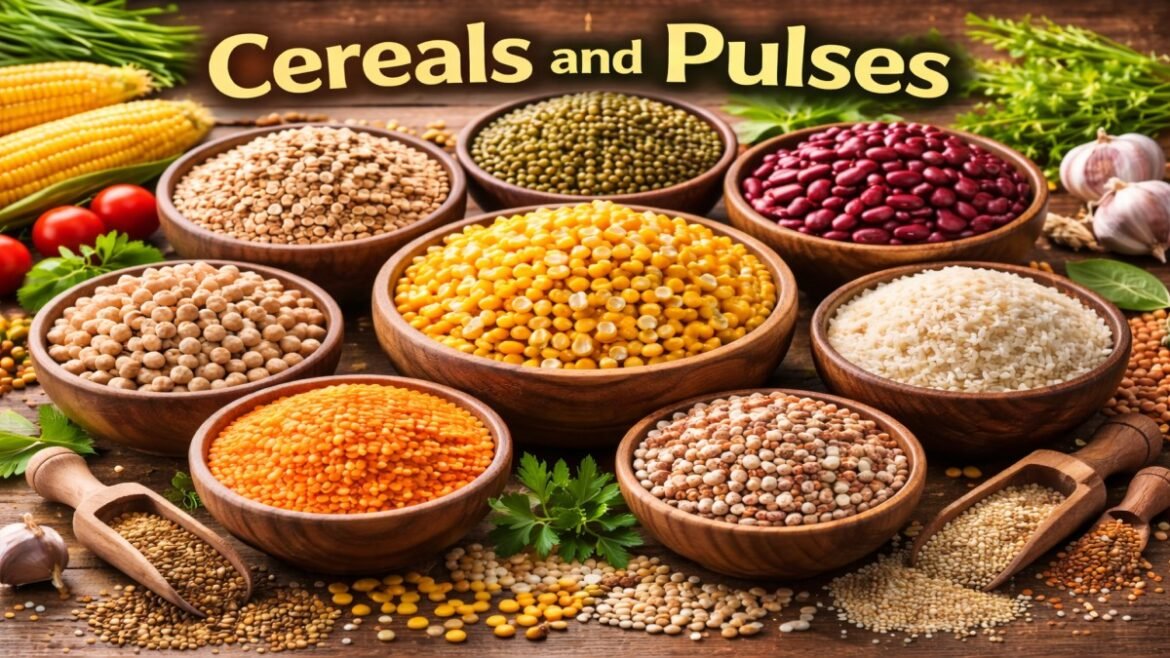
Introduction to Cereals and Pulses
Cereals and pulses are like the unsung heroes of our daily meals. They quietly sit on our plates, fueling our bodies and keeping us healthy, yet we rarely stop to appreciate their true value. From breakfast bread to a comforting bowl of lentils, these foods form the foundation of diets across the world.
What Are Cereals?
Cereals are grains obtained from grass-like plants. They are primarily grown for their edible seeds and are rich in carbohydrates, making them the main energy source for humans. Common examples include wheat, rice, maize, oats, and barley.
What Are Pulses?
Pulses are the edible dry seeds of leguminous plants. They include lentils, beans, chickpeas, and peas. Pulses are famous for their high protein and fiber content, especially in plant-based diets.
Why They Are Often Grouped Together
Cereals provide energy, while pulses supply protein. Together, they form a nutritionally complete combination, much like a perfect partnership that fills in each other’s gaps.
History and Importance of Cereals and Pulses
Role in Ancient Civilizations
Ancient civilizations thrived on cereals and pulses. Wheat and barley supported early farming communities, while lentils and peas were among the first domesticated crops. These foods made it possible for humans to settle, farm, and build societies.
Cereals and Pulses in Modern Agriculture
Even today, cereals and pulses remain the backbone of global food systems. They feed billions and play a critical role in food security.
Types of Cereals
Wheat
Wheat is widely used to make bread, pasta, and baked goods. It’s versatile, affordable, and rich in energy.
Rice
Rice is a staple food for more than half the world’s population. It’s easy to digest and pairs well with pulses.
Maize (Corn)
Maize is used both as food and animal feed. It’s also a key ingredient in processed foods.
Barley, Oats, and Millet
These cereals are gaining popularity due to their high fiber content and health benefits.
Types of Pulses
Lentils
Lentils cook quickly and are packed with protein, iron, and fiber.
Chickpeas
Chickpeas are used in dishes like hummus and curries. They are filling and nutritious.
Peas
Peas are mild in flavor and rich in vitamins and minerals.
Beans and Legumes
From kidney beans to black beans, this group offers variety and nutrition.
Nutritional Value of Cereals
Carbohydrates and Energy
Cereals are the body’s primary fuel source, providing long-lasting energy.
Fiber Content
Whole cereals help improve digestion and keep you feeling full longer.
Vitamins and Minerals
They contain B vitamins, iron, magnesium, and other essential nutrients.
Nutritional Value of Pulses
Plant-Based Protein Power
Pulses are one of the best protein sources for vegetarians and vegans.
Fiber and Digestive Health
High fiber aids digestion and supports gut health.
Micronutrients in Pulses
They provide iron, zinc, potassium, and folate.
Health Benefits of Cereals and Pulses
Heart Health
Regular consumption helps reduce cholesterol and supports heart health.
Weight Management
They are filling and low in fat, making them ideal for weight control.
Blood Sugar Control
Their slow digestion helps maintain stable blood sugar levels.
Cereals vs Pulses
Nutritional Comparison
Cereals are energy-rich, while pulses are protein-rich.
How They Complement Each Other
Together, they provide complete nutrition, similar to puzzle pieces fitting perfectly.
Role in Vegetarian and Vegan Diets
Protein Completeness
Combining cereals and pulses provides all essential amino acids.
Affordable Nutrition
They are budget-friendly and accessible worldwide.
Cereals and Pulses in Global Cuisines
Asian Diets
Rice and lentils dominate meals in many Asian countries.
African and Middle Eastern Foods
Millet, sorghum, and chickpeas are common staples.
Western Consumption Patterns
Bread, pasta, and beans are widely consumed.
Farming and Sustainability
Environmental Benefits of Pulses
Pulses improve soil fertility by fixing nitrogen.
Crop Rotation and Soil Health
Growing cereals and pulses together enhances sustainability.
Conclusion
Cereals and pulses are more than just everyday foods—they are the pillars of global nutrition. Affordable, versatile, and packed with essential nutrients, they support health, sustainability, and food security. Whether you’re aiming for a balanced diet or exploring plant-based eating, cereals and pulses deserve a permanent place on your plate.
FAQs
1. Why are cereals and pulses important together?
They complement each other nutritionally, providing energy and protein.
2. Are cereals and pulses good for weight loss?
Yes, their fiber content helps control appetite and supports weight management.
3. Can diabetics eat cereals and pulses?
Whole cereals and pulses help regulate blood sugar when eaten in moderation.
4. Are pulses better than meat for protein?
Pulses are an excellent plant-based protein source, especially when combined with cereals.
5. How often should cereals and pulses be eaten?
They can be included daily as part of a balanced diet.