
Introduction to Disasters
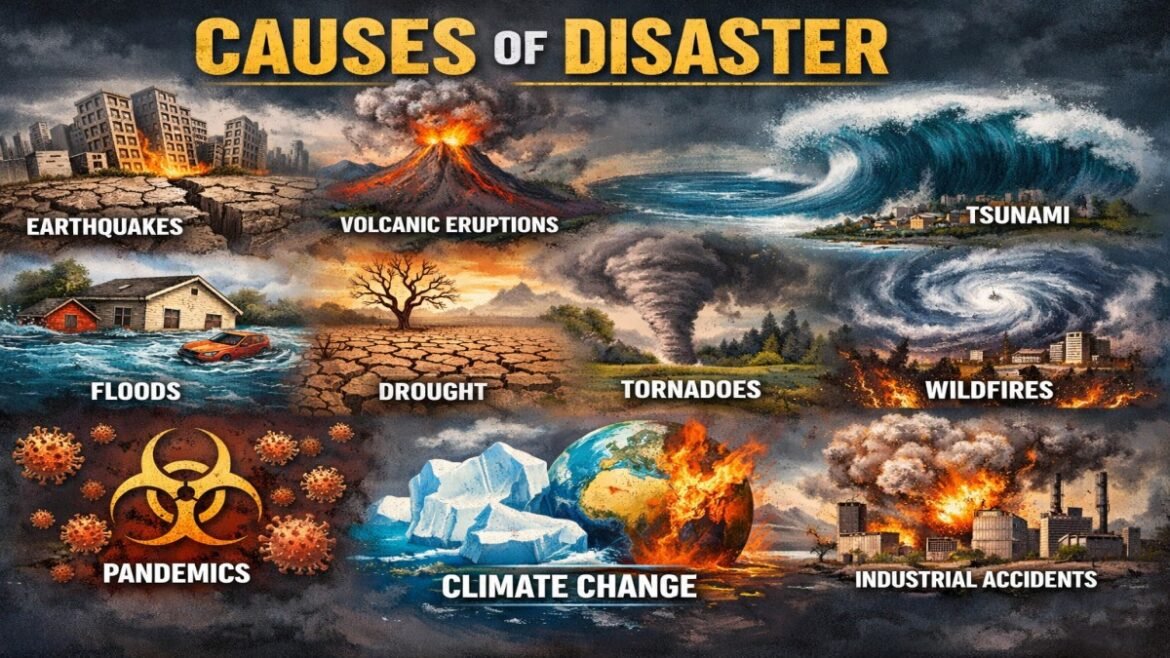
Causes of Disaster don’t knock politely before entering our lives. They arrive suddenly, shake our routines, and leave lasting scars. From raging floods to devastating industrial accidents, disasters are powerful reminders of how fragile human life can be.
What Is a Disaster?
A disaster is any sudden or gradual event that causes serious disruption to a community or society, resulting in human, economic, or environmental losses beyond the affected area’s ability to cope. Think of it as nature or human error hitting the reset button—often brutally.
Why Understanding Causes of Disaster Matters
Knowing the causes of disaster is like knowing where the cracks in a wall are. Once you see them, you can reinforce the structure. Understanding why disasters happen helps governments, communities, and individuals prepare better, reduce risks, and save lives.
Classification of Disasters
Natural Disasters
Natural disasters occur due to natural processes of the Earth.
Geological Disasters
These originate from the Earth’s internal processes, such as earthquakes, volcanic eruptions, and landslides.
Meteorological Disasters
These are weather-related events like floods, storms, droughts, and heatwaves.
Man-Made Disasters
Man-made disasters result from human actions, negligence, or technological failures.
Technological Disasters
Examples include industrial explosions, nuclear accidents, and chemical leaks.
Socio-Political Disasters
Wars, terrorism, and civil unrest also fall into this category.
Natural Causes of Disaster
Earthquakes
Earthquakes happen when tectonic plates suddenly shift, releasing enormous energy. In seconds, buildings crumble, roads split, and lives change forever. Areas along fault lines are especially vulnerable.
Volcanic Eruptions
Volcanoes erupt when molten rock, ash, and gases escape from beneath the Earth’s crust. While visually stunning, eruptions can destroy entire communities and affect global climates.
Floods
Floods occur due to heavy rainfall, river overflow, dam failure, or melting glaciers. They’re like uninvited guests that overstay their welcome—damaging crops, homes, and infrastructure.
Droughts
Droughts are slow-burning disasters. Prolonged lack of rainfall leads to water scarcity, crop failure, and famine, affecting millions silently.
Cyclones, Hurricanes, and Typhoons
These powerful storms form over warm oceans and bring strong winds, heavy rain, and storm surges. Different names, same destruction.
Tsunamis
Tsunamis are massive sea waves caused by underwater earthquakes or volcanic eruptions. They travel fast and hit coastal regions with terrifying force.
Wildfires
Wildfires can start naturally due to lightning or through human negligence. Dry climates, heatwaves, and strong winds make them nearly unstoppable.
Landslides and Avalanches
These occur when masses of rock, soil, or snow suddenly move downhill, often triggered by rainfall, earthquakes, or deforestation.
Pandemics and Epidemics
Diseases spreading rapidly across regions or globally can be considered biological disasters. COVID-19 is a recent and powerful example.
Human-Induced Causes of Disaster
Industrial Accidents
Factory explosions, gas leaks, and mine collapses often result from poor safety standards or human error.
Nuclear Disasters
Nuclear accidents release radioactive material, causing long-term environmental and health damage. Chernobyl and Fukushima still haunt us.
Chemical Spills and Explosions
Chemical disasters contaminate air, water, and soil, posing serious threats to life.
Urbanization and Poor Planning
Rapid urban growth without proper planning leads to overcrowding, weak infrastructure, and increased disaster risk.
Deforestation
Cutting down forests removes nature’s shield, increasing floods, landslides, and climate imbalance.
Climate Change
Climate change acts like fuel on fire, intensifying storms, droughts, heatwaves, and rising sea levels.
War and Armed Conflicts
Conflicts destroy infrastructure, displace populations, and create humanitarian disasters.
Terrorism
Terror attacks cause loss of life, psychological trauma, and economic disruption.
Environmental Factors Contributing to Disasters
Climate Variability
Unpredictable climate patterns increase the frequency and intensity of extreme weather events.
Global Warming
Rising global temperatures melt glaciers, raise sea levels, and intensify natural disasters.
Ecosystem Degradation
Damaged ecosystems lose their ability to absorb shocks, making disasters more severe.
Socio-Economic Causes of Disaster
Poverty and Inequality
Poor communities often live in high-risk areas and lack resources to prepare or recover.
Population Growth
More people mean more pressure on land, water, and infrastructure.
Weak Infrastructure
Poorly built structures collapse easily during disasters.
Lack of Awareness and Education
Ignorance can be deadly. Awareness saves lives.
Conclusion
Disasters are a harsh reality, but they’re not always unavoidable. By understanding the causes of disaster—both natural and human-made—we can reduce risks, prepare smarter, and build resilient communities. The choice is simple: learn from the past or repeat it.
Frequently Asked Questions
1. What are the main causes of disasters?
Natural processes, human activities, environmental degradation, and socio-economic factors.
2. Are all disasters preventable?
Not all, but their impacts can be significantly reduced.
3. How does climate change cause disasters?
It increases the frequency and intensity of extreme weather events.
4. What is the difference between natural and man-made disasters?
Natural disasters come from nature, while man-made disasters result from human actions.
5. Why is disaster awareness important?
Awareness saves lives and reduces losses.