
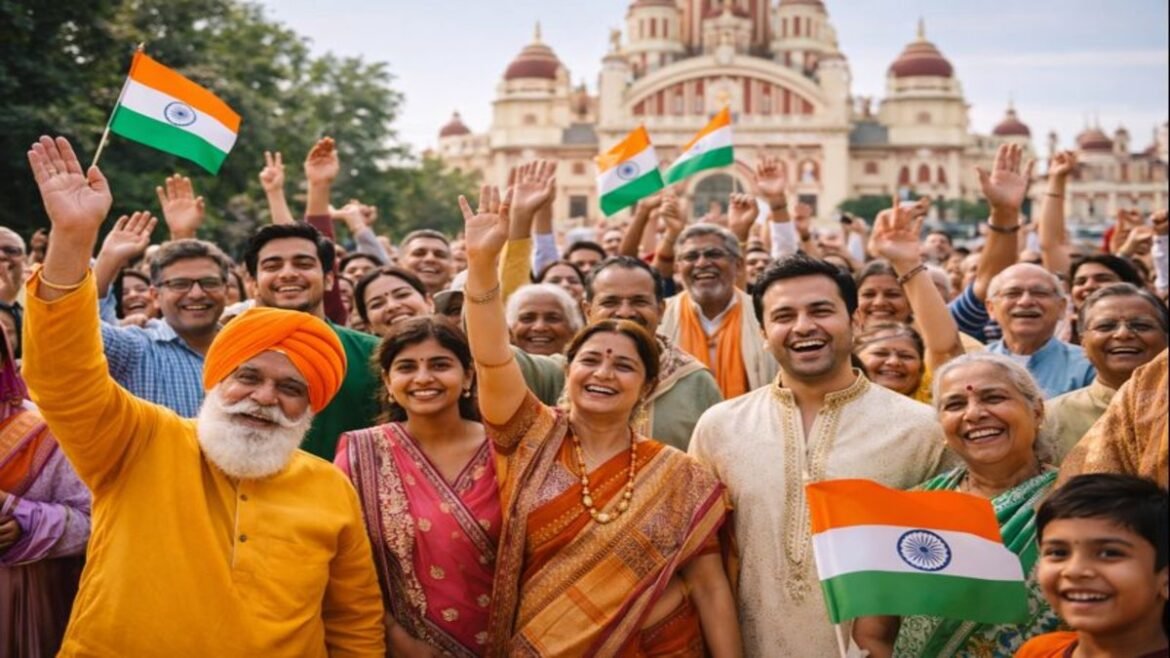
Introduction to Indian Society
Indian society is like a living mosaic millions of pieces, each different in color, shape, and texture, yet forming a single, evolving picture. It is ancient but not outdated, traditional yet surprisingly adaptable. From bustling metro cities to quiet rural villages, Indian society reflects a complex blend of history, culture, values, and modern aspirations.
Understanding Indian society isn’t about memorizing facts. It’s about feeling its rhythm the festivals, the family bonds, the contradictions, and the constant push-and-pull between tradition and change.
Historical Roots of Indian Society
Indian society didn’t appear overnight. Its foundations were laid thousands of years ago, shaped by the Indus Valley Civilization, Vedic culture, empires, invasions, colonial rule, and finally independence. Each phase added a new layer, like rings in an ancient tree trunk.
Ancient scriptures, medieval traditions, and colonial reforms all contributed to social institutions such as caste, family, religion, and governance. Even today, echoes of history influence how people think, behave, and relate to one another.
Core Features of Indian Society
Diversity and Unity
If there’s one word that defines Indian society, it’s diversity. Different languages, religions, customs, cuisines, and lifestyles coexist sometimes uneasily, often beautifully.
Yet, despite this diversity, there is a strong sense of unity. Shared values like respect for elders, hospitality, and community life act like invisible threads holding the social fabric together.
Social Structure
Indian society is traditionally structured and hierarchical. Roles and responsibilities were historically assigned based on birth, occupation, and gender. While modern laws promote equality, social structures still influence everyday interactions.
Varna and Jati System
The ancient varna system divided society into four broad groups, while the jati system created thousands of sub-castes. Over time, this evolved into a rigid caste system that affected social mobility. Though legally abolished, its social impact hasn’t disappeared entirely.
Religion and Indian Society
Major Religions in India
India is the birthplace of Hinduism, Buddhism, Jainism, and Sikhism, and also home to Islam, Christianity, Judaism, and others. Religion isn’t just a belief system here it’s a way of life.
Role of Religion in Daily Life
From morning prayers to festival celebrations, religion influences daily routines, moral values, and social customs. Temples, mosques, churches, and gurudwaras are not just places of worship but community centers.
Family System in Indian Society
Joint Family System
Traditionally, Indian favored joint families multiple generations living under one roof. This system promoted emotional security, shared responsibilities, and strong kinship bonds.
Nuclear Family Trend
Urbanization and modernization have led to a rise in nuclear families. Smaller households offer independence but sometimes lack the emotional cushion of extended family support.
Changing Family Values
Respect for elders remains strong, but individual choice is gaining importance. Decision-making is slowly shifting from collective authority to personal preference.
Caste System in Indian Society
Origin of the Caste System
The caste system originated as a division of labor but gradually became hereditary and rigid. It influenced occupation, marriage, and social status for centuries.
Caste in Modern India
Today, constitutional provisions aim to reduce caste-based discrimination through reservations and affirmative action. While progress is visible, social attitudes take longer to change.
Marriage and Kinship
Types of Marriage
Arranged marriages have long been the norm, emphasizing family compatibility over individual choice. Love marriages, once rare, are now increasingly accepted, especially in urban areas.
Changing Marriage Practices
Inter-caste and inter-religious marriages are rising, challenging traditional boundaries. Marriage is slowly transforming from a social obligation into a personal partnership.
Status of Women in Indian Society
Traditional Role of Women
Historically, women were expected to manage households and prioritize family over personal ambition. Education & independence were limited.
Women in Contemporary India
Today, Indian women are leaders, entrepreneurs, scientists, and artists. Legal reforms, education, and awareness movements have empowered women, though challenges like gender inequality and safety concerns remain.
Education and Social Change
Education is one of the strongest drivers of social change in Indian society. It opens doors to employment, awareness, and upward mobility.
Conclusion
Indian society is not static; it’s a living, breathing entity constantly evolving. It carries the wisdom of the past and the ambition of the future. Understanding it means accepting its contradictions and appreciating its resilience. In many ways, Indian society is like a river sometimes calm, sometimes chaotic, but always moving forward.
FAQs
1. What is the main feature of Indian society?
Its unity in diversity multiple cultures coexisting within one social framework.
2. Is the caste system still relevant today?
Legally no, but socially its influence still exists in some areas.
3. How has globalization affected Indian society?
It has modernized lifestyles while also challenging traditional values.
4. What role does family play in Indian society?
Family remains a central institution, though its structure is changing.
5. Is Indian society changing rapidly?
Yes, especially due to education, technology, and urbanization.