
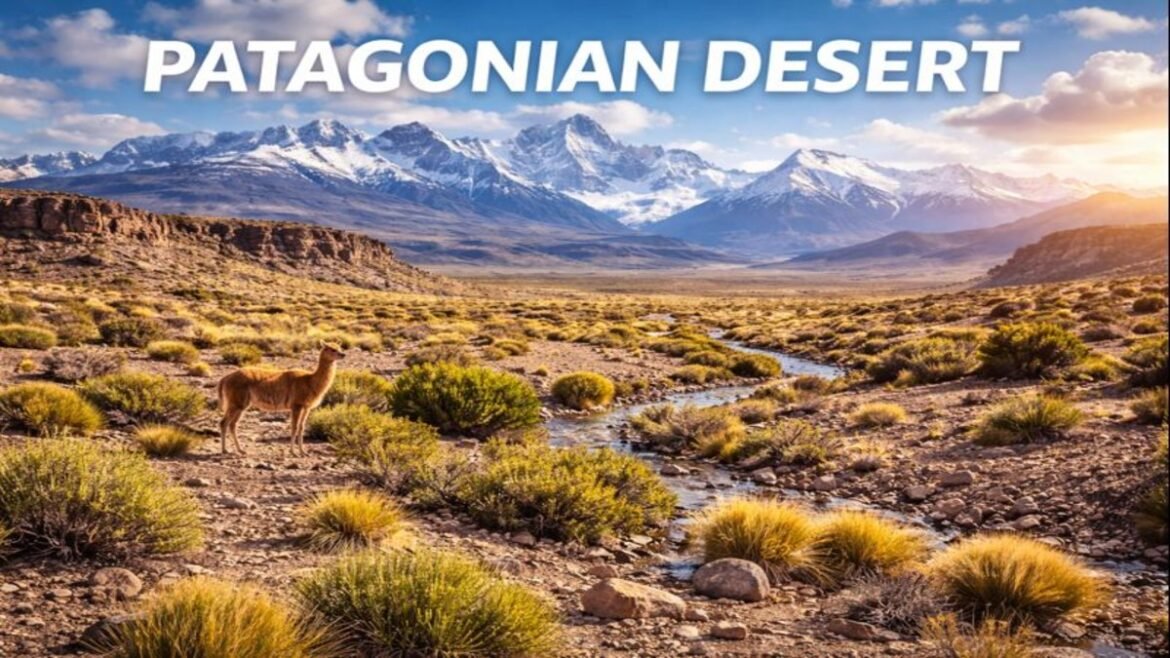
Introduction to the Patagonian Desert
When people think of deserts, they usually imagine endless sand dunes and scorching heat. The Patagonian Desert flips that image upside down. This vast, windswept land is cold, rugged, and hauntingly beautiful. Stretching across southern Argentina, it’s the largest cold desert in the world and one of the most underrated natural wonders on Earth.
What Makes the Patagonian Desert Unique
Unlike hot deserts, Patagonia is defined by strong winds, low rainfall, and dramatic temperature swings. It’s a place where silence feels loud and the horizon seems infinite.
Where Is the Patagonian Desert Located
The Patagonian Desert lies primarily in southern Argentina, east of the Andes Mountains, extending from the Colorado River down to Tierra del Fuego.
Geography and Landscape
Size and Boundaries
Covering roughly 673,000 square kilometers, the Patagonian Desert dominates much of Argentina’s southern half. It’s larger than many countries.
Key Landforms and Plateaus
The region features:
- Vast plateaus
- Rocky plains
- Deep river valleys
- Volcanic formations
These elements give Patagonia its raw, almost otherworldly appearance.
Soil and Terrain Characteristics
The soil is dry, gravelly, and poor in nutrients, making agriculture difficult but perfect for hardy shrubs and grasses.
Climate of the Patagonian Desert
Temperature Extremes
Summers are mild, while winters can be brutally cold. Temperatures often drop below freezing, especially at night.
Rainfall and Wind Patterns
Annual rainfall averages less than 200 mm, and the wind never seems to stop. Gusts can exceed 100 km/h, shaping both the land and life itself.
Why It’s Called a Cold Desert
Low precipitation not temperature is what defines a desert. Patagonia checks that box easily.
Flora of the Patagonian Desert
Native Plant Species
Vegetation is sparse but resilient. Common plants include:
- Low shrubs
- Cushion plants
- Hardy grasses
Survival Strategies of Desert Plants
These plants have deep roots, small leaves, and slow growth nature’s way of conserving water.
Fauna and Wildlife
Iconic Animals of Patagonia
Despite harsh conditions, wildlife thrives. You’ll find:
- Guanacos
- Patagonian foxes
- Pumas
Birds, Reptiles, and Small Mammals
Birdlife is especially rich, with condors and rheas dominating the skies.
Adaptations to Harsh Conditions
Animals here are masters of energy conservation and camouflage.
Indigenous Peoples and Early History
Original Inhabitants
The Tehuelche people lived here for thousands of years, adapting to the desert’s rhythm.
Cultural Legacy
Their traditions and knowledge still influence Patagonian identity today.
European Exploration and Settlement
Early Expeditions
European explorers arrived in the 16th century, often describing the land as desolate yet mesmerizing.
Impact on the Region
Colonization brought sheep farming, drastically altering ecosystems.
Economic Activities
Sheep Farming and Ranching
Patagonia became a global wool supplier, thanks to its vast grazing lands.
Oil, Gas, and Mining
Natural resources now play a major economic role.
Modern Economic Challenges
Balancing development with conservation remains a struggle.
Tourism in the Patagonian Desert
Popular Tourist Attractions
Highlights include:
- Valdés Peninsula
- Petrified Forests
- Remote national parks
Adventure and Eco-Tourism
Hiking, wildlife watching, and stargazing attract adventurous travelers.
Environmental Importance
Biodiversity Value
The desert supports unique species found nowhere else.
Role in Climate Regulation
Its ecosystems help regulate regional climate patterns.
Environmental Threats
Climate Change Effects
Rising temperatures and shifting rainfall threaten fragile habitats.
Overgrazing and Desertification
Excessive grazing accelerates land degradation.
Conservation Efforts
Protected Areas and National Parks
Several reserves aim to preserve Patagonia’s ecosystems.
Community-Based Conservation
Local initiatives focus on sustainable land use.
Interesting Facts About the Patagonian Desert
Records and Unique Features
- Largest cold desert on Earth
- Home to some of the strongest winds recorded
- One of the least populated regions globally
Conclusion
The Patagonian Desert isn’t empty it’s alive with stories, resilience, and quiet power. From its fierce winds to its adapted wildlife, this cold desert proves that life can thrive in the harshest places. It’s a reminder that beauty doesn’t always shout; sometimes, it whispers across a vast, open plain.
FAQs
1. Is the Patagonian Desert hot or cold?
It’s a cold desert with low rainfall and cool to freezing temperatures.
2. Why is the Patagonian Desert so windy?
Its location between the Andes and the Atlantic creates constant pressure differences.
3. Can people live in the Patagonian Desert?
Yes, but population density is very low due to harsh conditions.
4. What animals are unique to Patagonia?
Guanacos, rheas, and Patagonian foxes are iconic species.
5. Is the Patagonian Desert worth visiting?
Absolutely its landscapes are unlike anywhere else on Earth.